

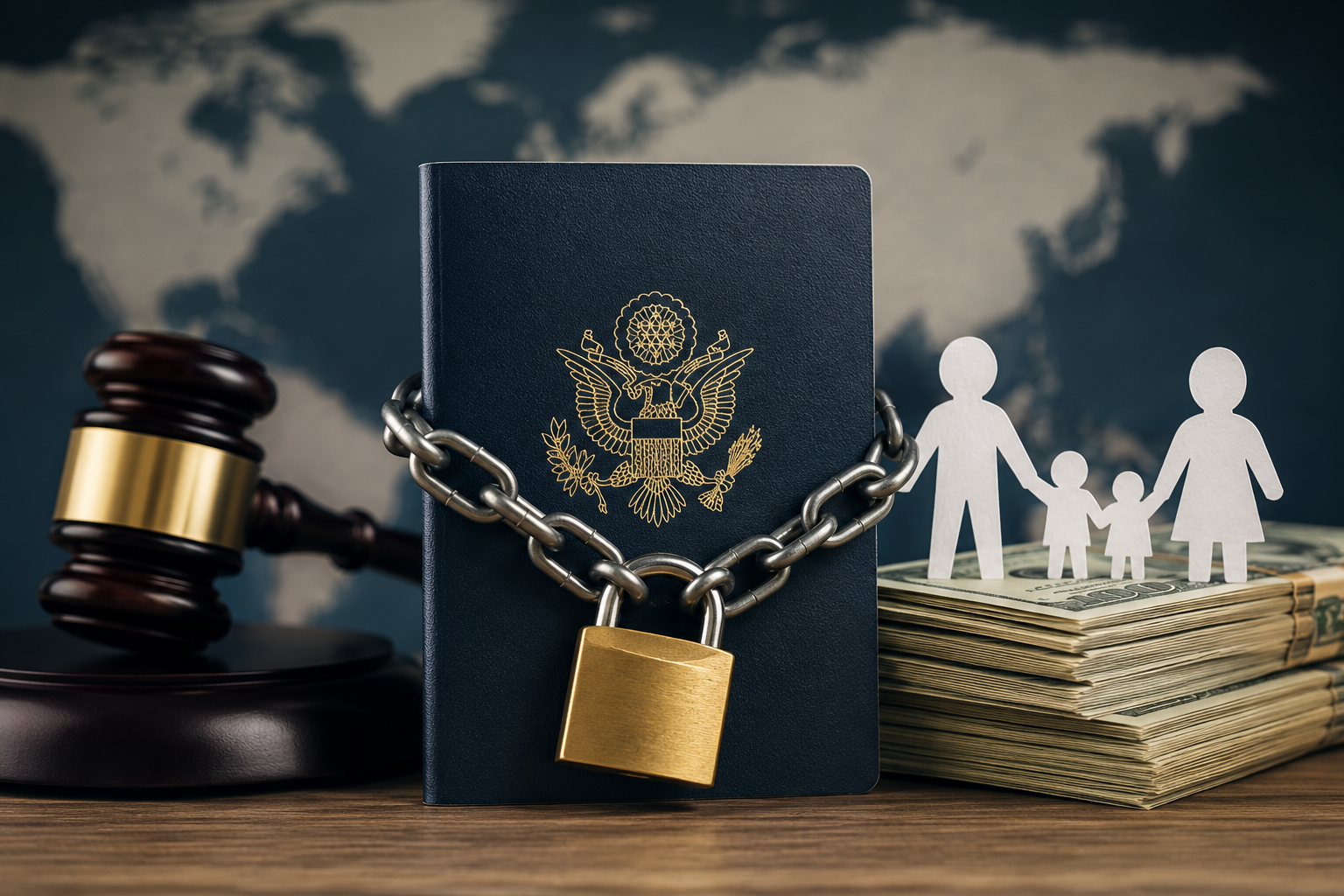
Federal Enforcement Expands Beyond State Borders
A growing number of Americans may soon find themselves unable to travel internationally as the federal government moves to expand enforcement against parents with significant unpaid child support debt. The policy, which has drawn national attention in recent weeks, allows the U.S. State Department to deny or revoke passports for individuals who owe large amounts in overdue child support.
While many people are only now hearing about the issue, the law itself is not new. Congress first approved passport restrictions tied to unpaid child support in 1996 as part of a broader welfare reform effort. For years, enforcement existed mainly as a passport denial system during the application or renewal process. Now federal officials are signaling a much stronger approach that could include active passport revocations for qualifying individuals.
The renewed enforcement effort is expected to impact families across the country, including many in immigrant and international communities where overseas travel is often necessary for family obligations, funerals, ministry work, business opportunities, or maintaining ties with relatives abroad.
How the Policy Works
Under federal law, state child support agencies report seriously delinquent cases to the U.S. Department of Health and Human Services. Those cases are then forwarded to the State Department, which can refuse to issue or renew a passport until the debt is resolved.
Current federal law allows passport restrictions when child support arrears exceed $2,500. However, reports indicate the government is initially prioritizing individuals who owe far larger amounts, in some cases exceeding $100,000.
For many Americans, the issue may come as a surprise because the restriction can arise during a passport renewal or when applying for a new passport before international travel. In some situations, travelers may not fully understand the status of their child support case until their passport application is denied.
Federal officials argue the policy is intended to encourage accountability and ensure parents fulfill their financial responsibilities toward their children. Supporters say child support is not optional and that tougher enforcement measures are necessary because many custodial parents struggle financially when support payments stop.
Child support advocates note that unpaid support can create major hardships for single-parent households already dealing with rising housing costs, healthcare expenses, food prices, and childcare burdens.
Concerns About Financial Hardship
At the same time, critics of the crackdown say the issue is more complicated than simply labeling parents as irresponsible. Economic instability, job loss, inflation, illness, immigration complications, and court delays can all contribute to the rapid growth of child support debt over time.
Some legal advocates warn that revoking passports could make it even harder for certain individuals to earn income, especially those whose employment requires international travel. Trucking contractors, international business owners, missionaries, maritime workers, and professionals working overseas could face additional financial strain if they lose travel privileges.
Others fear that some people may not even realize how large their debt has become due to penalties and accumulated interest added over many years.
The issue is particularly sensitive in immigrant communities, where international travel is often connected to family caregiving, cultural responsibilities, or religious obligations. Many individuals routinely travel abroad to support aging parents, attend weddings and funerals, or assist relatives during emergencies.
For dual-national families and immigrants with strong overseas ties, losing passport access can feel deeply personal and disruptive.
Importance of Staying Informed
Legal experts encourage anyone with an active child support case to verify their payment history and stay in communication with their local child support agency. In many states, individuals may qualify for payment plans, debt reviews, or court modifications if their financial situation has changed significantly.
Family law attorneys also advise people not to ignore court notices or agency correspondence related to child support obligations. In some cases, individuals who lose jobs or experience medical emergencies fail to request formal payment modifications, allowing unpaid balances to continue growing even when their income has dropped.
Advocates stress that communication is critical because courts generally require official modifications rather than informal arrangements between parents.
A Broader National Conversation
The renewed focus on passport enforcement reflects a broader national debate about personal responsibility, government power, and economic pressure facing American families. While many agree that children deserve financial support from both parents, there are growing questions about whether aggressive enforcement alone solves the underlying financial struggles affecting millions of households.
For immigrant and faith-based communities especially, the conversation also raises concerns about compassion, reconciliation, and practical solutions that strengthen families rather than deepen financial crises.
As federal enforcement expands, many Americans may soon discover that unpaid child support is no longer simply a state court issue. It could directly affect their ability to travel, work internationally, and maintain connections with loved ones around the world.
Readers who may be affected are encouraged to contact their state child support office or seek legal guidance to better understand their rights, obligations, and available options before international travel plans are disrupted.