
“SNAP is not just a food program. It is a health program, an economic program, and a community stability program,” said Dr. Giridhar Mallya during a national briefing hosted by American Community Media in partnership with the Robert Wood Johnson Foundation.
Public health experts, journalists, and community advocates gathered for the May 8 national briefing to discuss the devastating impact of recent federal cuts to the Supplemental Nutrition Assistance Program, commonly known as SNAP. The discussion centered on the growing consequences of the cuts approved under HR1, legislation that reduced SNAP funding by approximately $187 billion through 2034, the largest reduction in the program’s history.
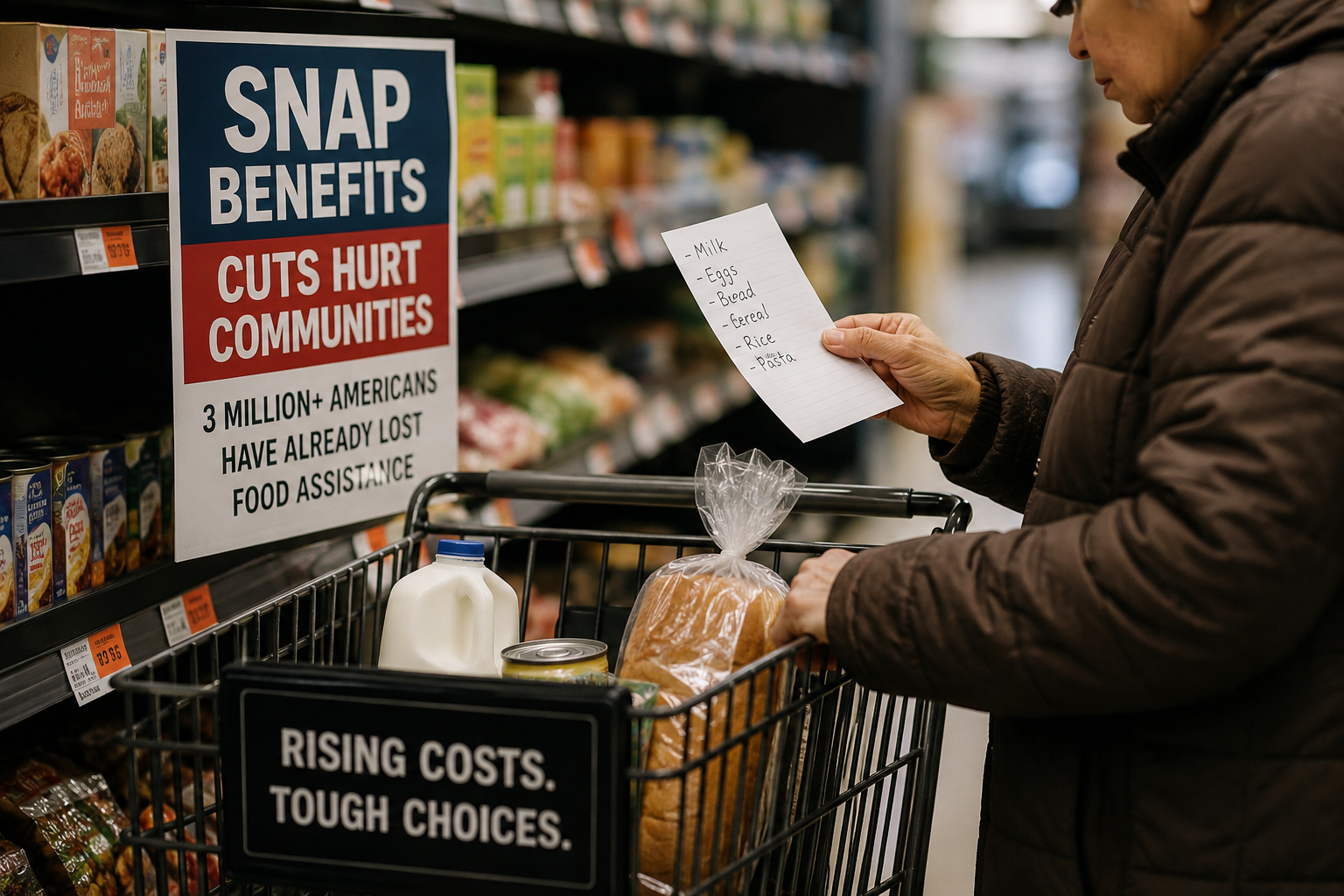
According to speakers during the briefing, more than 3 million Americans have already lost food assistance benefits since the law’s passage, leaving millions of families struggling to keep food on the table amid rising housing, healthcare, and grocery costs.
A Growing Public Health Emergency

Dr. Mallya warned that the effects of the cuts reach far beyond grocery stores.
“When people lose access to nutritious food, we see impacts across every part of society,” he said. “We see worsening chronic disease, increased stress, poorer mental health outcomes, and greater strain on healthcare systems.”
He emphasized that SNAP has long served as one of the nation’s most effective anti-hunger and anti-poverty programs, especially for children, seniors, disabled individuals, and working-class families.
Dr. Lorna E. Thorpe of the NYU Grossman School of Medicine explained that new data released through the Congressional District Health Dashboard now allows communities to track SNAP participation quarter by quarter alongside other health and economic indicators.
“The dashboard gives communities the ability to see what is happening in their own congressional districts in real time,” Thorpe said. “This is about helping people understand how policy decisions affect health outcomes where they live.”
Thorpe also explained that the research incorporates information from Census data, the American Community Survey, the National Center for Health Statistics, and other major health surveys to create a more comprehensive picture of how communities are being affected.
Fear Among Immigrant Families
One of the most emotional portions of the briefing focused on the impact the cuts are having on immigrant communities and mixed-status families.
Journalists participating in the briefing repeatedly raised concerns about fear spreading among families who may qualify for assistance but are increasingly reluctant to apply because of immigration enforcement activities.
“How has the fear created by ICE and CBP impacted minorities applying for or recertifying for SNAP benefits?” one journalist asked during the session.
Another participant questioned whether “fear of immigration consequences could discourage eligible families from applying for food assistance.”
Speakers acknowledged that fear and misinformation are becoming major barriers for vulnerable communities, especially households with children who are U.S. citizens but have undocumented parents.
Community members from California and other states described worsening conditions on the ground.
“In Pomona, California, it’s a dire situation,” one participant said. “SNAP is so important to many Hispanic families and due to the government restricting benefits, many children are going hungry. Food banks are becoming essential to those families.”
Others warned that single mothers whose spouses have been deported or detained are facing increasing hardship as they struggle to care for children while navigating rising living costs.
Economic Consequences for Communities

Experts stressed that SNAP cuts do not only affect individual households. They also weaken local economies.
“SNAP dollars move quickly through communities,” Dr. Mallya explained. “They support local grocery stores, small retailers, and food suppliers. When those dollars disappear, communities feel the impact almost immediately.”
Participants expressed concern that small neighborhood markets and community grocery stores could face declining sales while food banks and charitable organizations become overwhelmed by growing demand.
The briefing also highlighted concerns about the long-term consequences for public health. Reduced access to healthy food often leads to higher rates of chronic disease, increased hospitalizations, developmental problems among children, and worsening mental health conditions.
What Communities Can Do
Despite the seriousness of the situation, speakers encouraged communities not to lose hope or remain silent.
Faith organizations, nonprofits, and community groups were urged to expand outreach efforts, strengthen food pantry programs, and educate families about available resources.
“This is a moment where local communities matter tremendously,” Thorpe said. “Data is important, but so is community action.”
Speakers also encouraged residents to contact elected officials, participate in town halls, monitor local policy decisions, and support organizations advocating for food security protections.
Journalists were encouraged to continue reporting on how the cuts are affecting real families and local neighborhoods rather than treating hunger as an abstract political issue.
Throughout the briefing, one message remained clear: hunger is no longer a distant crisis affecting only a small portion of society. It is rapidly becoming a widespread economic and public health emergency touching working families, immigrants, seniors, and children across America.
As millions continue losing food assistance benefits, experts warned that communities may soon face difficult choices between food, housing, transportation, and healthcare.
“The stakes are enormous,” Dr. Mallya said. “This is about whether families can live with dignity and whether communities can remain healthy and stable.”