

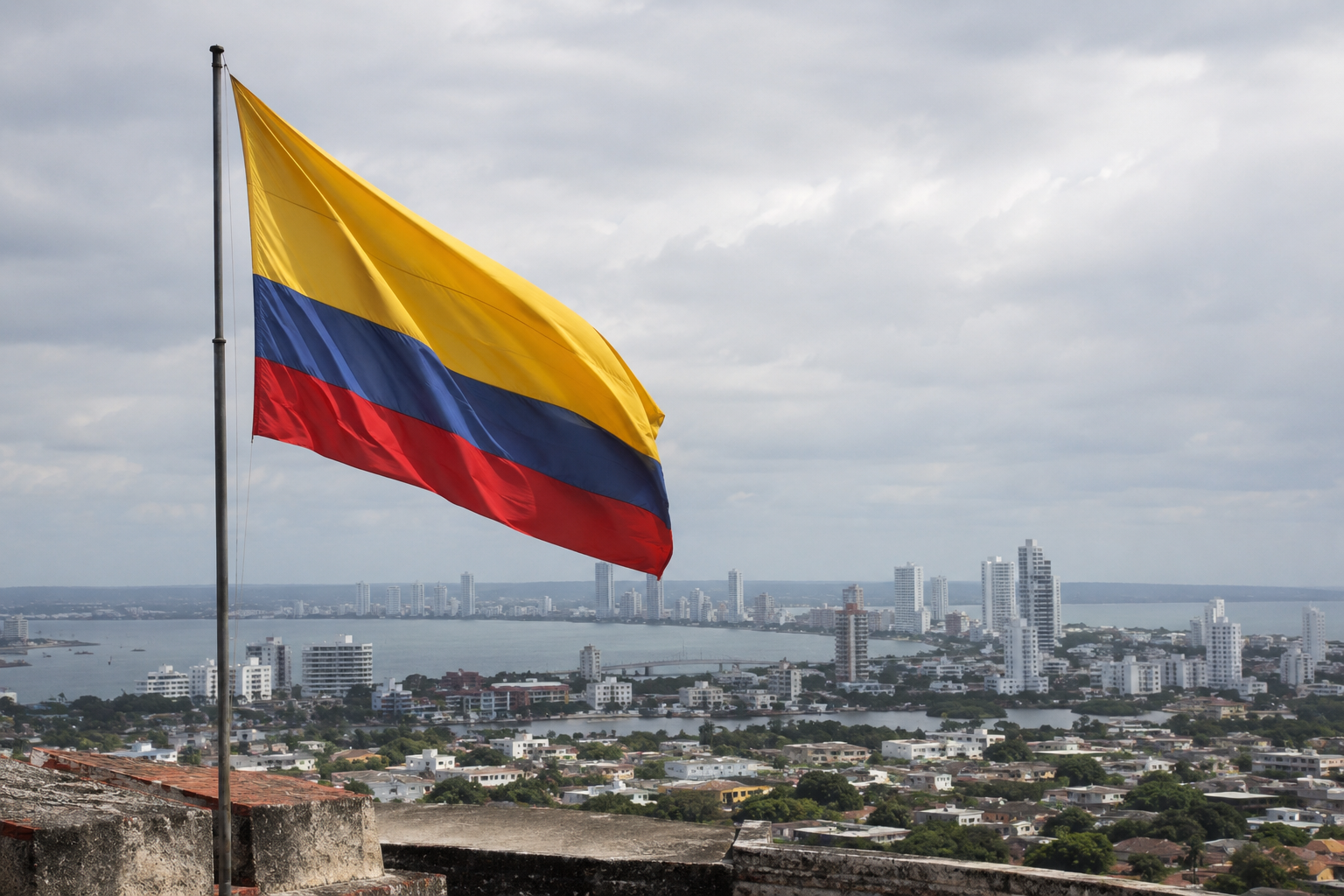
As Colombians prepared to vote in one of the most consequential presidential runoff elections in the country’s modern history, scholars, journalists, and regional experts warned that the outcome could have implications extending far beyond Colombia’s borders. During a national briefing hosted by American Community Media, panelists explored how the election represents more than a contest between political parties. Instead, they argued, it is a defining moment for democracy, human rights, migration, peace, and regional stability throughout Latin America.
Opening the discussion, moderator Pilar Marrero explained that Colombia has spent decades wrestling with armed conflict, displacement, political violence, and deep social divisions. While many observers have framed the election as another battle between the political left and right, the experts challenged that assumption, arguing that the country’s challenges are far more complex.
Beatriz Magaloni, Professor of Political Science and Senior Fellow at Stanford University, cautioned against oversimplifying the election. “The language of polarization obscures more than it reveals,” she said. “What we are observing is really not ideological per se, but really experiential. It’s the way people experience democracy in their everyday lives and the way they experience what they see as the state failing them.”
Different Colombias Living Different Realities
Magaloni described what she called “two Colombias.” In cities and urban communities, many citizens live with daily fears of crime, extortion, and insecurity. Those experiences often lead voters to support candidates promising aggressive crackdowns on criminal activity.
Meanwhile, many rural communities face an entirely different reality. Indigenous peoples, Afro-Colombian communities, and remote villages continue to struggle with armed criminal organizations competing for control of land, mining operations, drug trafficking routes, forests, and other natural resources.
“The real threat comes from these armed criminal groups that want to control territory,” Magaloni explained. “They are killing significant numbers of social leaders, indigenous leaders, Afro-descendant communities, and attacking the very structure of local democracy.”
She warned that these contrasting experiences have created a dangerous disconnect within Colombian society, where each side often struggles to understand the other’s fears and priorities.
Democracy Must Deliver Results
Drawing on extensive surveys conducted across Latin America, Magaloni said many citizens remain committed to democratic values but are increasingly frustrated that democratic governments have failed to provide security and opportunity.
“Democracy has to deliver for people to continue to embrace democracy and its normative principles,” she said.
She also warned that growing support for strongman leadership poses risks to democratic institutions and human rights. While many citizens value civil liberties and free elections, she expressed concern that an increasing number are willing to sacrifice due process and the rule of law in exchange for promises of greater security.
Communities Still Living with the Legacy of Violence
Journalist and sociologist Manuel Ortiz brought a deeply personal perspective after years documenting conditions throughout Colombia. He emphasized that understanding the country’s politics requires understanding the human cost of decades of violence.
“I’m not an expert,” Ortiz said. “I’ve been traveling to Colombia for probably 13 years, but every time I go to Colombia, I feel I know less. It’s a very complex country.”
Ortiz shared the stories of indigenous communities affected by violent confrontations over disputed land, including recent deadly clashes that left numerous people dead and more than one hundred injured. After spending several days with both communities involved, he concluded that the conflict was not simply between neighboring groups but reflected decades of displacement, land seizures, and unresolved historical grievances.
According to Ortiz, many communities believe that recovering land lost during earlier periods of violence remains essential for achieving lasting peace.
“This is not about left or right,” he said. “This is about democracy versus democratic backsliding. This is about the peace agreements and restoring land versus returning to the periods of violence and land grabbing.”
Human Rights and Regional Stability at Stake
Anthropologist Alex Sierra focused on how organized criminal groups continue to threaten vulnerable communities and warned that the election could influence the future of democratic governance throughout Latin America.
Speaking through interpretation, Sierra described how many young Colombians who experienced violence during previous administrations fear a return to aggressive security policies. He also argued that international political movements and foreign influence have increasingly shaped elections throughout the region.
Sierra said populist leaders often promise simple answers to highly complex problems, but those promises may come at the expense of democratic institutions and human rights. He also emphasized that drug trafficking, organized crime, and political instability require international cooperation rather than isolated national responses.
Returning for closing remarks, Magaloni presented evidence showing the expansion of armed criminal organizations across Colombia. She explained that many of these groups profit not only from narcotics but also from mining, oil, forests, extortion, and control of local populations.
“What this means is that these armed criminal groups really have an interest in controlling populations, mostly in rural Colombia,” she said. “Whose rights are going to be protected under the following regime is worrisome for anyone who cares about human rights.”
As Colombia moves forward, the panel agreed that the country’s election will serve as more than a national political contest. It will test whether democratic institutions can effectively address insecurity, protect vulnerable communities, uphold human rights, and rebuild public confidence. The outcome could influence not only Colombia’s future but also provide important lessons for democracies across the Americas that are confronting many of the same challenges.