

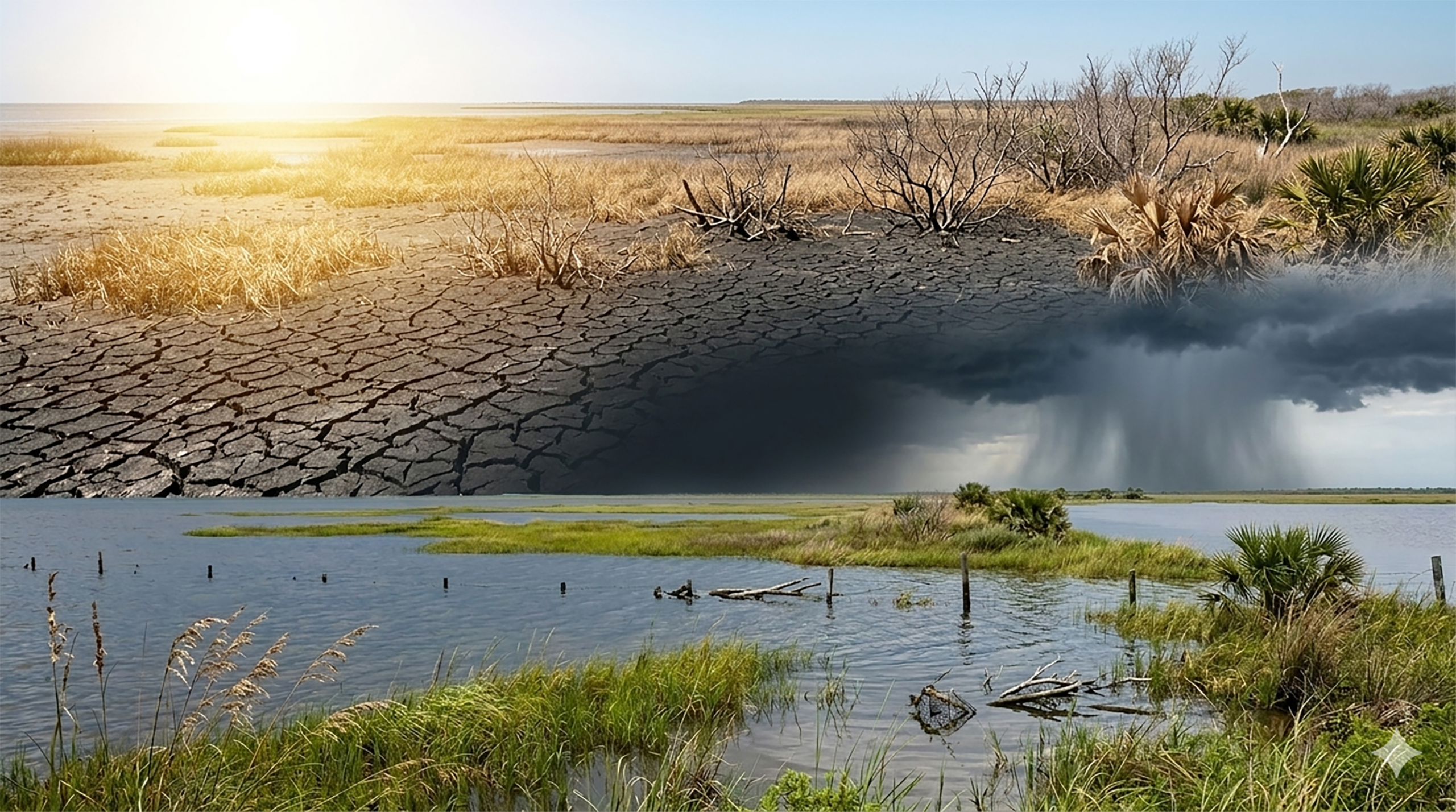
Extreme Weather Is Changing the Conversation
Although climate change has faded from much of the nation’s political conversation, scientists say the planet itself is telling a different story. Record-breaking heat, destructive wildfires, worsening air pollution, stronger storms, prolonged droughts, and heavier rainfall continue to affect millions of people across the globe. During an American Community Media national news briefing, climate experts and community leaders warned that the growing disconnect between political debate and environmental reality does not lessen the risks facing families. Instead, they argued that communities must focus less on political rhetoric and more on practical solutions that protect lives, strengthen neighborhoods, and prepare for an increasingly unpredictable future.
Pilar Marrero, Associate Editor of American Community Media, opened the discussion by noting that Europe recently experienced thousands of excess deaths during an unprecedented heat wave. At the same time, the United States continues to face dangerous heat domes, expanding wildfire smoke, and the growing likelihood of a powerful El Niño event. She said these disasters continue to fall most heavily on society’s most vulnerable populations, even as public discussion surrounding climate change has diminished.
The Science Behind Today’s Weather
Karen McKinnon, Associate Professor of Statistics and the Environment at UCLA, explained that although political attention has shifted, people around the world are experiencing the effects of climate change more directly than ever before. “People are really feeling the impacts of climate and weather extremes,” she said. “There is an interesting moment right now where, if anything, we can be more aware of and potentially more responsive to climate change while also there is this political pushback.”
McKinnon described the succession of record-breaking heat waves across Europe, dangerous humidity levels in the eastern United States, widespread smoke from Canadian wildfires, and the expected arrival of a major El Niño. While El Niño is a naturally occurring climate pattern, she explained that today’s warmer global temperatures magnify its impacts. A warmer atmosphere holds more moisture, increasing the likelihood of heavier rainfall and flooding, while elevated temperatures intensify dangerous heat events.
She emphasized that climate science has advanced dramatically during the past decade. Rather than speaking only about abstract global temperature increases, researchers can now connect many individual extreme weather events directly to climate change. “We can now say with much greater confidence how some of these high-impact extremes are affected, and their probability has changed due to climate change,” McKinnon explained. She believes this shift allows scientists to communicate in ways that resonate more deeply with everyday experiences, such as canceled outdoor activities, unsafe air quality, and prolonged periods of dangerous heat.
Responding to questions about whether climate change can be reversed, McKinnon said reducing carbon emissions remains essential but acknowledged that adaptation will also be necessary. “We know exactly the cause of climate change,” she said. “We therefore know how to reverse it. But in practice, we need to make large structural changes to our economy.” Until those changes occur, communities must continue investing in practical measures that help people remain safe during increasingly frequent climate emergencies.
Resilience Begins in the Neighborhood
While scientific research helps explain the causes of climate change, Shina Robinson of the Asian Pacific Environmental Network focused on how communities are responding on the ground. Her organization has spent decades working with Asian American, immigrant, and refugee communities throughout California that often live near refineries, industrial facilities, and busy transportation corridors where environmental hazards are already common.
Robinson described how climate change compounds existing inequalities. Heat waves, wildfire smoke, aging housing, pollution, and power outages frequently overlap, creating multiple risks for families already facing economic hardship. Rather than waiting for outside assistance, many neighborhoods are developing “resilience hubs,” trusted community centers that provide information, services, emergency resources, and gathering places before, during, and after disasters.
She stressed that climate conversations become more meaningful when they focus on health and daily life instead of technical policy language. “We’re talking about health. We’re talking about cleaner air in homes. We’re talking about lower asthma rates. We’re talking about safety for people’s kids,” Robinson said. By emphasizing the benefits people experience directly, she believes communities become more willing to support practical climate solutions that improve quality of life.
Learning From Communities Already Adapting
Mark Valentine, Senior Advisor for the Omega Resilience Awards, encouraged participants to rethink how resilience itself is understood. His organization supports grassroots leaders throughout Africa, India, and Latin America who are developing locally driven responses to environmental, economic, and social challenges.
Valentine observed that many communities dislike being praised simply for being resilient because resilience often reflects hardships they never chose. “Resilience implies the necessity to survive a crisis, often not of one’s making,” he said. “They don’t want to be congratulated on being resilient. They would rather not have had to go through the torturous journey.”
Instead, Valentine urged policymakers and researchers to recognize the value of local knowledge. He argued that some of the world’s most effective adaptation strategies are already emerging from communities living with climate pressures every day. Indigenous traditions, neighborhood organizing, and community-based problem solving all offer valuable lessons alongside scientific research. He cautioned that large-scale climate projects should never overlook the needs of the people living where those projects take place.
The speakers concluded that climate change is no longer a distant prediction but a present-day reality affecting health, safety, housing, and livelihoods. While political attention may fluctuate, extreme weather continues to shape everyday life. The message from the briefing was clear. Scientific understanding remains vital, but lasting progress will depend equally on trusted local leadership, informed communities, and practical resilience strategies that help families weather the challenges already unfolding.