

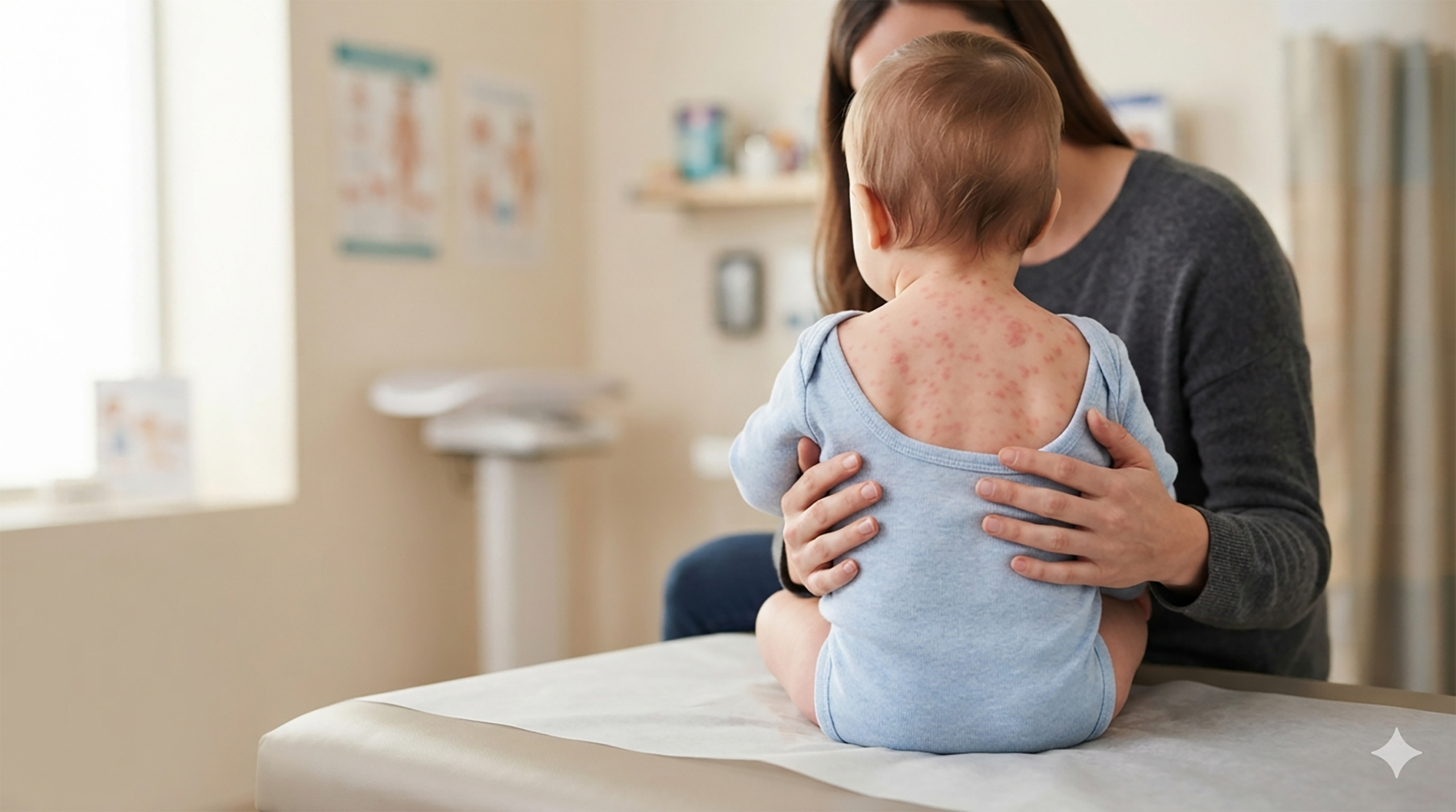
Twenty-six years after measles was eliminated from continuous transmission in the United States, one of the world’s most contagious diseases is making an alarming return. Health experts speaking during an American Community Media news briefing warned that the virus itself has not become more dangerous. Instead, declining vaccination rates, misinformation, and growing distrust of public health institutions have created the conditions for outbreaks that were once thought to be a thing of the past. More than 2,170 measles cases have already been reported this year, representing the highest number recorded in 35 years. Outbreaks have spread across several states, including Utah, Texas, and South Carolina, while adults are also becoming increasingly vulnerable as immunity gaps widen. Although measles was declared eliminated in the United States in 2000, experts stressed that elimination did not mean the disease disappeared worldwide. As long as measles continues circulating in other countries, imported cases remain a constant threat whenever communities allow vaccination rates to decline.
The Virus Has Not Changed. People Have.
Patsy Stinchfield, Executive Director of the Measles Collaborative and a nationally recognized pediatric nurse practitioner, said the resurgence has nothing to do with the virus becoming stronger or more aggressive. “Measles did not come back because the virus got stronger,” she explained. “The virus is the same as it has been. It came back because we let our guard down.” She noted that measles remains one of the most contagious diseases known to medicine, with a single infected person capable of spreading the virus to as many as 18 susceptible individuals. Public health experts estimate that approximately 95 percent of a community must be vaccinated to prevent outbreaks. However, immunization rates have steadily declined in many areas because of vaccine hesitancy, disruptions during the COVID-19 pandemic, and uneven access to healthcare. As these gaps have widened, measles has found opportunities to spread rapidly through under-vaccinated communities.
More Than a Childhood Rash
The panel challenged the common belief that measles is simply a mild childhood illness. Stinchfield explained that the virus enters through the nose and throat before spreading throughout the body, affecting the lungs, digestive system, brain, eyes, and immune system. The disease can lead to pneumonia, severe dehydration, hearing loss, blindness, brain inflammation, and even death. She warned that many people are unaware of another serious consequence known as immune amnesia, in which the virus weakens the body’s immune memory and leaves survivors more vulnerable to other infections for months or even years after recovery. “It is a gamble to go unvaccinated,” she said. While supportive treatments such as vitamin A may help reduce complications among hospitalized children, experts emphasized that vaccination remains the safest and most effective way to prevent infection and protect communities.
Minnesota’s Experience Shows the Power of Misinformation
One of the most compelling examples of how misinformation can influence public health came from Minnesota’s Somali community. Before the outbreak there, approximately 92 percent of Somali toddlers had received the MMR vaccine. Over time, organized anti-vaccine campaigns falsely linking the vaccine to autism convinced many parents to delay or refuse immunization. As vaccination rates declined, the community became vulnerable to a measles outbreak that could have been prevented. Stinchfield recalled conversations with parents who later regretted those decisions. “One parent told me, ‘My sister died of measles in Somalia. Had I known the M in MMR stood for measles, I never would have skipped it.'” Rather than criticizing families, healthcare workers partnered with Somali physicians, met with religious leaders in local mosques, held community meetings, and answered questions directly. “We listened first,” Stinchfield explained. “We answered questions. We addressed fears.” She said rebuilding trust required respect, patience, and meaningful partnerships with trusted community voices instead of simply providing medical facts.
Utah’s Outbreak Reveals Broader Challenges
Dr. Andrew Pavia, Chief of Pediatric Infectious Diseases at the University of Utah, described how his state’s year-long outbreak illustrates the challenges facing many parts of the country. Although Utah maintained relatively high statewide vaccination rates, several communities experienced dramatic declines, with some schools reporting vaccination rates as low as 30 to 40 percent. Distrust of government, lingering anti-vaccine attitudes, geographic isolation, and reductions in public health resources combined to create an environment where a single imported case quickly developed into a widespread outbreak. Pavia believes the official number of infections significantly underestimates the true extent of the problem because many families never sought testing after multiple members became ill. “We were undercounting by about two to fourfold,” he said, suggesting that the actual number of infections may have been several times higher than official reports indicated. He also noted that many younger physicians have never treated measles because the disease had become so uncommon, making diagnosis more difficult during the current resurgence.
Rebuilding Trust Before the Next Outbreak
Throughout the briefing, every speaker returned to one central message: rebuilding public trust is essential if the nation hopes to reverse the current trend. Scientific evidence alone is often not enough to overcome fear and misinformation. Public health leaders urged healthcare providers, faith leaders, educators, and community organizations to work together, meet families where they are, answer questions honestly, and communicate through trusted local voices. They emphasized that parents deserve compassionate conversations rather than judgment, especially when misinformation has shaped their decisions.
Responding to questions about vaccine hesitancy, Stinchfield said, “We need to build back trust, listen first, talk more about the dangers of the disease, reach parents where they are, show that we vaccinated our own children, that vaccines are safe and work to keep us protected.” Dr. Pavia added that one of the most important lessons learned from recent outbreaks is that relationships with communities must be built before an emergency occurs. “We need to work with communities before they have an outbreak so that there is good communication and trust,” he said. He concluded the discussion with a message that summarizes the responsibility shared by every member of society: “Vaccines are for WE, not just for ME.”
For immigrant communities, churches, schools, and families across America, the resurgence of measles serves as a reminder that diseases once believed to be under control can quickly return when trust erodes and misinformation spreads. Preventing future outbreaks will require more than medical advances. It will require honest conversations, community partnerships, and a renewed commitment to protecting one another through informed public health decisions.