

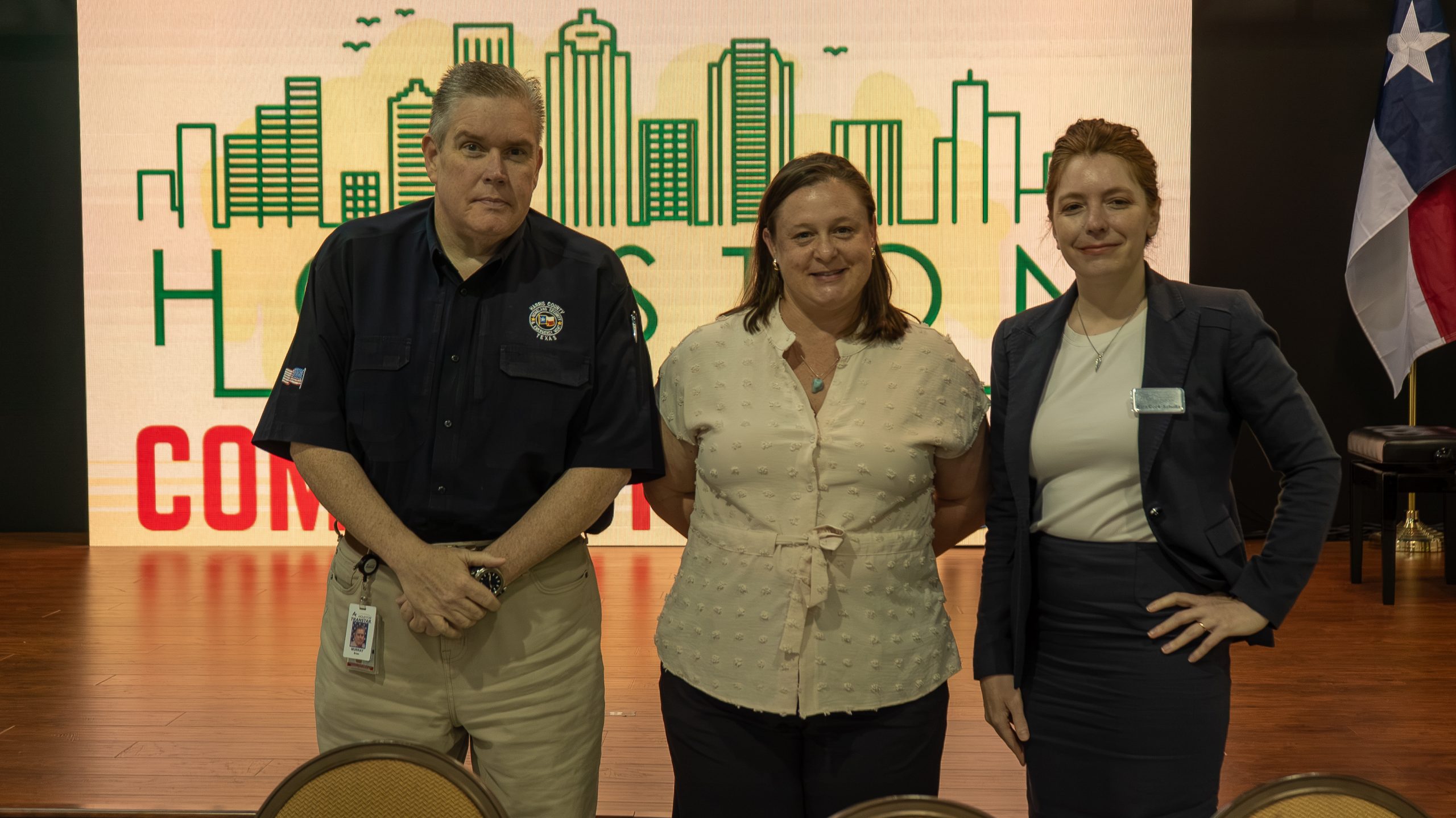
“No level of government can sustain five million people for a day,” Brian Murray warned. “If you’re not doing something to make sure that you’re prepared to take care of yourself and your family for seven to ten days, that was your first mistake.”
That message framed a Houston Community Media briefing where emergency management and nonprofit leaders urged Greater Houston residents to prepare long before hurricanes, floods, freezes, derechos, extreme heat or power failures arrive. Murray, deputy director and public information officer for the Harris County Office of Homeland Security and Emergency Management, said preparedness must become a year-round responsibility. “Stop thinking of preparedness as something that we do for six months of the year,” he said. “This is something we do 12 months a year.”
Prepare the Household First
Families should decide where they will go if ordered to evacuate, how relatives will communicate if phone service fails, who will assist children, seniors and people with disabilities, and how pets will be protected. Every household should keep seven to ten days of water, nonperishable food, medicines, flashlights, batteries, hygiene products, diapers, pet supplies, cash, and charged power banks.
Important telephone numbers and instructions should be written on paper because internet and cellular service may fail. Brooke Campbell of United Way of Greater Houston advised households to keep backup phone chargers “charged and ready to go.” United Way also provides regional preparedness plans in multiple languages.
Understand Insurance Before the Damage
Residents should review insurance coverage before disaster strikes. Murray cautioned that many people choose the cheapest policy without understanding deductibles, exclusions or coverage limits. Homeowners, renters and business owners should ask what is covered for wind, flooding, frozen pipes, roof damage, household contents and solar panels.

“Make sure you understand what your insurance covers,” Murray said. A percentage-based deductible can leave a homeowner responsible for thousands of dollars before insurance pays anything. Flood coverage may require a separate policy. Know what the policy will pay before water enters the home.
Receive and Obey Trusted Alerts
Residents should register for Ready Harris alerts and follow Harris County emergency management, the National Weather Service and local government. The Harris County Flood Control District also provides information about bayous, creeks and nearby flood risks.
Murray said official warnings are often available, but people miss them because they are overwhelmed by messages. “You need to put yourself in the position to get information,” he said. Families should share alerts with neighbors who may not use smartphones, speak English fluently, or receive digital notifications.
When officials order an evacuation, residents should leave early. Moderator Nakia reminded the audience that some people refuse to leave, then call for rescue when conditions have become too dangerous for first responders. Churches and neighborhood leaders can help arrange transportation and check on older or isolated residents.
Know Who to Call
Calling 211 connects residents with verified local services for food, shelter, transportation, utility assistance, mental health support and disaster recovery. Campbell described 211 as available “24/7, 365,” with callers matched to resources based partly on their ZIP code.
Residents may call 311 for city or county government services. After major events, disaster recovery centers may bring together FEMA, the Small Business Administration and nonprofit agencies. Small businesses can consult the Before, During and After resource for preparedness checklists, employee communications and disaster information.
Protect Vulnerable Residents
Kara Cook-Schultz of the Greater Houston Community Foundation encouraged families, churches and civic organizations to register vulnerable residents with the State of Texas Emergency Assistance Registry. “Make sure that the vulnerable people in your life and in your churches and in your civic clubs are signed up,” she said. Residents can call 211 for help registering.
Cook-Schultz also advised neighborhood organizations to walk their communities before disasters, identifying overflowing ditches, transportation barriers, isolated seniors and local nonprofits that can assist. This turns household readiness into community resilience.
Recovery Requires Partnerships
The Greater Houston Disaster Alliance, a partnership of United Way of Greater Houston and the Greater Houston Community Foundation, raises and distributes funds to community organizations after qualifying disasters. Campbell said the alliance supports nonprofits providing emergency financial assistance and home repair. “We consolidated efforts,” she said, creating one place for donors to give and one process for nonprofits seeking grants.
Government assistance alone may not make a family whole. Recovery can depend on insurance, savings, nonprofit support, community grants and low-interest SBA disaster loans. Preparation means knowing not only how to survive the emergency, but where to begin rebuilding afterward.
Houston has endured enough disasters to know that hope is not a plan. The best time to prepare is not when warning sirens sound. It is today.