

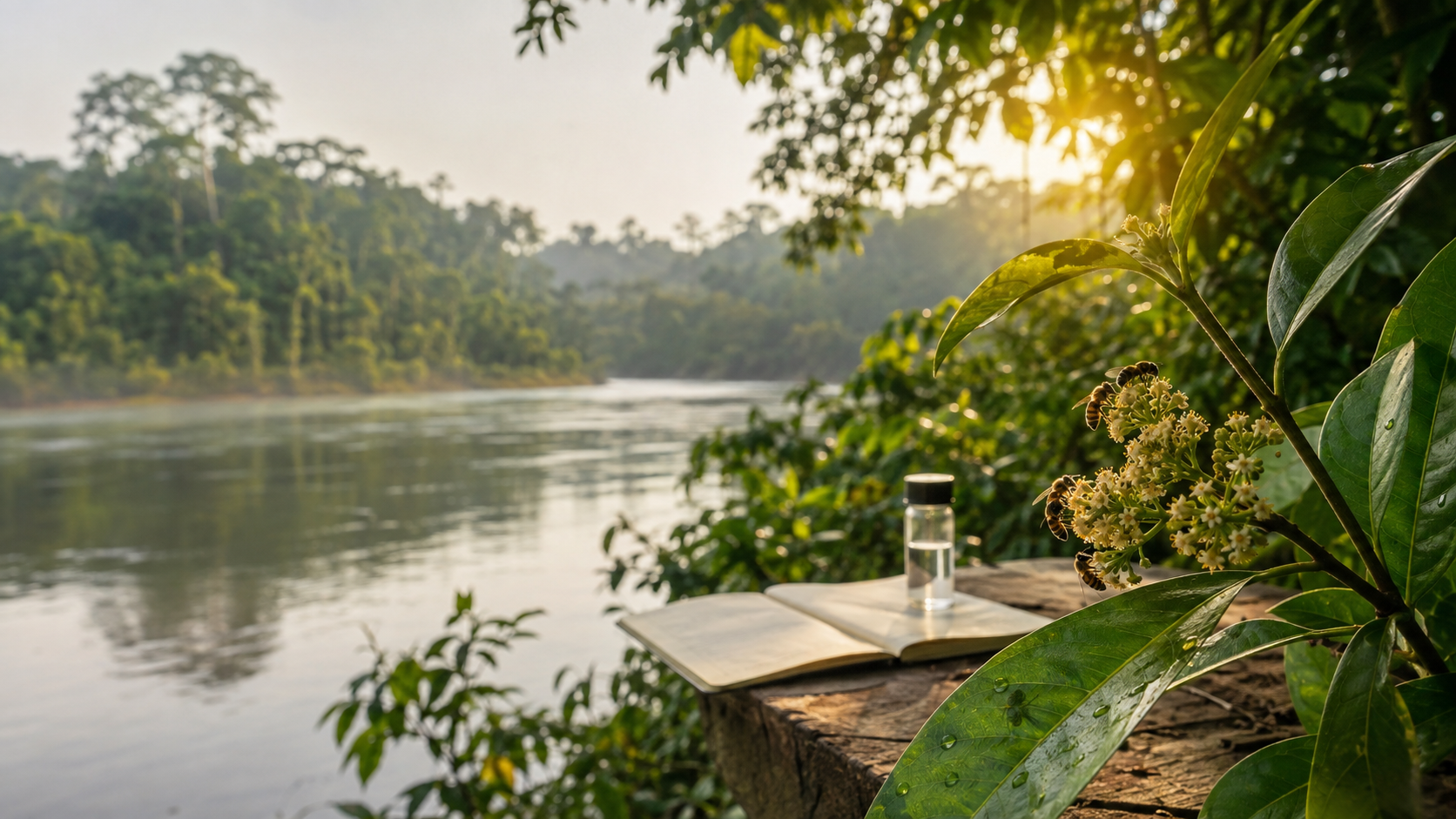
The future of the Amazon rainforest may depend, in part, on knowledge that has been preserved for thousands of years. That message emerged during an American Community Media briefing featuring Dr. Rosa Vásquez Espinoza, a Peruvian chemical biologist, National Geographic Explorer, author of The Spirit of the Rainforest and founder of Amazon Research Internacional. Vásquez Espinoza is working to bring modern scientific research together with the ancestral knowledge of Indigenous communities to protect biodiversity, strengthen local economies and help the world reconsider its relationship with nature. The Amazon contains roughly 10 percent of the world’s known biodiversity and plays an essential role in regulating climate and freshwater systems. Yet deforestation, mining, habitat loss and climate change are pushing parts of the rainforest toward dangerous ecological tipping points.

A Living Relationship
Vásquez Espinoza explained that many Indigenous cultures do not view human beings as separate from the natural world. Their traditions recognize a relationship in which people care for the land and the land, in return, sustains them. “If I as a human being have the rights to have access to a healthy forest and healthy waters, the animals around me and the plants around me do too,” she said. “Because if they are not healthy, me as a human being, I am not healthy.” This understanding is reflected in the growing rights of nature movement, which seeks legal recognition and protection for rivers, forests, animals and other natural systems. Vásquez Espinoza said this approach would not replace environmental laws. Instead, it would encourage governments and communities to move beyond responding to destruction after it occurs. “We cannot just be reactive anymore,” she said. “We need to think regeneration and regeneration now.”
The Small Bee With a Large Role
One of the most compelling examples of her work involves the stingless bee, an ancient pollinator found throughout tropical regions of Africa, Asia, Australia and the Americas. These bees help pollinate valuable crops, including coffee, cacao, avocados and blueberries. They also produce honey that has long been used medicinally by Indigenous communities. During the COVID-19 pandemic, several Amazonian communities told Vásquez Espinoza that they were relying on stingless bee honey to treat symptoms. The communities had reached similar conclusions independently, prompting her team to conduct chemical testing of the honey in Peru. Her research soon revealed that the importance of the bee extended far beyond medicine. Stingless bee conservation can support food production, traditional culture, education, women, young people and community livelihoods. “It really touched on culture, education, food, medicine, nutrition, livelihoods, empowerments,” she said. Her organization has also helped communities increase the economic value of native honey while protecting the forests and plants that the bees require, demonstrating that conservation and economic opportunity do not have to be competing goals.
Science Catches Up
Vásquez Espinoza challenged the assumption that ancestral knowledge is primitive or unscientific. Traditional practices were developed through generations of observation, experimentation and careful interaction with the environment. Modern laboratories may use different tools, she explained, but the underlying process of asking questions, testing possibilities and reaching conclusions can be remarkably similar. “In a way, modern science is catching up with ancestral knowledge,” she said. The Amazon has already contributed to medicine, agriculture, food, cosmetics and technology, yet much of its biological and cultural wealth remains undocumented. Losing the rainforest could therefore mean losing plants, organisms and knowledge capable of addressing future medical, environmental and food security challenges. She stressed that the people who have preserved this knowledge must be placed at the center of future scientific and conservation efforts so that the work is conducted equitably and respectfully.
A Global Responsibility
Although the Amazon may appear distant from Houston and other American cities, its influence reaches far beyond South America. Water released by its forests affects ocean conditions, rainfall and weather patterns. Its resources also enter international supply chains through coffee, cacao, wood, gold, medicines and other products. Vásquez Espinoza encouraged consumers to ask where their food and materials originate, noting that individual decisions may appear small but collective demand can influence how businesses operate. “To change the world, we need to first just focus on what’s around us and what can we change,” she said. Local gardens, responsible purchasing, public education and community conservation projects can all contribute to a larger movement, particularly when people act together.
Lessons in Stewardship and Community
Her message carries particular meaning for immigrant, multicultural and faith communities that understand the importance of heritage, elders and responsible stewardship. Amazonian communities have survived exploitation, displacement and broken trust while continuing to protect the well-being of generations not yet born. “The future is ancestral, too,” Vásquez Espinoza said. “There is so much that we can learn from our roots.” The Amazon’s lesson is ultimately one of interdependence. Protecting creation requires science, but it also requires humility, community, responsible choices and a willingness to listen to those who have cared for the land for generations.
Instagram Caption
What can ancient Indigenous wisdom teach modern science about protecting the Amazon rainforest? Dr. Rosa Vásquez Espinoza explains how native pollinators, community knowledge and responsible stewardship can help safeguard one of the world’s most important ecosystems. Read the full story on the Christian Herald website at mychristianherald.com.