

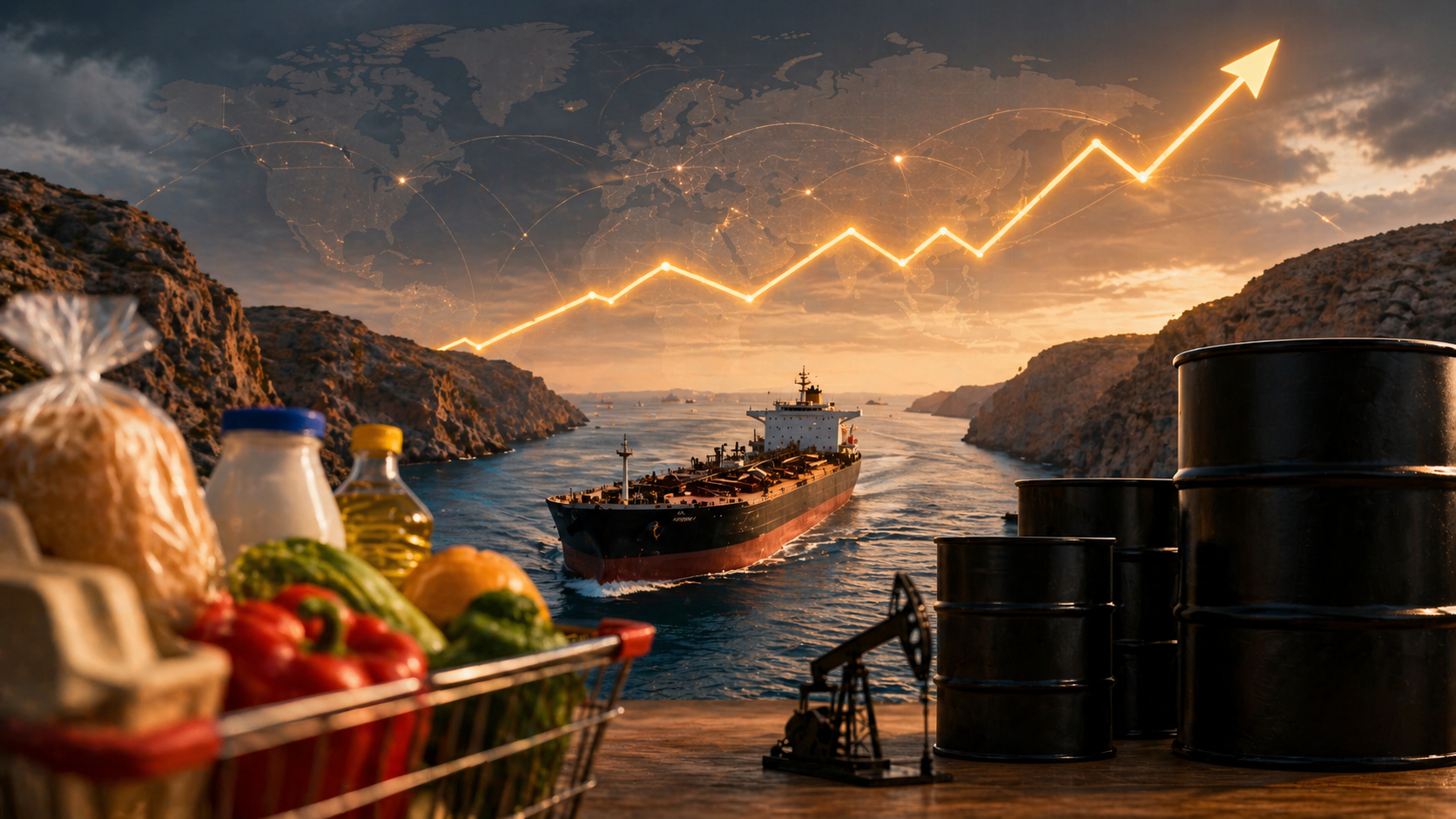
A global conflict thousands of miles away is now showing up in the most personal place for many families: the checkout line. During a recent national news briefing hosted by American Community Media, economic and policy experts warned that the ongoing U.S.–Iran war is fueling a surge in consumer costs, disrupting supply chains, and placing new pressure on households across the United States and around the world.
Understanding the Conflict Behind the Costs

Professor William O. Beeman, a Middle East expert at the University of Minnesota, explained that the geopolitical dynamics driving the crisis are deeply rooted in history and national identity. He emphasized that “the protection of Iranian national sovereignty… is an extremely fundamental part of the Iranian identity,” noting that this principle shapes Iran’s response to external pressure.
Beeman cautioned that attempts to force compliance through economic or military pressure are unlikely to succeed, stating clearly that “no amount of economic coercion… is going to deter the Iranian government.”
He also addressed the reopening of the Strait of Hormuz, a critical global oil route, explaining that the move was strategic and tied to broader regional developments rather than direct U.S. influence. According to Beeman, understanding Iran’s historical and cultural perspective is essential for any meaningful resolution. “In order to successfully negotiate with Iran, one must fully understand the Iranian perspective,” he said.
Oil Prices and the U.S. Economy
Dr. Ryan Nunn, Director of Research at the Budget Lab at Yale, focused on how the conflict is translating into economic pressure for American consumers. He noted that oil prices surged dramatically in the early stages of the conflict, rising from about $65 per barrel to nearly $100 per barrel, marking one of the largest increases in decades.

“When oil prices go up, gas prices go up,” Nunn explained, but he stressed that the effects extend far beyond fuel. His research shows that rising oil prices tend to increase inflation while slowing economic activity.
Even modest changes can have large consequences. Nunn estimated that the current shock could lead to “about 115 billion dollars less in output in a year” for the U.S. economy if sustained.
While he noted that the U.S. economy is more resilient today due to improved energy efficiency and increased domestic production, the burden is not evenly shared. “This kind of inflationary shock hits lower-income households especially hard,” he said, pointing to higher energy costs and fewer financial buffers among vulnerable families.
Global Ripple Effects and Human Impact
Dr. Anil Deolalikar, an economist at UC Riverside, broadened the discussion to the global stage, warning that the consequences are far more severe in developing nations. He explained that oil is not just a fuel source but a key input in countless products, including fertilizer, plastics, and pharmaceuticals.
“That’s why oil price increases… can lead to a sharp spike in general inflation,” he said, adding that such shocks historically trigger stagflation, where prices rise while growth slows.

Deolalikar highlighted the disproportionate impact on poorer countries, particularly in regions already facing food insecurity. Even small increases in food prices, he said, “can often mean the difference between life and death” for vulnerable populations.
Using India as a case study, he described how supply chain disruptions and rising energy costs are affecting daily life. With up to 90 percent of India’s cooking gas imports passing through the Strait of Hormuz, shortages have forced many households to revert to firewood and kerosene.
The consequences extend beyond households. Farmers are struggling with rising fertilizer and fuel costs, while urban workers are losing income as small businesses shut down. Deolalikar warned that poverty levels could rise sharply, with millions of people pushed back into financial hardship.
What Comes Next for Consumers
Despite recent fluctuations in oil prices, experts caution that relief may not come quickly. Nunn explained that price changes take time to filter through the economy and may not immediately translate into lower costs at the pump or grocery store.
Historically, oil shocks can take more than a year to fully stabilize, meaning consumers may continue to feel the effects for some time.
Deolalikar offered a sobering conclusion, noting that even if prices decline, “the damage to the poorest countries… has already been done.”
A Global Issue With Local Consequences
The briefing underscored a key reality: global conflicts are no longer distant events. They are deeply interconnected with everyday life, shaping the cost of living, economic stability, and even food security.
As policymakers navigate complex geopolitical decisions, families across the United States and beyond are already experiencing the consequences. The challenge ahead will be not only to resolve the conflict but also to manage its long-term economic impact on the most vulnerable populations.