

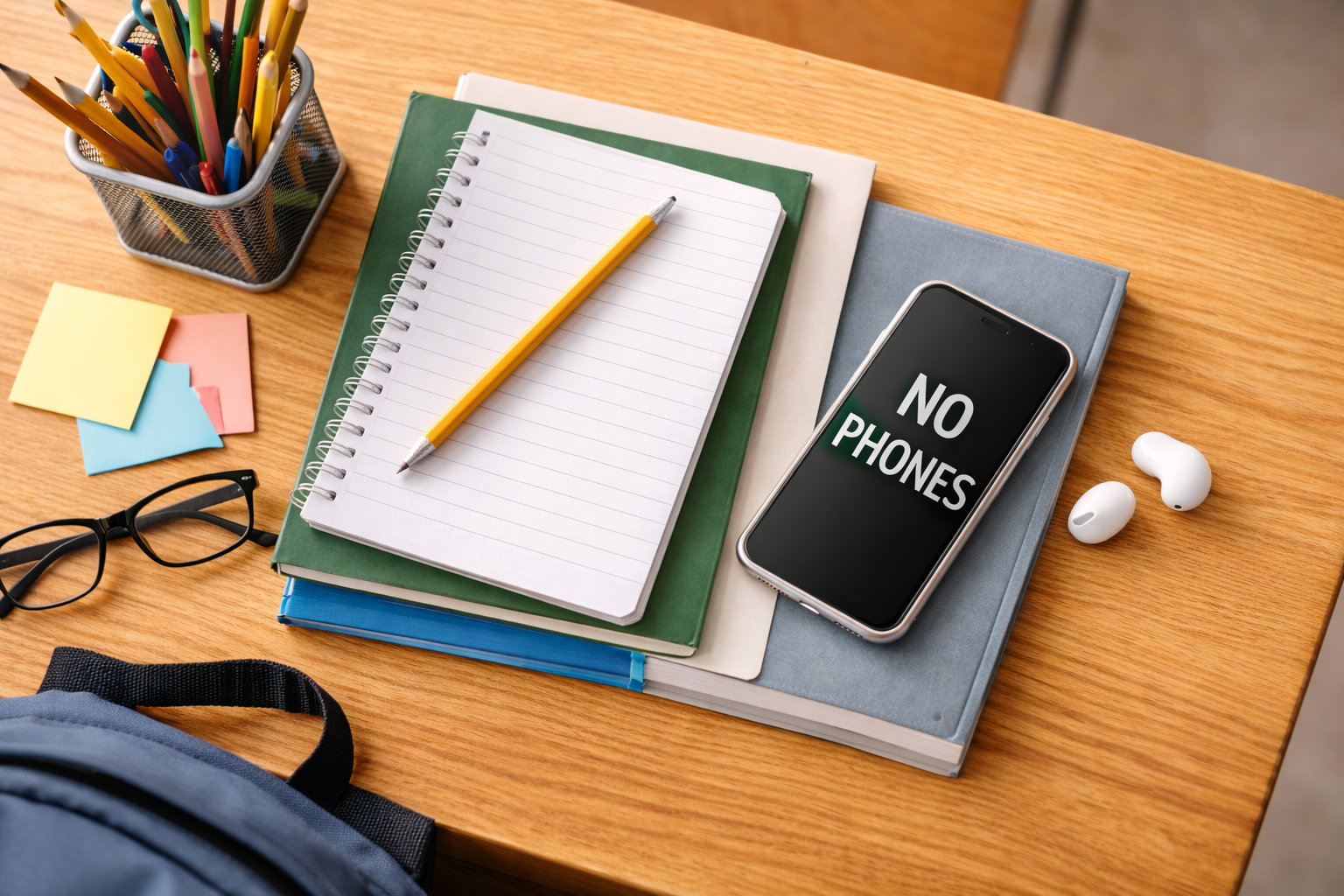
“Cell phone bans can work… but implementation matters.”
That was the central message from a national news briefing hosted by American Community Media, where researchers, educators, and students explored whether banning cell phones in schools is improving academic outcomes or creating new challenges for students and families.
Growing Concerns Over Student Phone Use
Moderator Sunita Sohrabji opened the discussion by highlighting the growing influence of smartphones and social media on young people, noting that teens and young adults now spend an average of 4 to 6 hours daily on their devices for social media, gaming, and casual communication. She also pointed out that 33 states have already enacted policies requiring school districts to implement some form of cellphone restriction, reflecting a nationwide push to address distractions and mental health concerns tied to excessive phone use.
Sohrabji emphasized that the issue has gained urgency following recent legal action against major technology platforms, reinforcing concerns that digital environments are contributing to addiction and emotional distress among youth.
Research Points to Academic Gains

Dr. Timothy Pressley, Associate Professor of Psychology at Christopher Newport University, presented findings from a global review of studies examining the effects of cellphone bans in schools, explaining that while research is still developing, early evidence shows measurable academic benefits. “Our knowledge on the impact is still growing, and we still need a lot more research,” he said, noting that many studies indicate improved academic performance, especially among lower-achieving and disadvantaged students, once restrictions are put in place.
Pressley explained that stricter “bell-to-bell” bans tend to produce the strongest outcomes by minimizing distractions throughout the entire school day, leading to better classroom engagement. At the same time, he cautioned that results are not always immediate, citing a Florida study in which no academic improvement was observed in the first year, but gains emerged in the second year as enforcement became more consistent and students adjusted to the policy.
He also addressed mental health findings, noting that while some studies show reductions in bullying, overall results remain mixed. “It’s very hard to draw any conclusions about the mental health benefits,” he said, explaining that continued phone use outside school limits the broader impact of in-school restrictions.
Safety, Communication, and Practical Concerns
Beyond academics, Pressley acknowledged concerns raised by parents and educators, particularly regarding communication during emergencies and daily logistics. He explained that traditional systems, such as contacting students through school offices and emergency alert systems, remain effective, adding that direct phone use during crises could sometimes interfere with emergency response efforts. He also noted that students with special needs or health conditions can be accommodated through individualized education plans, ensuring they retain necessary access to their devices when required.
Case Study Shows Classroom Improvements

Dr. David Marshall, Associate Professor of Educational Research at Auburn University, shared findings from a case study conducted in a Virginia school district that implemented a full-day cellphone ban. He highlighted the widespread presence of smartphones among students, stating that “95% of students… have access to a smartphone, and the majority admit that they use it more than they would like.”
Following implementation, teachers reported significant improvements in classroom environments, including fewer distractions and increased student focus. Marshall noted that educators also experienced reduced workloads because they spent less time managing disruptions caused by phone use. In addition, teachers observed stronger social interactions among students, with more conversations taking place in hallways and cafeterias, creating a more engaged school environment overall.
Despite these gains, Marshall emphasized that consistency is critical to success, explaining that uneven enforcement across classrooms can undermine the effectiveness of such policies and frustrate teachers. He stressed that strong administrative support and clear communication are essential for ensuring that policies are applied fairly and consistently.
Students Offer a Different Perspective

While research findings highlighted potential benefits, student speakers provided a contrasting view, arguing that strict bans may not address the root of the issue. Kai Bwor, a senior at Granada Hills Charter School, openly discussed her own reliance on her phone, saying, “I wake up, and I check that little screen of mine… it rewards my brain and… flushes me with a sense of dopamine.” She explained that social media plays a significant role in shaping identity and self-image, adding that online platforms can intensify insecurities and contribute to issues like body dysmorphia.
Despite acknowledging these challenges, Bwor opposed strict bans, arguing that overly rigid policies may lead students to find ways around the rules. “Strict parents can create sneaky kids,” she said, advocating instead for structured guidelines that allow students to learn self-discipline and responsible technology use over time.
Nicholas Torres, a recent high school graduate from Houston, also opposed cellphone bans, emphasizing the practical role phones play in modern education. “During class time, we use them… for assignments… ” It’s rarely on paper,” he said, noting that smartphones are often integrated into daily learning activities. He also pointed to safety concerns, explaining that having access to a phone provides reassurance during emergencies.
At the same time, Torres acknowledged the dual nature of smartphone use, stating that phones can both alleviate loneliness through connection and contribute to isolation when overused.
A Debate Far From Settled

The discussion ultimately underscored a broader challenge facing schools across the country: balancing the need to reduce distractions with the responsibility to prepare students for a technology-driven future. Marshall noted that while cellphone bans are not a complete solution, they can improve focus, engagement, and classroom dynamics when implemented effectively.
In closing, both experts and students agreed on one key point: the need for balance. While research suggests that restrictions can enhance learning environments, students emphasized the importance of teaching responsible use rather than relying solely on prohibition. As schools continue to refine their policies, the debate over cellphone bans remains ongoing, reflecting the complexities of education in the digital age.