

Technology, Immigration Enforcement and Privacy
The growing use of artificial intelligence, automated license plate readers, data brokers and other digital surveillance tools is changing the landscape of immigration enforcement in the United States, raising questions about privacy, civil liberties and how government agencies obtain and use personal information. Those concerns were the focus of an American Community Media briefing titled “The Expanding Surveillance Dragnet,” which brought together attorneys, researchers, data specialists and community organizers to examine how surveillance technology is being used and what it could mean for immigrant communities and the broader public. The briefing included experts Stephen Manning, Denise Bell, Steven Hubbard and Saira Hussain, followed by a second panel featuring Jonathan Paz, Brian Hofer, Kimberly Woo, Lena Graber and Abdi Soltani.
What Is the Surveillance Dragnet?
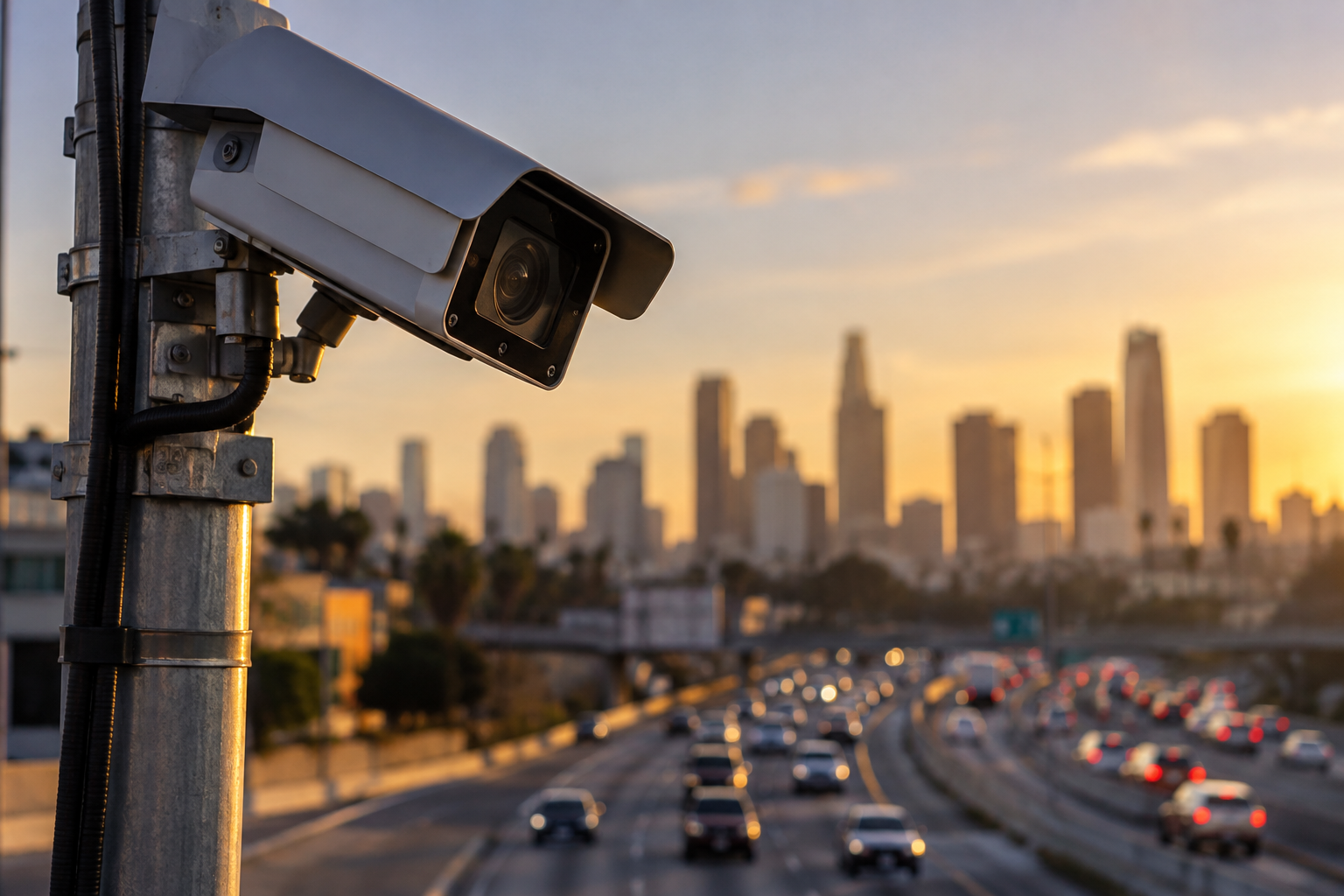
Speakers described a system that goes far beyond traditional cameras. Automated license plate readers, facial recognition, cell phone location information, government databases, commercial data and artificial intelligence can increasingly be combined to help agencies identify individuals, establish travel patterns and locate people. Recent research from the American Immigration Council has also documented an expansion of artificial intelligence in immigration enforcement, reporting that active immigration-related AI use cases within the Department of Homeland Security increased between late 2024 and early 2026.
Jonathan Paz, a former Flock Safety employee and former Waltham, Massachusetts, city councilor, told the briefing that he initially believed automated license plate readers could serve legitimate public safety purposes such as finding missing children or recovering stolen vehicles. His perspective changed while working in government affairs for the company. Paz said companies operating in the surveillance industry have become increasingly powerful and argued that “their main role is to surveil the public.” He also described concerns about how quickly cameras can be installed and how difficult oversight can become once surveillance technology is incorporated into local law enforcement systems.
Brian Hofer, executive director of Secure Justice, emphasized that license plate readers should not be considered isolated devices. Modern systems can combine information from cameras with other public and private data sources. “These have become giant national ecosystems that really can track you throughout the country,” Hofer said. He argued that the ability to merge data from different sources, particularly when paired with AI analysis, can reveal patterns of travel, relationships and behavior that would previously have required significantly more investigative effort.
Immigrant Communities Feel the Impact
The briefing repeatedly returned to the potential impact on immigrant families. Lena Graber of the Immigrant Legal Resource Center explained that technology is only one part of the immigration enforcement system. She said more than half of ICE arrests occur after individuals are transferred or connected to the agency through other law enforcement authorities, making cooperation between local agencies and federal immigration officials another important part of the enforcement picture.
Graber also warned that AI can make previously disconnected information more useful to enforcement agencies by rapidly analyzing large quantities of data. “I think surveillance is not a technology story. It’s a political story,” she said, emphasizing that decisions about how technology is purchased, regulated and deployed remain human and governmental decisions. The Immigrant Legal Resource Center’s updated 2026 state map similarly notes that state and local law enforcement policies can significantly affect how immigration enforcement operates across different jurisdictions.
Community Organizing and Local Oversight
Kimberly Woo, a community organizer with Services, Immigrant Rights and Education Network, focused on grassroots responses to surveillance technology. She described coalitions involving immigrant organizations, religious groups, health organizations and community residents that have pushed local governments to reconsider surveillance contracts. “Mass surveillance really affects everyone,” Woo said, noting that license plate cameras may collect information on motorists regardless of whether they are suspected of wrongdoing.
Woo said community campaigns have relied on public meetings, education, records requests and coalition building. “We know that we are stronger together,” she said while describing organizing efforts across several Bay Area communities.
A Broader Question of Privacy
Abdi Soltani of the ACLU of Northern California placed the debate within the broader question of government power and personal privacy. He said surveillance should concern citizens and noncitizens alike because the technologies can track ordinary movement through communities. “Every person deserves the freedom of movement,” Soltani said, describing the ability to travel without continuous government tracking as a basic question of liberty.
Soltani also challenged journalists to continue examining how surveillance systems are purchased, connected and used. “Journalism is a key strategy,” he said, because reporting can bring systems designed to operate quietly into public view and democratic oversight.
For immigrant and faith communities, the discussion points to a larger challenge: understanding how rapidly changing technology intersects with privacy, public safety, immigration law and constitutional protections. As surveillance tools become more sophisticated, the central question is no longer simply whether technology can collect information, but who has access to that information, how it is used and what safeguards exist when powerful databases and artificial intelligence come together.