
A Climate Event Already Breaking Records
A powerful El Niño developing in the tropical Pacific could become one of the strongest ever recorded, raising the risk of extreme heat, flooding, drought, coastal damage and other weather disruptions in the United States and around the world. During an American Community Media briefing, climate scientist Dr. Daniel Swain said the event has already reached remarkable levels and is expected to strengthen in the coming months. “El Niño has arrived, and it’s continuing to get stronger,” Swain told journalists. He explained that El Niño is a natural climate process caused by unusually warm water in the eastern tropical Pacific Ocean. Still, this year’s event is developing against the backdrop of a warming planet. Swain, a climate scientist with the University of California Agriculture and Natural Resources and a research partner at the NSF National Center for Atmospheric Research, specializes in droughts, floods, storms and wildfires.
The measurements are already extraordinary. Swain said ocean temperatures in a critical El Niño region were exceeding historical observations for the same time of year. Forecast models also pointed toward continued strengthening. “There is no formal definition of a super El Niño,” he explained, saying the phrase is generally used to describe a very strong event. But the current projections could go considerably further. “I would suggest maybe we need a new category of extreme El Niño, because the forecast for this year is genuinely extreme.” He said the event itself is likely to peak between October and December, perhaps around November, while many of its most significant effects outside the tropics may be felt from December through March or later.
Climate Change Raises the Stakes
El Niño temporarily releases stored heat from the tropical ocean into the atmosphere, increasing global temperatures. This time, Swain cautioned, that natural warming will be added to long-term human-caused climate change. The combination could produce another period of record-breaking global temperatures while intensifying the water cycle. “In the next 6 to 12 months,” he said, the world will likely experience an increase in record extreme temperatures as well as unusually intense rainfall or lack of rainfall. That means some places may face floods while others endure drought and wildfire. Swain emphasized that the effects will vary dramatically by region, with tropical forests such as Indonesia and potentially the Amazon particularly vulnerable to drought and wildfire. At the same time, portions of Africa could experience either flooding or drought.
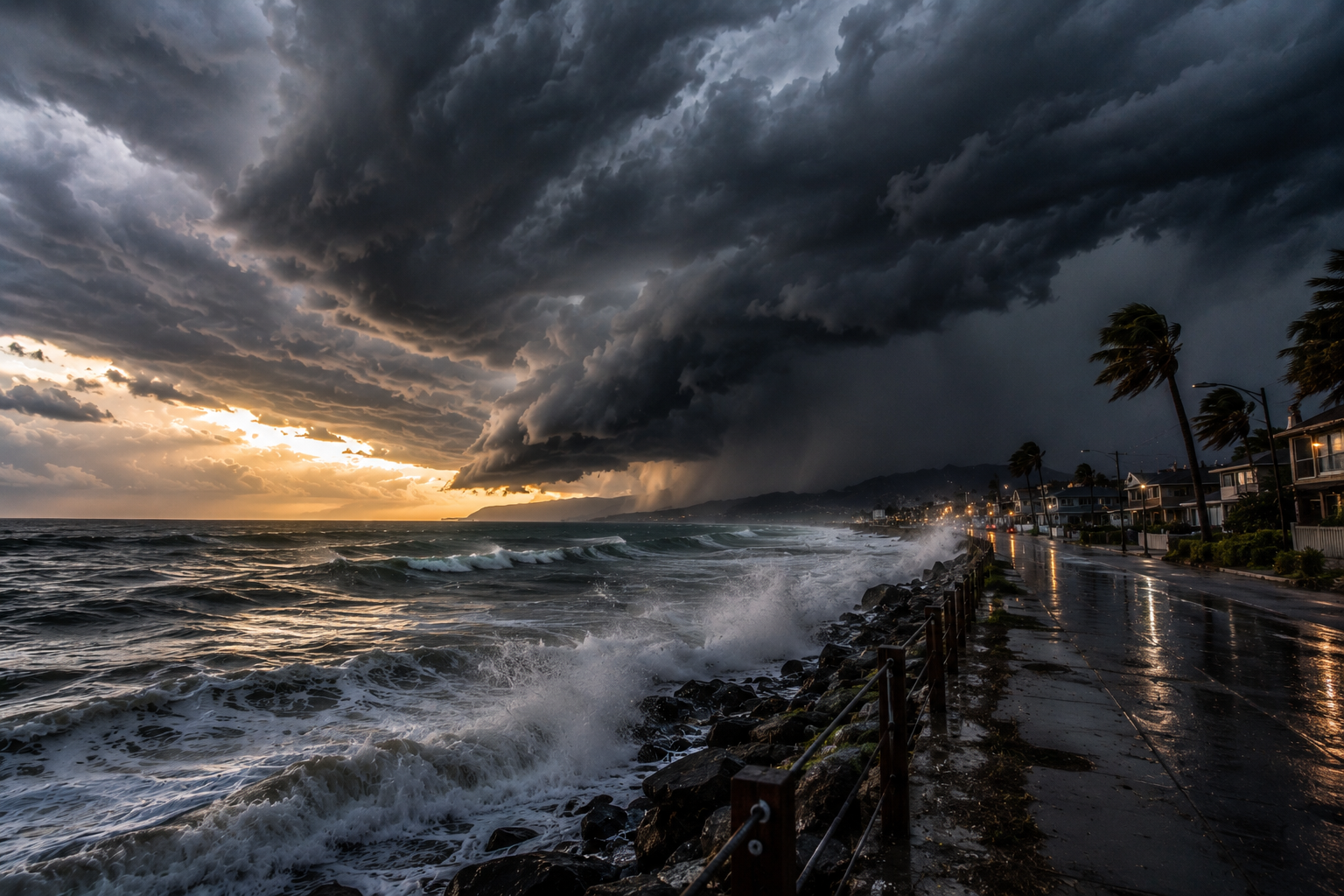
California is among the areas facing significant risks. Warmer coastal waters can make heat waves more dangerous by increasing humidity. At the same time, temporary sea-level rise associated with El Niño could combine with winter storms, high tides and long-term sea-level rise. Swain warned that low-lying communities, bays, estuaries, beaches, transportation corridors and coastal infrastructure could face increased flooding and erosion. Southern and central California are also likely to experience a wetter-than-average winter. “El Niño doesn’t guarantee a wet winter in California,” Swain said, but an event of this magnitude “likely increases the amount of precipitation that California will experience this winter” and raises the possibility of inland flooding.
Questions About Communities and Water
The risks prompted journalists to ask whether governments should be acting now. Nestor Fantini of Hispanic LA asked whether the approaching El Niño should be treated as “a strategic regional threat to LA, requiring an immediate surge in disaster prevention resources.” Swain said there was already evidence of preparation, including the construction of large sand berms along some Southern California beaches to protect against higher ocean levels and waves. He stressed that the strongest impacts remain months away, providing an important opportunity for preparation rather than panic. “This is not an imminent disaster,” he said, “It’s also not a guaranteed disaster.” Still, he said officials have enough information to justify taking precautionary steps now.
In the Southwest, Alvin Galloway raised concerns about the Colorado River and asked how El Niño could affect a drought that has lasted more than 20 years, including water levels at Lake Mead and Lake Powell. “How will the super Niño affect the drought?” Galloway asked. Swain called it closer to a “$1 trillion question” because of the enormous stakes. A wetter winter could provide temporary relief in the Lower Colorado Basin, including Arizona. Still, Swain warned that even an exceptionally wet year would not solve the region’s long-term water imbalance. Demand already greatly exceeds available supply, and climate change continues to contribute to long-term aridification.
Health Risks Could Follow Floods and Drought
Health concerns also emerged during the briefing. American Community Media journalist Sunita Sohrabji asked, “Are we going to see a rise in bacteria-related illnesses that are activated by heat?” Swain said the greater concern may come from disruptions to the water cycle. Floods and severe drought can increase waterborne disease risks, especially where clean-water and treatment systems are fragile. In the United States, he identified rural and tribal communities without consistently reliable water infrastructure as among those potentially more vulnerable. He also raised concern about Valley fever, a soil-borne fungal illness found in California, Arizona and other parts of the Southwest. Wet conditions can encourage the fungus to grow, followed by opportunities for it to spread when soil becomes hot, dry and dusty.
Preparation, Not Panic
Moderator Sandy Close said the unusually strong participation in the briefing reflected the growing urgency journalists and communities feel about the subject. Closing the discussion, she called for “doing a better job of covering this larger topic,” recognizing that residents will need clear information rather than sensationalism as conditions develop. Swain offered a similar caution to journalists, particularly about exaggerated headlines. The threat, he said, is serious enough without overstating it. “We really are headed for a very strong El Niño event, potentially, and maybe even most likely the strongest on record,” he said. Yet the message was not one of helplessness. “We can’t prevent El Niño,” Swain said, “but we can slow and then halt climate change.” And when powerful natural events arrive, communities can prepare, strengthen infrastructure, understand flood risks and take practical measures that make their consequences less severe.