


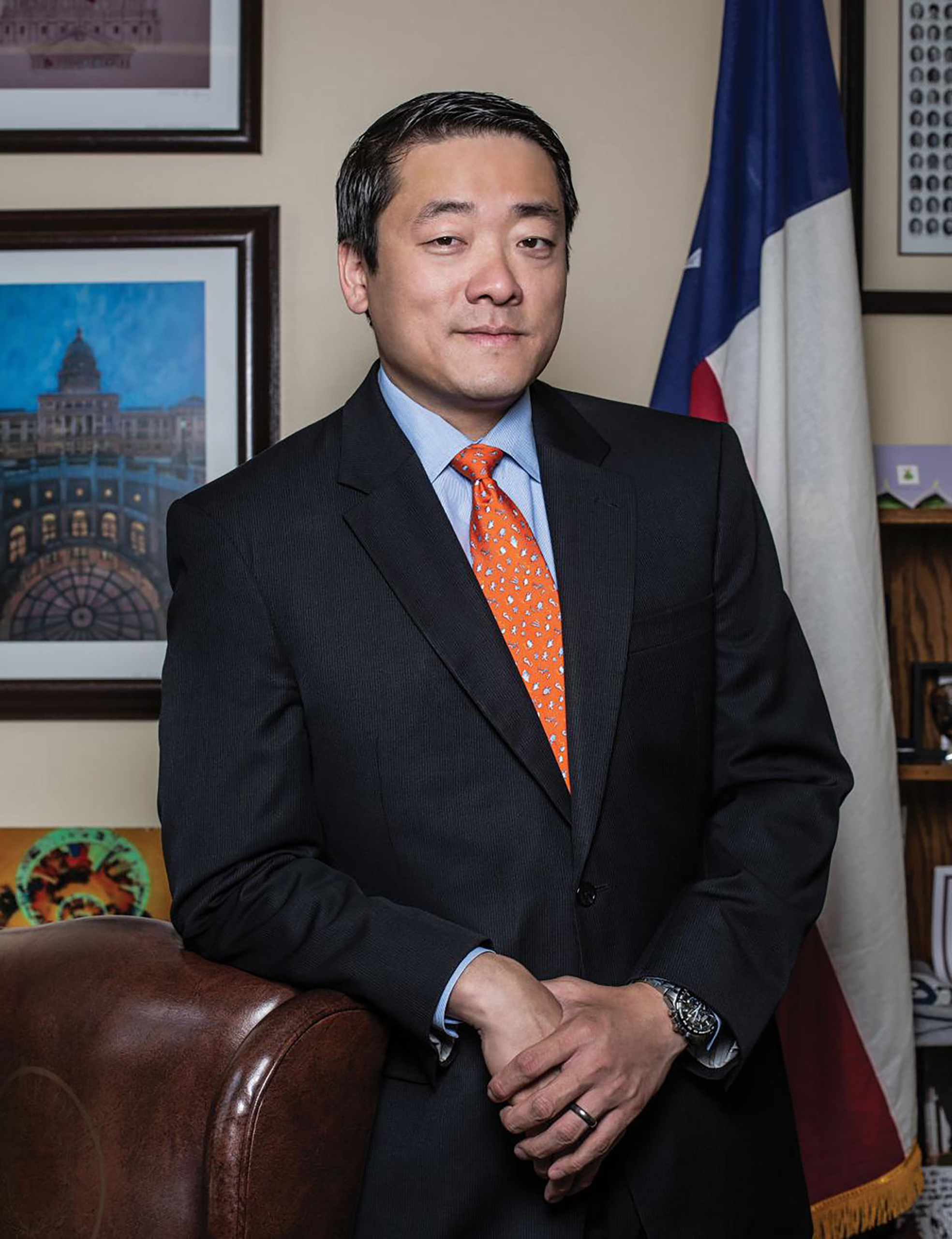
Texas State Representative Gene Wu is urging Texans to rethink how the state treats children who struggle in school, arguing that investing in education, mental health, and rehabilitation is far more effective than relying on punishment. Speaking during a Houston Community Media news briefing titled Who Cares About Our Youth?, Wu said the future of Texas depends on whether lawmakers and communities are willing to address the root causes of youth challenges rather than simply reacting after problems occur.
A System That Should Build Children, Not Break Them
The discussion opened with moderator Sandy Close, executive director of American Community Media, who said the interview series was designed to place the needs of young people at the center of public policy conversations. She noted that while headlines often focus on political debates surrounding schools, the deeper question is whether lawmakers are paying enough attention to the everyday challenges facing children and teenagers.
Representative Wu, who has represented House District 137 since 2013 and has spent years working on juvenile justice and child welfare issues, said his passion began while serving as a prosecutor in the Harris County District Attorney’s Office. Rather than seeing children simply as offenders, he witnessed judges, prosecutors, and defense attorneys working together to understand why young people entered the justice system in the first place.
“I saw prosecutors and defense attorneys and judges working together to fix what is wrong with the child, and not just say, ‘How much can we punish this child for acting the way that they did? Wu said.
He argued that many of the problems appearing in schools and juvenile courts are not created by children alone but by failures within society itself. “A lot of the problems that we see in society, that we see in the criminal justice system, that we see in delinquent children, are problems that we created, or problems that our society helped create, and we put no resources into fixing these problems.”
Wu stressed that Texas law emphasizes rehabilitation rather than punishment for juveniles. “The word punishment is not used in any context for juveniles. The word is rehabilitation. Every single thing that we do in a state by law should and must go towards rehabilitation.”
Education Funding at the Center of the Crisis
Throughout the briefing, Wu repeatedly returned to what he believes is the state’s greatest challenge: an underfunded education system that is increasingly unable to meet students’ academic, emotional, and behavioral needs.
“We simply do not have an education system that deals with kids who come from troubled homes, who come from impoverished backgrounds, who have mental health issues, who have behavioral issues,” he said.
According to Wu, larger class sizes, school closures, and a growing emphasis on standardized testing are leaving teachers overwhelmed and students behind. He warned that schools often lack the counselors, therapists, and support staff necessary to help struggling students before problems escalate.
“What we’re more interested in is not, ‘Do we punish this child?’ but, ‘How do we keep this child from coming back into the system?’ That’s the most important question.”
Wu also expressed concern that disciplinary practices have changed dramatically over the years. Rather than sending students to a principal’s office for minor behavioral issues, he said many schools now rely heavily on law enforcement.
“Back when I was in school, there were no cops in school,” he said. “Now kids are getting arrested.”
He argued that police officers are being placed in situations better suited for educators, counselors, and mental health professionals, creating unnecessary confrontations between students and authority figures.
Communities Must Raise Their Voices
When asked how legislators could be persuaded to prioritize youth mental health and education funding, Wu pointed directly to the public.
“The way this will ever change is because of the public,” he said. “The way that they’re able to get away with this is because the public’s not paying attention.”
Wu encouraged journalists, parents, and community organizations to continue highlighting these issues so they become impossible for elected officials to ignore. He also challenged citizens to demand accountability from lawmakers.
“I want our citizens to start believing that this government works for you, or it’s supposed to,” Wu said. “Start treating it that way. Demand it. Go to your elected officials and say, ‘Tell me what you’re going to do to fix this.'”
During the question-and-answer session, audience members asked about student debt, artificial intelligence, and preparing young Texans for future careers. Wu acknowledged that Texas must improve educational quality if students are to compete successfully in a changing workforce.
He also offered practical advice for young people who want to make a difference in public policy.
“My three steps for everything are: educate, organize, activate,” he said. “Educate everyone you can. Organize people who care. Then activate them to make change.”
A Call to Invest in the Next Generation
As the briefing concluded, Sandy Close encouraged journalists to continue reporting on youth issues, citing shrinking access to school counselors, larger class sizes, and reduced support services as stories that deserve greater public attention.
Wu agreed that meaningful progress will require sustained community engagement. While acknowledging the challenges facing Texas schools and juvenile justice programs, he expressed hope that improvement remains possible.
“There is a ray of hope because we used to be better,” Wu said. “We can go back to that. We need the community to come out and say, ‘Let’s go back to that. That was really good.'”
The conversation served as both an assessment of the current challenges facing Texas youth and a call for greater public involvement. Whether through stronger schools, expanded mental health services, or more thoughtful juvenile justice policies, Wu argued that investing in children today will determine the strength of Texas tomorrow.