


A Growing Problem in Houston Schools
Mental health challenges among Houston’s youth have reached levels that educators, researchers, and counselors say demand immediate attention. During a recent Houston Community Media briefing, experts shared troubling data and firsthand experiences that paint a picture of a generation struggling with anxiety, depression, trauma, bullying, substance abuse, and growing uncertainty about the future. While mental health concerns among young people have been rising nationally for several years, new findings from Houston schools suggest that the problem is becoming increasingly severe at the local level. Speakers at the briefing emphasized that students are not only experiencing emotional distress at alarming rates, but many are actively seeking help and asking adults to pay attention to what they are going through. Their message was that mental health is no longer a secondary issue in education. It is a central issue affecting student success, family stability, and the long-term health of the community.

Katharine Neill Harris, a fellow in drug policy at Rice University’s Baker Institute for Public Policy, presented findings based on data collected through the Centers for Disease Control and Prevention’s Youth Risk Behavior Surveillance Survey, which includes responses from Houston ISD students. The numbers revealed a disturbing trend. Nearly 42 percent of students surveyed reported feeling sad or hopeless to the point that they stopped participating in normal activities, representing a substantial increase over previous years. Even more troubling was the finding that 14 percent of students reported attempting suicide in 2023. Harris noted that rates of emotional distress were particularly high among female students and LGBTQ youth. She also pointed to increases in bullying, feelings of insecurity at school, and growing concerns about substance use. While some encouraging trends were observed, including decreases in alcohol consumption and cigarette smoking, the survey found significant concerns involving prescription drug misuse and experimentation with dangerous substances.
Funding Challenges and Limited Resources
The findings become even more concerning when viewed alongside the challenges facing schools and communities as they attempt to respond. Harris explained that reductions in federal, state, and local funding have created obstacles for mental health programs at precisely the time they are needed most. Schools are being asked to address increasingly complex emotional and behavioral issues while operating with fewer resources. The shortage of counselors remains one of the most visible examples. National recommendations call for one counselor for every 250 students, yet Houston ISD has reported ratios exceeding 500 students per counselor. Harris argued that while innovative programs and community partnerships are valuable, they cannot fully replace the consistent presence of trained mental health professionals who know students personally and can identify problems before they become crises. She warned that without sustained investment and strong leadership, the trends reflected in the data could continue to worsen.
Houston ISD officials acknowledge both the scale of the challenge and the urgency of the response. Najah Callander, Deputy Chief of Family and Community Partnerships for Houston ISD, described how student needs have evolved dramatically in recent years, particularly since the COVID-19 pandemic. District surveys found that more than half of students reported experiencing some form of mental health challenge. Many identified emotional wellness as one of their most important unmet needs. Callander said one encouraging development is that students today are increasingly willing to advocate for themselves. Rather than waiting for adults to recognize their struggles, many are actively asking for help and directing attention to the issues they face.

Sunrise Centers Offers Support for Families
One of Houston ISD’s primary responses has been the expansion of Sunrise Centers, community hubs designed to provide comprehensive support for students and families. Located throughout the city, the centers offer access to food assistance, healthcare referrals, counseling services, educational programs, after-school activities, and other essential resources. The goal is to address not only mental health concerns but also the social and economic pressures that often contribute to emotional distress.
Callander explained that many families face immediate challenges involving housing, food insecurity, transportation, and healthcare. Until those basic needs are addressed, mental health treatment can become difficult to prioritize. Last year alone, Sunrise Centers delivered more than 2,700 hours of mental health services and worked with hundreds of students requiring ongoing support. Through partnerships with multiple mental health organizations, the centers have become an important safety net for families across the district. Houston ISD has also partnered with Hazel Health, a telehealth provider that allows students to access mental health services both during and outside school hours. Officials believe these partnerships are helping to close some gaps in care, although the demand for services continues to exceed available resources.
Listening to the Voices of Young People
While statistics help define the scope of the problem, therapist Sarah Howell provided a deeply personal perspective drawn from years of working directly with vulnerable youth. A former Houston ISD social worker who now operates a community-based counseling practice, Howell has spent much of her career supporting immigrant students, refugee families, trafficking survivors, and young people dealing with severe trauma. She described hearing stories that many adults would struggle to comprehend, yet she emphasized that one common theme appears repeatedly, regardless of a student’s background. Young people want to be seen, heard, and understood.
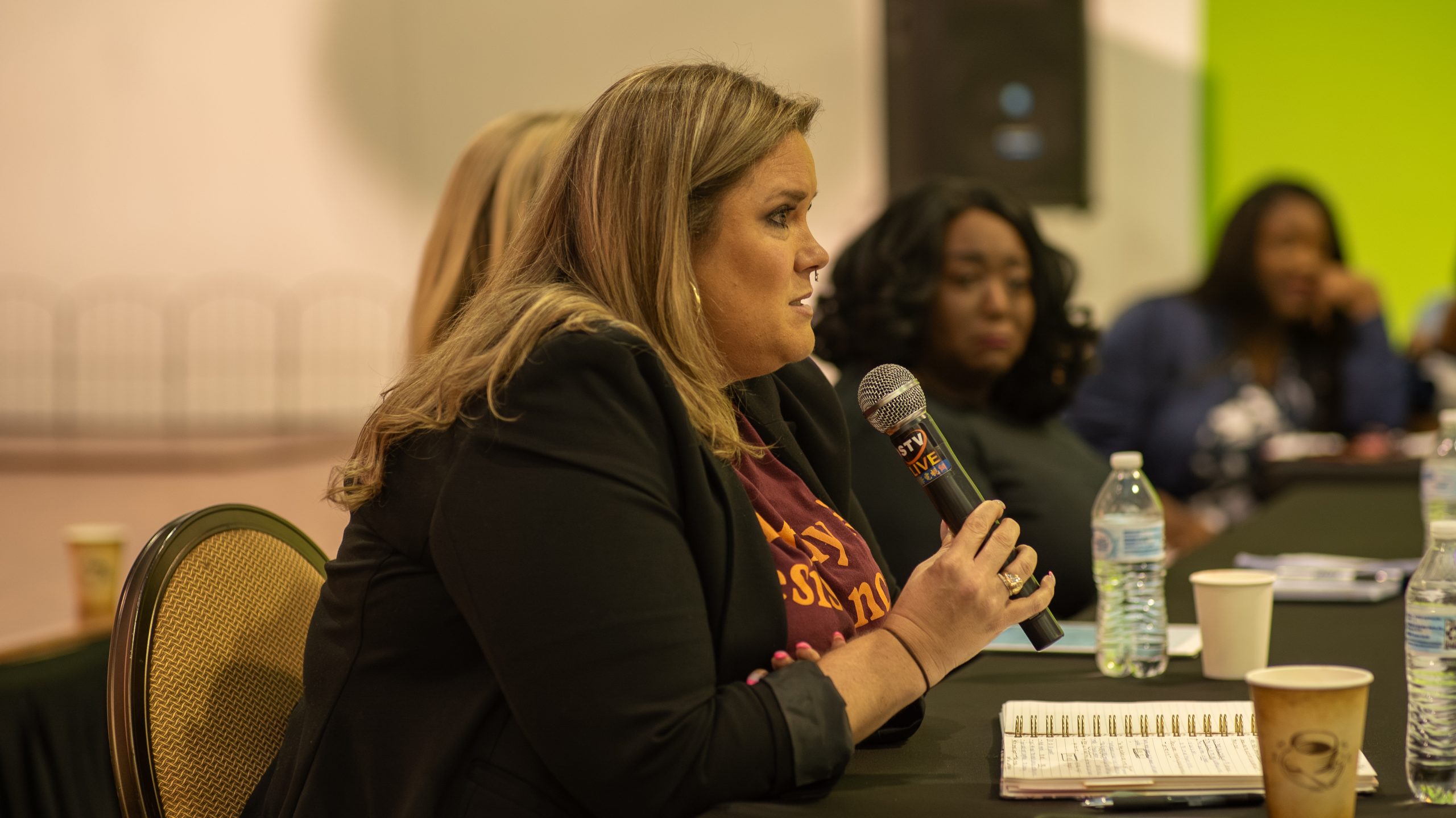
According to Howell, many students tell her that adults are often too busy, stressed, or distracted to truly listen to what they are experiencing. Financial pressures, long work hours, family responsibilities, and the demands of daily life can leave little room for meaningful conversations. One statement she hears repeatedly from young clients is simple but powerful: “This is my first time living.” The phrase reflects a desire for adults to recognize that while previous generations faced their own hardships, today’s young people are navigating challenges unique to their time and deserve understanding rather than dismissal. Howell believes that meaningful relationships, open communication, and early intervention can make a significant difference in helping young people cope with the pressures they face.
A Community Responsibility
The briefing concluded with a call for a broader community response to what many participants described as a growing crisis. Schools alone cannot solve the problem. Families, churches, healthcare providers, nonprofit organizations, and government leaders all have important roles to play in supporting young people. The speakers agreed that addressing youth mental health will require sustained investment, expanded access to counseling services, stronger family engagement, and a willingness to listen carefully to what students themselves are saying.
As Houston awaits updated federal survey data that may provide an even clearer picture of current trends, one reality is already apparent. Thousands of young people across the city are struggling silently with emotional and mental health challenges. The question facing Houston is not whether the problem exists, but whether the community will respond with the urgency, compassion, and commitment necessary to help its young people thrive.