

The future of birthright citizenship in the United States is once again under intense national scrutiny as the Supreme Court prepares to rule on a controversial executive order that could redefine who qualifies as an American. At a national news briefing hosted by American Community Media, leading experts warned that the stakes extend far beyond immigration policy, touching on the nation’s identity, economy, and moral direction.
Professor Hiroshi Motomura of UCLA School of Law framed the issue in stark terms, emphasizing that the debate is not merely legal but deeply philosophical. “Fundamentally, we are debating what kind of country the United States is meant to be,” he said, pointing to the Fourteenth Amendment as a cornerstone of an inclusive national vision.
A Constitutional Vision of Belonging
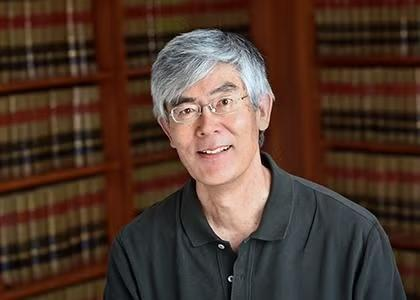
Motomura explained that the Fourteenth Amendment was designed not only to overturn past injustices such as the Dred Scott decision, but also to establish a forward-looking principle of inclusion. “It embodies an inclusive vision of the United States,” he said, adding that citizenship was meant to serve as “a vehicle for belonging” rather than something determined by ancestry or parental status.
He warned that restricting birthright citizenship would mark a profound shift away from that vision, potentially creating “second-class members of society” and altering the nation’s historical trajectory. The case before the Supreme Court, he noted, is “one of the most monumental and important cases that the court has seen in modern history.”
Trillions at Stake in Economic Impact

Beyond the legal arguments, researchers presented stark economic projections. Dr. Phillip Connor of Princeton University revealed that immigrants and their U.S.-born children have contributed enormously to the American economy and will continue to do so if current policies remain in place.
“Our estimates show at least $7.7 trillion in income contributions to the U.S. economy over a century,” Connor said, emphasizing that these figures are conservative and could be significantly higher.
He added that ending birthright citizenship could result in the loss of millions of future workers, particularly in high-skill occupations. “If we think labor shortages exist today, imagine how that would be magnified when you remove millions of potential workers in the future,” he warned.
A Growing Underclass and Social Divide

Dr. Julia Gelatt of the Migration Policy Institute focused on the long-term social consequences, cautioning that eliminating birthright citizenship could expand, rather than reduce, the undocumented population.
“We find that the unauthorized immigrant population would actually grow by 2.7 million over the next 20 years and 5.4 million over 50 years,” she explained, describing how children born without status would create a “self-perpetuating class excluded from social membership.”
Gelatt emphasized the human toll, noting that such children could face limited access to education, healthcare, and economic opportunity. Without legal status, she said, many would grow up knowing they “aren’t able to work legally in the United States,” which could lower aspirations and long-term outcomes.
Global Talent and America’s Competitive Edge

Xiao Wang, CEO of Boundless Immigration, shifted the conversation to global competitiveness, warning that the policy could discourage highly skilled immigrants from choosing the United States.
“A ban on birthright citizenship is not just about changing the legal rule,” Wang said. “It changes how talented people around the world think about building a life in the United States.”
He stressed that immigrants consider not only career opportunities but also the security of their families. “You’re asking the bigger question: can I build a stable life there? Will my children be secure there?” he said.
Wang warned that the impact would be especially severe in sectors already facing shortages, such as healthcare. Rural communities, he noted, could be hit hardest as fewer foreign-born doctors and caregivers choose to work in underserved areas.
A Defining Moment for the Nation
As the briefing concluded, speakers agreed that the implications of the Supreme Court’s decision will extend far into the future. Wang described immigration as America’s “secret sauce” for growth and innovation, while Gelatt cautioned that removing birthright citizenship would risk undermining decades of progress.
Connor urged policymakers to consider long-term consequences, warning that the economic and demographic effects could last for generations. Motomura, meanwhile, returned to the broader question at the heart of the debate: who belongs in America.
As the nation awaits the Court’s ruling, expected later this year, the outcome may redefine not only immigration policy but the very meaning of citizenship itself.