
Preserving Place, Price, and People
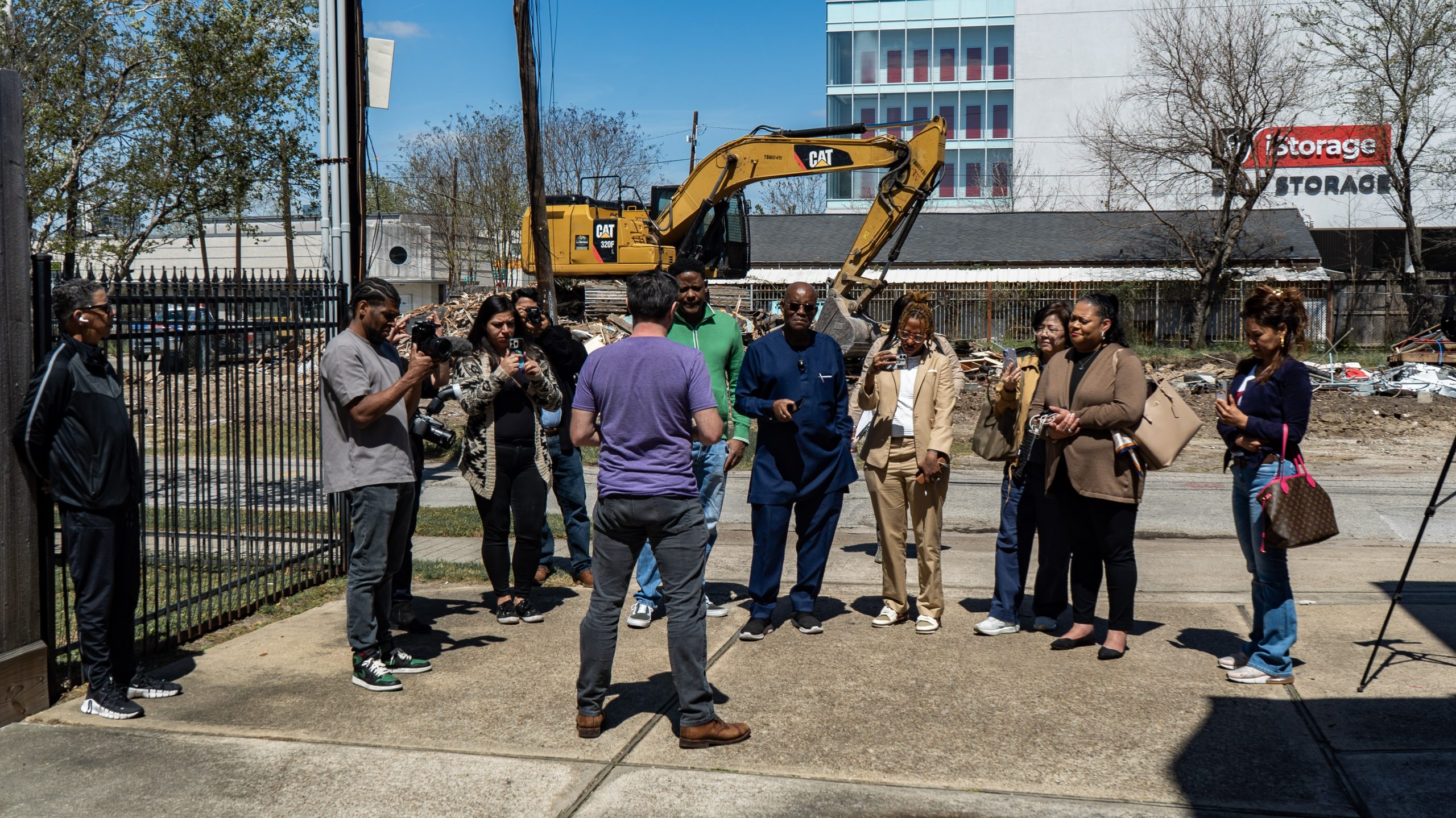
HOUSTON — A recent housing tour hosted by Houston Community Land Trust (CLT) brought community leaders, media professionals, and advocates face-to-face with one of the most pressing challenges in the city today: preserving affordability while maintaining the cultural fabric of historic neighborhoods. The tour began in Third Ward at the organization’s new headquarters, where Executive Director Dr. Ashley Allen outlined the nonprofit’s mission and set the tone for the day’s discussions. “We are here to preserve place and space and price,” Allen said, emphasizing that true affordability must be sustained long term and not just offered as a temporary solution. Houston Community Land Trust, a 501(c)(3) nonprofit organization, works to keep housing permanently affordable by placing land into community ownership. Under this model, the land is held in trust while homeowners own the structures, ensuring long-term stability and preventing displacement, which has become increasingly common across Houston.
Restoring Hope Through Homeownership
Board member Ron Johnson shared his personal journey into the program, explaining how it allowed him to return to the community where he was raised after losing a previous home during the housing market crash. “I didn’t think homeownership was going to be my thing,” Johnson said. “But this program changed my perspective and allowed me to come back to my community.” His testimony highlighted the program’s impact not only as a housing solution but also as a pathway to restoring dignity and connection. Josie Anderson, a founding partner who helped close the first community land trust home in 2019, noted that the program has already helped more than 200 families. “It allows people to achieve the American dream in a way that is sustainable,” she said, pointing to the long-term affordability that distinguishes the model from traditional housing programs.
The Reality of Displacement in Third Ward
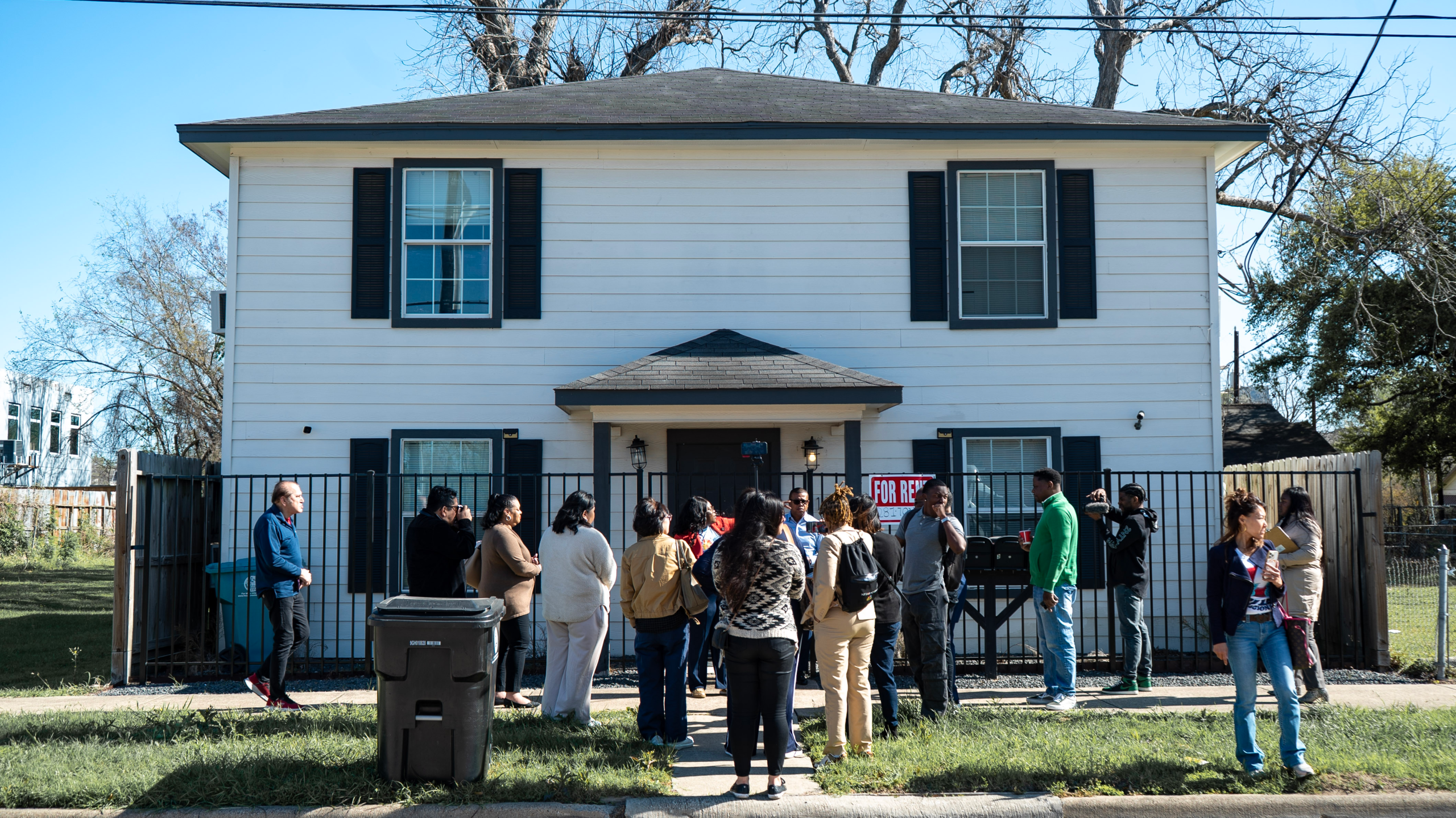
As the bus moved through Third Ward, participants witnessed the stark contrast between older homes and newly built townhouses priced well above $400,000. Allen explained how rising property values are forcing long-time residents out, even those who have already paid off their homes. Property taxes alone have become a major burden, often leading to displacement or forcing families to sell homes that have been in their families for generations. “People are even afraid to improve their homes because their taxes will go up,” Allen said, underscoring the difficult choices many residents now face. The group also visited a community land trust rental property, where rents are based on income rather than market rates. Dr. Allen stressed that affordability should not come at the expense of quality. “Everybody deserves quality housing,” she said, noting that too many residents are forced to live in substandard conditions simply because they have no other options.
A Model Rooted in Community and Justice
While traveling to Wayside Village, Allen provided historical context for the Community Land Trust model, explaining that it originated during the Civil Rights Movement when Black farmers used collective ownership to protect their land from discrimination and displacement. “We have completely turned housing into a commodity,” she said. “But it should be about community.” At Wayside Village, participants saw a mixed-income neighborhood where affordable homes are seamlessly integrated with market-rate homes. The design is intentional, eliminating the visible separation often associated with low-income housing. “The whole point is that you don’t know which homes are in the CLT,” Dr. Allen explained, highlighting how the model promotes dignity and inclusion while maintaining affordability.
A Life-Changing Opportunity in Acres Homes
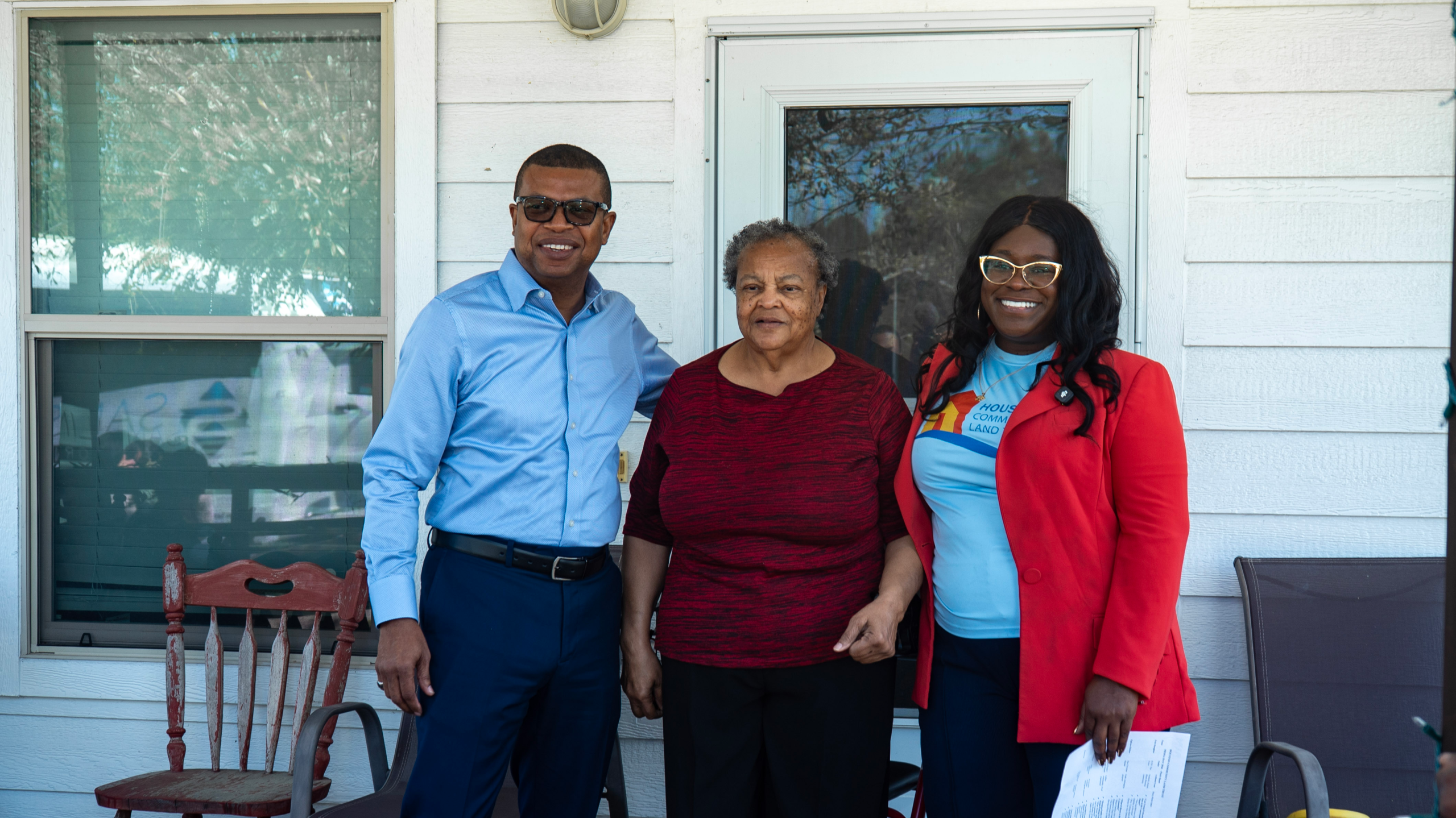
One of the most powerful moments of the tour came in Acres Homes, where longtime resident Ms. Mitchell shared her personal testimony. A retired City of Houston employee, she described how she once believed homeownership was out of reach after being told she could only afford a $75,000 home. “I prayed to the Lord, and He said He was going to give me a house,” she said. Through the community land trust program, she was able to purchase a home within her means and secure stability for her future. “I was so excited. I could not believe it,” she added. Ms. Mitchell also emphasized the ripple effect her experience has had within her community, particularly among members of her church. “If it had not been for CLT helping me, they would not have believed it was possible,” she said, explaining how her journey has encouraged others to pursue homeownership and financial stability.
Freedmen’s Town and the Cost of Losing History
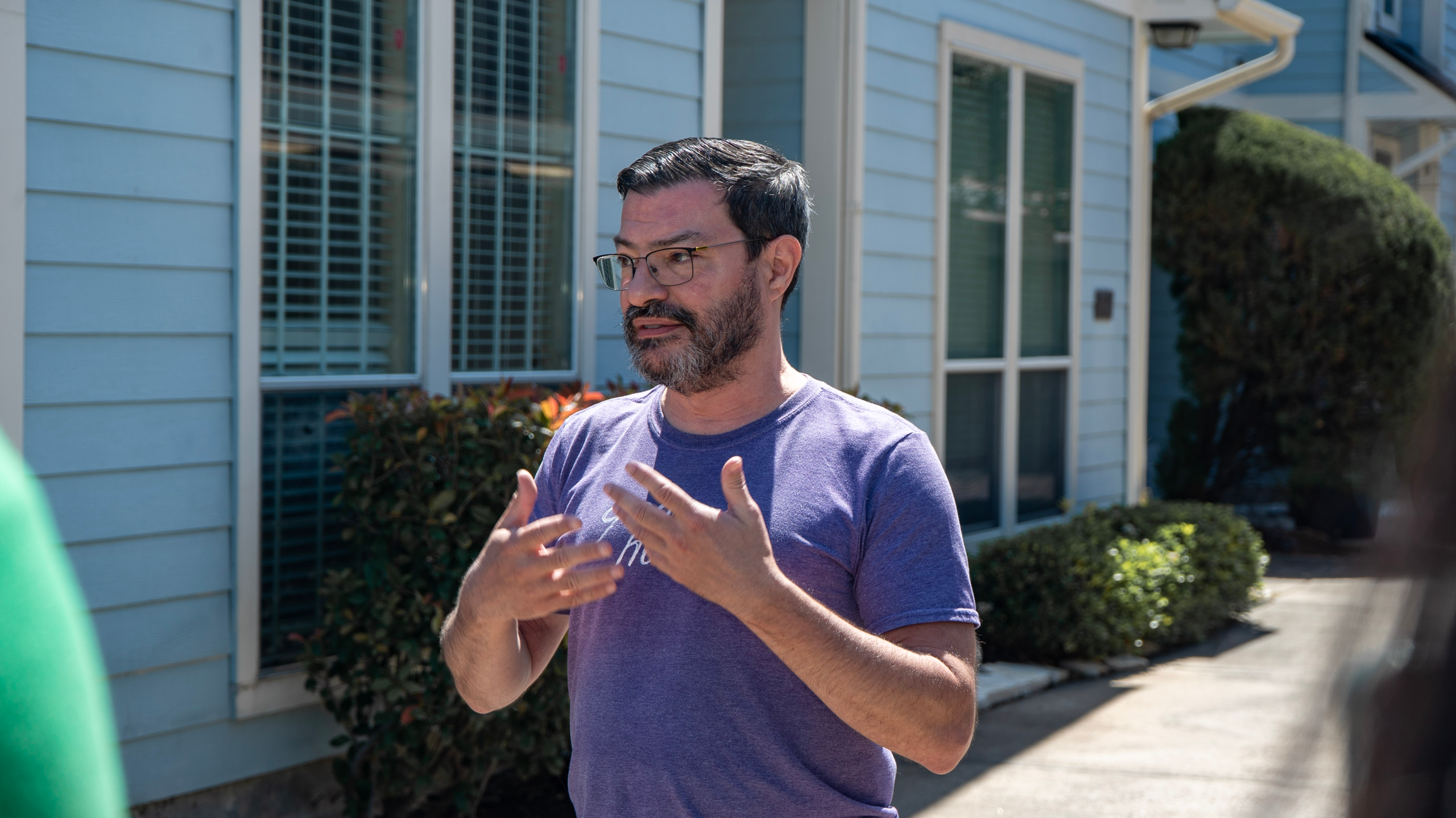
The tour concluded in Freedmen’s Town in the Fourth Ward, one of Houston’s most historic Black communities, where the effects of rapid development and displacement were especially visible. Once a thriving community established by formerly enslaved people, the area has seen much of its historic character erased by rising costs and new development. Dr. Allen explained that even well-intentioned housing initiatives have failed to protect residents when affordability is not sustained. “Even with a free home, people still lost their place and their space,” she said, referring to programs that did not account for rising property taxes. Community Land Trust homeowner Andrew Kozma shared his perspective on the changing neighborhood, describing how rising costs are pushing out workers who once formed the backbone of the area. “You can have a city designed for profit, or a city designed for community,” Cosma said, pointing to the need for intentional planning that prioritizes people over profit.
A Call for Action and Lasting Solutions
As the tour wrapped up, Dr. Allen challenged attendees to help spread awareness and push for meaningful solutions to Houston’s housing crisis. She emphasized that addressing affordability requires collective action, community engagement, and a shift in how housing is viewed. “We don’t need more ribbon cuttings,” she said. “We need to actually solve the problem.” With more than 200 homes already preserved through its model, Houston Community Land Trust is demonstrating that long-term affordability is achievable. However, Allen made it clear that broader support and public awareness will be critical in expanding these efforts. As Houston continues to grow, the question remains whether the city will prioritize inclusive development that allows residents of all income levels to remain in the communities they call home.