

By The Christian Herald Staff Writer
August 14, 2025
A powerful wave of civic resistance is rising across Texas, where lawmakers, civil rights advocates, and ordinary citizens are sounding the alarm over a controversial redistricting proposal many say threatens democracy and dilutes the voice of minority voters.
In a packed online briefing titled Redrawing Texas Maps: Behind the Political Firestorm, state lawmakers, legal experts, and community activists gathered to dissect the implications of proposed changes to the Texas electoral map. At the heart of the matter: a Republican-led effort to redraw district boundaries that critics argue unfairly weakens Black, Latino, and Asian voting power in the Lone Star State.
The event featured State Representative Gene Wu (D-Houston), voting rights attorney Karla Maradiaga of the Texas Civil Rights Project, longtime activist Melissa Allala of District 29, and Carmela Walker of the Houston Area Urban League. Together, they painted a sobering picture of a political maneuver with profound implications for representation and justice.
The Walkout Heard Around the Nation
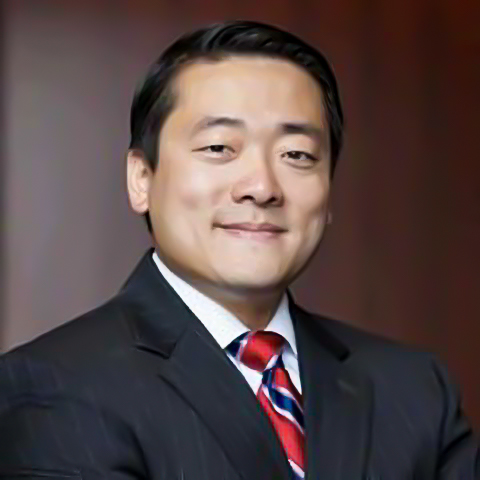
Representative Gene Wu, speaking from Chicago, where he and other Democratic legislators have taken refuge since walking out of the Texas House, described the move as a desperate but necessary act of defiance. On August 3rd, dozens of Democratic legislators staged a walkout to break quorum and halt the redistricting session, a strategy to block what Wu called “the most extreme gerrymandering effort in recent history.”
“We are witnessing an attempt to rewrite the rules in the middle of the game,” said Wu. “The proposed maps not only undermine democracy, but they also rob our communities of their rightful voice. If these changes are implemented, a Black vote in Texas will be counted as one-fifth of a white vote. That’s not democracy. That’s disenfranchisement.”
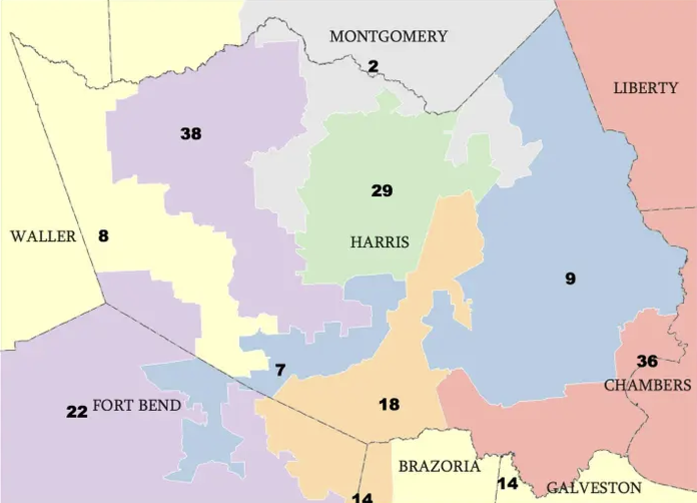
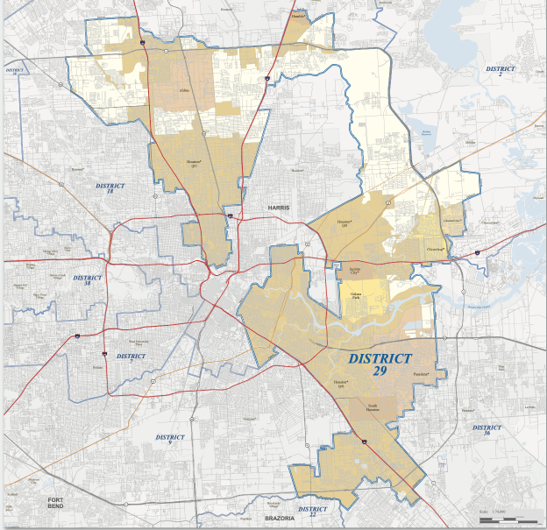
Wu explained how racial gerrymandering works in two main ways: “cracking” communities by splitting them into multiple districts to dilute their voting power, and “packing” them into one district to limit their influence elsewhere. He pointed to proposed changes in District 18 and District 29 as examples of this dangerous trend.
Legal Pushback from Civil Rights Advocates
Karla Maradiaga, a voting rights attorney with the Texas Civil Rights Project, spoke passionately about her firsthand experience attending recent redistricting hearings. “At the Houston hearing alone, nearly 1,000 people signed up to testify,” she said. “But they had no access to the proposed maps. There was no transparency, no process. Just a rushed political power grab.”

Maradiaga emphasized that redistricting is intended to occur after a census to ensure that districts accurately reflect fundamental population shifts. However, this special session was triggered not by population needs, but by a letter from the Trump-era Department of Justice, which raised serious concerns about motive and timing.
She also noted that the redistricting proposal was being prioritized over more pressing issues, such as flood relief. “People are still recovering from devastating floods,” she said. “Yet our leaders are focused on locking in political power rather than protecting our communities.”
District 29: A Community Divided
For Melissa Allala, the redistricting fight is deeply personal. A two-time census worker and resident of Congressional District 29, Allala described how her community, a 74% Latino, working-class district, has been reshaped into what she calls a “box that cuts out voices.”
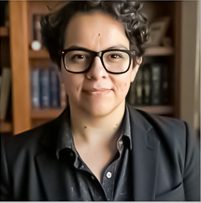
“This new map breaks up tight-knit neighborhoods and weakens the political influence we’ve spent years building,” she said. “It’s clear that this isn’t about better representation, it’s about winning elections.”
Allala warned that although the changes are technical, their consequences are tangible. “This affects who gets heard when we call for flood assistance, community centers, or even safe roads. If we lose our voice at the ballot box, we lose our ability to protect and uplift our neighborhoods.”
Mobilizing the Community for the Long Road Ahead
Carmela Walker of the Houston Area Urban League called for sustained community education, grassroots organizing, and cross-generational engagement. “This isn’t just about maps,” she said. “It’s about economic development, health equity, criminal justice reform, and who gets to sit at the table where those decisions are made.”
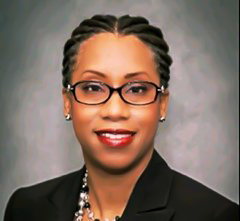
Walker emphasized the importance of civic education, particularly for young people and new voters, as well as the value of collaboration with local universities, nonprofits, and advocacy groups. “We must remind people that power starts with participation,” she said. “Voting still matters. Showing up to town halls matters. And understanding these issues gives us the tools to fight back.”
A Trigger Law and a Warning
The stakes are high. Wu and his fellow lawmakers are now calling on other states, notably California, New York, and Illinois, to pass “trigger laws” that would redraw their own maps in retaliation if Texas proceeds. “This is a Cold War strategy,” Wu admitted, “but if we don’t match force with force, we lose the entire system.”
As Texas braces for legal battles and more special sessions, the message from the panel was clear: the fight to preserve fair representation is far from over, and the next battleground will be in the courts, the streets, and at the ballot box.
To learn more or get involved, visit:
Texas Civil Rights Project – www.texascivilrightsproject.org
Houston Area Urban League – www.haul.org