

By The Christian Herald
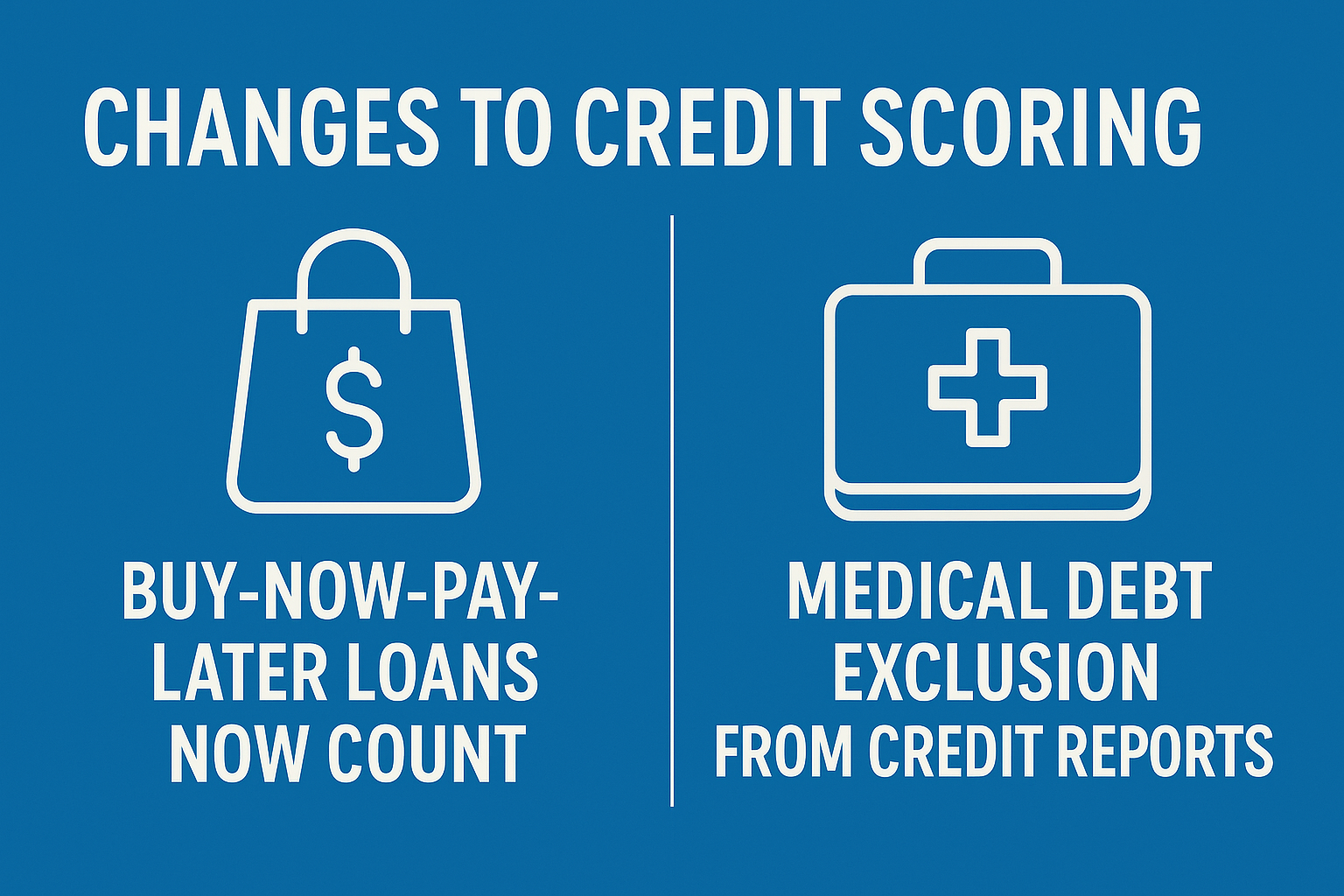
In a significant shift that could alter the financial future of millions, two substantial changes are being introduced to how credit scores are calculated in the United States. For the first time, Buy-Now-Pay-Later (BNPL) services like Klarna and Affirm will be factored into your credit score. At the same time, medical debt is being removed from credit scoring entirely, in a sweeping consumer protection move by federal regulators.
These developments are poised to shake up the credit landscape, potentially raising scores for some Americans while posing new risks for others. Here’s what you need to know.
Buy Now, Pay Later Loans Will Now Count
Starting this fall, FICO—the leading credit score provider—will roll out two new models: FICO Score 10 BNPL and FICO Score 10T BNPL. For the first time, these models will incorporate data from BNPL providers such as Affirm, Afterpay, Sezzle, and Klarna.
BNPL services enable shoppers to break down a purchase into smaller, interest-free payments—typically in four installments. They’ve become especially popular among younger consumers who want to avoid credit cards; however, until now, these transactions have been largely invisible to traditional credit scoring models.
That’s changing. FICO partnered with Equifax to incorporate this data into its scoring algorithms, providing lenders with a more comprehensive picture of a consumer’s financial behavior.
The Good
If you’re using BNPL responsibly—paying on time and not overextending—your credit score could go up. According to FICO, users with five or more BNPL lines who consistently make timely payments saw their scores improve in simulations of the new model.
This could open doors to better interest rates on auto loans, mortgages, or even job opportunities where credit checks are part of the hiring process.
The Risk
However, the flip side is just as important: late payments or defaults on BNPL loans will now negatively impact your credit score.
A 2024 Consumer Financial Protection Bureau (CFPB) report found that more than 20% of BNPL users had missed a payment in the past year. What was once a private mistake will soon have real consequences.
Additionally, the practice of “loan stacking”—taking out multiple BNPL loans across several platforms—could be seen as a red flag. FICO’s system will now capture that behavior, and lenders may interpret it as a sign of financial overextension.
“This is a wake-up call for consumers who thought of BNPL as a casual option,” said financial analyst Kara Dunmore. “It’s now being treated like any other form of credit.”
Medical Debt: No Longer a Credit Killer
While BNPL inclusion adds new data to the scoring system, another change is the removal of one of the most controversial items: medical debt.
In March 2025, the Consumer Financial Protection Bureau finalized a rule that bans the use of medical debt in credit decisions. This means lenders can no longer consider unpaid hospital bills or emergency care expenses when determining creditworthiness.
Why This Matters
Medical debt has long been criticized as an unreliable predictor of risk. People don’t choose to get sick, and hospital billing is notoriously complex. A minor error or insurance delay could result in thousands of dollars in collections.
“Medical debt doesn’t reflect a person’s ability or willingness to repay a loan,” said CFPB Director Rohit Chopra. “It reflects a broken healthcare system.”
Studies show that nearly 58% of all third-party collections on credit reports were related to medical debt. That’s now changing.
What It Means for Consumers
According to a report by the CFPB, around 15 million Americans are expected to see their scores rise by an average of 20 points. That boost could help thousands of people qualify for mortgages, auto loans, and credit cards that they would have otherwise been denied.
It’s not just a theoretical gain. The agency estimates that up to 22,000 more mortgages could be approved each year under the new rule.
For many, this offers relief from an unfair penalty and a second chance at financial stability.
What Lenders and Consumers Should Expect
The integration of BNPL data and the removal of medical debt will affect both ends of the credit equation.
For lenders, this means they’ll need to update their risk models to account for the new FICO scores and federal rules. While this adds complexity, it also provides more accurate and current data about a consumer’s behavior, critical in an economy where alternative credit usage is growing.
For consumers, education will be key. Many people are unaware that their everyday shopping habits—such as using Afterpay to purchase shoes—can now impact their credit score. And those who were once penalized for unpaid ambulance bills will finally catch a break.
“This is a rebalancing of the system,” said personal finance coach A.J. Palmer. “It rewards transparency and punishes hidden risks. It’s good policy.”
The Bigger Picture
These credit scoring changes reflect a larger shift in how Americans borrow and spend. The rise of fintech, combined with increasing scrutiny of outdated credit practices, is driving reform.
And while these changes bring hope, they also bring responsibility.
Consumers must now treat BNPL loans like credit cards—pay on time, track your balances, and avoid taking on more than you can manage. Likewise, staying vigilant about medical bills—even if they no longer damage your credit—remains important for your financial well-being.
Final Thoughts
In the past, credit scores were primarily based on traditional loans and credit cards. Today’s reality is more complex, and the scoring models are finally catching up.
Whether you’re a BNPL power user or someone buried under hospital bills, the rules are changing. And for millions of Americans, that change may finally offer a little financial breathing room.