

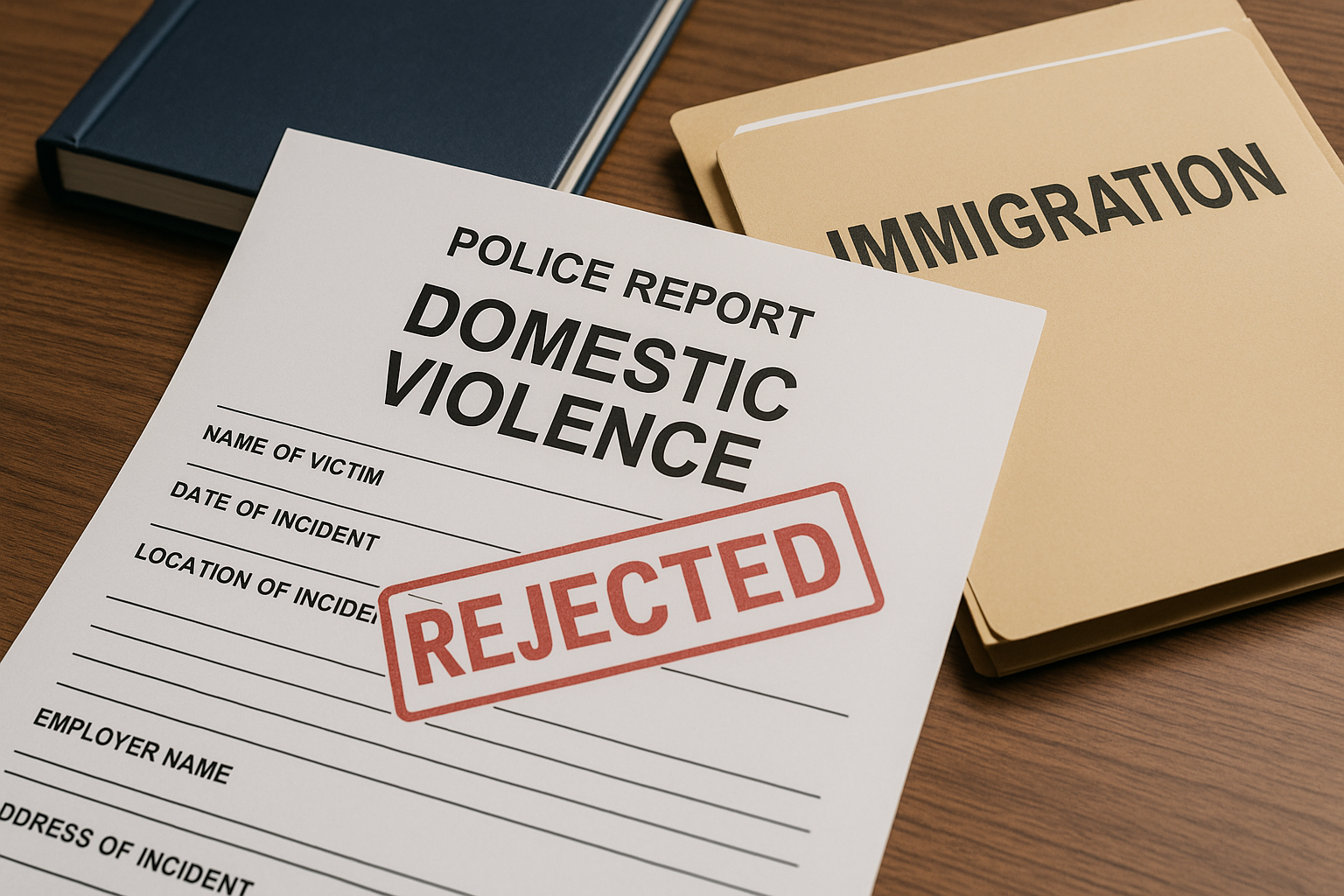
At a recent national virtual briefing organized by American Community Media, advocates and journalists gathered to discuss a growing crisis that is placing immigrant survivors of domestic violence in danger and silence. The event, titled “Immigrant Survivors of Domestic Violence Face Rising Barriers to Safety and Justice,” revealed how new immigration enforcement policies, fear of deportation, and funding cuts are keeping victims from seeking help.
Moderated by journalist Pilar Marrero, the one-hour session drew participants from across the nation, with simultaneous interpretation provided in Spanish, Chinese, and Korean. Three frontline leaders spoke about the worsening conditions facing survivors: Carmen McDonald, Executive Director of the Survivor Justice Center; Morgan Weibel, Director of Client Advocacy and Legal Services at the Tahirih Justice Center; and Patima Komolamit, Executive Director of the Center for the Pacific Asian Family.
A Climate of Fear
Carmen McDonald opened the discussion by describing the chilling fear spreading through immigrant neighborhoods since the rise of immigration raids. As the head of one of Los Angeles County’s leading survivor advocacy organizations, she said that roughly seventy percent of her clients are immigrants. Many are now afraid to appear in court, go to medical appointments, or even report abuse to law enforcement.
“Silence is not safety,” McDonald said. “When survivors are silenced, abusers go free. When immigrants are too afraid to call the police, everyone is less safe.”
She explained that her center provides legal and social work services to low-income survivors of domestic violence, sexual assault, and human trafficking. But in recent months, she has seen a rise in canceled appointments, missed court dates, and reports of fear at the sight of unmarked cars or uniformed officers. One client, she said, refused to attend her dialysis appointment because it was located near a large retail store where immigration officers had previously been seen.
Beyond the personal cost, McDonald warned that the crisis has become a public safety issue. “When people are too frightened to speak up, the violence continues unchecked,” she said.
Legal Protections Under Pressure
The next speaker, attorney Morgan Weibel, explained how the tightening of immigration laws has weakened long-standing protections such as the Violence Against Women Act (VAWA) and the U and T visas. These visas were designed to allow survivors of violent crime and trafficking to apply for status without relying on their abusers.
Weibel said that survivors are now being subjected to longer processing times, new interviews, and stricter reviews that discourage many from applying. In some cases, those whose applications are denied are immediately placed in deportation proceedings. “The stakes are higher than ever,” she said. “Survivors are questioning whether seeking help is worth the risk of being detained or separated from their children.”
She also addressed recent court rulings that have rolled back progress for gender-based asylum seekers. Under the new interpretation, women fleeing domestic or gender violence may be denied asylum unless their cases fit narrow definitions. “It should not depend on where a woman files her case or which judge she faces,” Weibel said. “No one’s safety should be determined by geography or politics.”
One Survivor’s Journey
The most emotional moment came when McDonald introduced Juana Padilla, a survivor who recently received her green card after a five-year battle for protection under VAWA. Her voice trembled as she recalled years of abuse at the hands of her former husband. This U.S. military veteran used his authority to intimidate her and prevent police intervention.
“When I called for help, he would put his uniform on the table and the officers would say everything was fine,” Padilla said. “I had no family here. I felt alone.”
At one point, she fled to Mexico with her children but was forced to return after her husband kidnapped them. With the help of the Survivor Justice Center, she rebuilt her life in the United States, obtained her legal status, and ensured medical care for her youngest child. “Any woman from any country has the right to safety,” she said. “I thank God and the people who helped me to start again.”
Her story, shared through tears and gratitude, became a living example of the hope that advocates fight to preserve.
Funding Cuts and Cultural Barriers
The final speaker, Patima Komolamit, spoke from her experience leading the Center for the Pacific Asian Family, which provides crisis intervention and shelter services in more than thirty languages. She described how recent restrictions on federal grant funding and new anti-DEIA policies are straining organizations that serve immigrant women.
“In our communities, immigration is often used as a weapon of control,” she said. “Now that same threat has been institutionalized in policy,” Komolamit emphasized that many survivors fear reporting abuse because they believe their personal information could reach immigration authorities. She called on communities and faith leaders to help create safe spaces for those who cannot safely turn to the system for help.
Her organization operates a 24-hour, multilingual crisis hotline, and she urged reporters and advocates to widely share the number. “The first voice a survivor hears must be one of compassion and understanding,” she said.
A Call to Action
The speakers agreed that restoring trust in the justice system is essential. They encouraged the public to support nonprofit legal programs, volunteer for shelters, and advocate for policy reforms that protect immigrant survivors rather than punish them.
Faith communities, they added, have a special role to play. Churches and organizations can offer education, spiritual care, and a sense of belonging to those who have nowhere else to turn.
As the briefing closed, Marrero thanked the panelists and the journalists who covered the issue, reminding everyone that behind every statistic is a person like Juana Padilla—a mother, a believer, and a survivor who found courage in the face of fear.
“The Lord is close to the brokenhearted,” the Psalmist wrote. For many immigrant women seeking refuge from violence, that nearness may come through the compassion of those willing to listen, speak up, and stand beside them.