

By Eghosa Edebor
Christian Herald, Houston
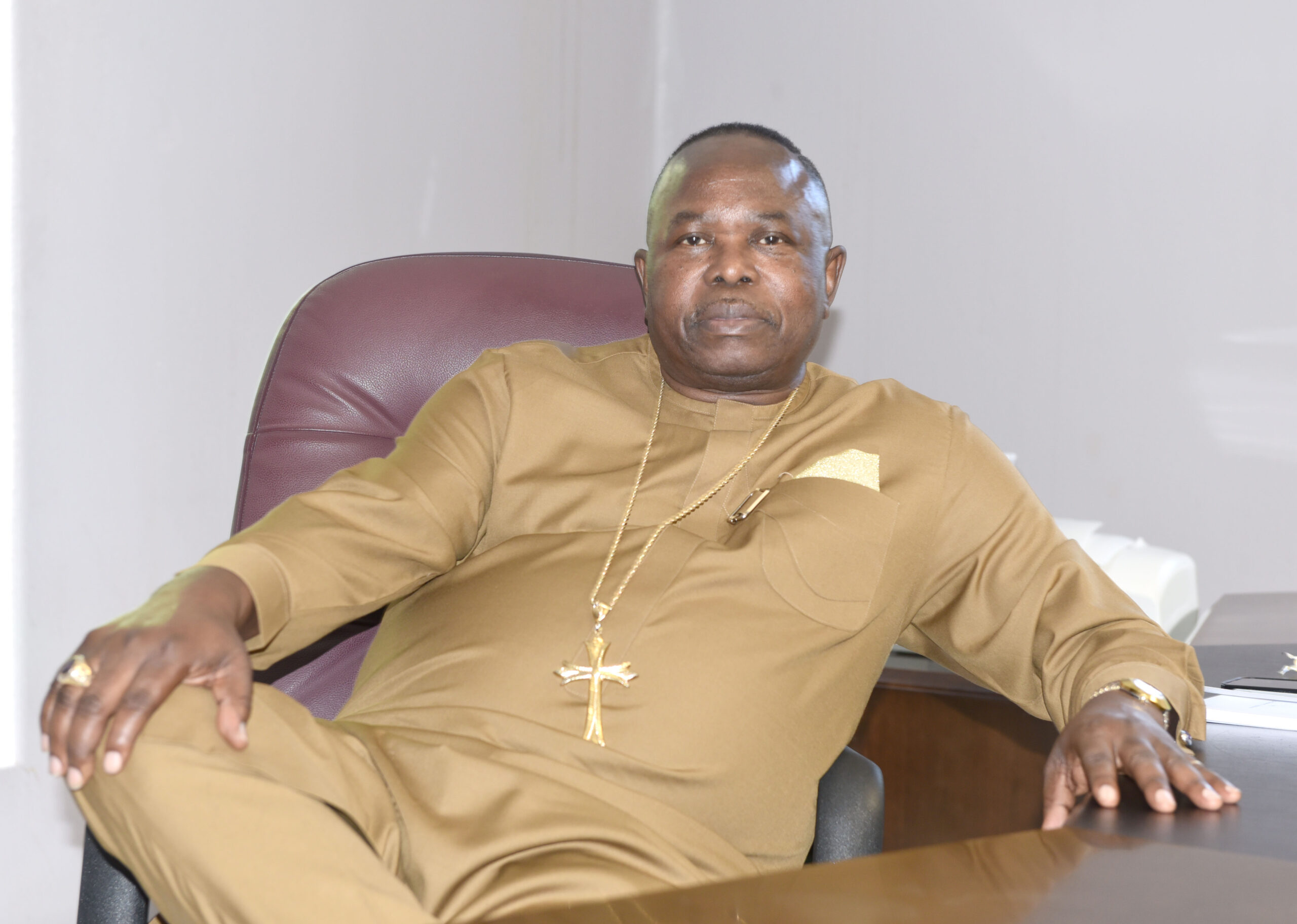
When Simeon Agbolabori first stepped onto American soil in 1987, he had no family waiting to receive him, no job lined up, and very little understanding of how drastically his life was about to change. What he did have was a fierce determination, an unshakable faith in God, and a deep conviction that his steps were being ordered—even if he didn’t yet know where they would lead.
“I didn’t come here because I wanted to chase the American dream,” Bishop Agbolabori recalled during our extended interview. “I came because there was something bigger ahead of me, though I didn’t know it at the time.”
Born in the city of Ibadan, Nigeria, but originally from Osun State, Bishop Agbolabori’s life was steeped in ministry from the beginning. His father, a pastor and founder of a local church, instilled in him the rhythms of church life early. As a teenager, Simeon began interpreting Yoruba services into English, an experience that quietly shaped his calling long before he acknowledged it.
After studying engineering and working with the National Electric Power Authority (NEPA), he became involved in music, forming a band that played at celebrations across Nigeria. His plan was clear: build a career, support his family, and serve the church—but never lead it. “One pastor in the family was enough,” he laughed.
Everything changed when he received a prophecy that confirmed what his father had believed all along: Simeon was destined to serve God’s people. Still, even after arriving in Houston, Texas, his focus was survival, not ministry.
A Rough Landing
Bishop Agbolabori’s earliest days in the U.S. were filled with hardship and disorientation. “I was staying with a man I barely knew from Nigeria,” he said. “He was kind to house me, but the area we lived in—north MacGregor near TSU—was rough, full of drugs and violence.”
His first job was at Wendy’s, where he washed dishes, took out trash, and learned to make French fries. The accent barrier made taking drive-thru orders nearly impossible. “I spoke too fast for Americans,” he recalled. “They’d ask, ‘What did you say?’ over and over. I felt frustrated and foreign.”
Without a car, he took a two-hour Metro ride to work—and when shifts ended at 11 p.m., he often had no ride home. “I’d sit at the bus stop from 1 a.m. until the first morning bus at 5:45,” he said. “I didn’t know it was dangerous. I could’ve been killed. That area was full of gang activity.”
Eventually, he befriended a night-shift clerk at a nearby convenience store who allowed him to wait inside for safety. That simple act of kindness may have saved his life.
Juggling Jobs and Dreams
As he picked up more work—including a job at Stop-N-Go and later a sales position—he finally saved enough to rent his own apartment and buy a car. At one point, he was working three jobs just to survive and send money back home.
“I hated hamburgers,” he joked. “But I stayed at Wendy’s out of sentiment—it was my first job in America.”
Despite his engineering background, Bishop Agbolabori knew he had to start over. “I said to myself, ‘In Nigeria, I was somebody. But in America, I must become somebody new.’ I worked with humility.”
Amid his hustle, he still felt the spiritual tug he had long resisted. It took an encounter with tragedy—and divine intervention—for him to fully surrender.
A Life-Altering Encounter
After facing ridicule from a church leader for the growth of a women’s prayer ministry he helped lead, Simeon walked out of the church heartbroken. “I cried all the way home,” he said. That night, he dreamed of his late father asking, “Is this what I sent you to America to do?”
Then, one night at 3 a.m. while working alone, he was robbed at gunpoint. Two men held guns to his head. They took his valuables and left. “In that moment,” he recalled, “my life flashed before me. I saw everything I had tried to ignore.”
That same night, he had another dream—this time, it wasn’t his father but a clear voice he believes was from God. “He said, ‘I brought you here to preach restoration to the broken.’ That was the turning point.”
Embracing the Call
With no building, no congregation, and no funding, he stepped out in faith. “I asked God, ‘Where do I start?’ And He said, ‘Just start.’” That simple obedience led to the birth of Restoration Chapel, now a vibrant, spirit-filled ministry in the heart of Houston.
It wasn’t easy. The road to pastoral leadership was filled with skepticism, opposition, and spiritual battles. But Bishop Agbolabori pressed on. Over time, his ministry grew—first a few women, then dozens, then families from every background.
“I didn’t plan to plant a church,” he said. “But God planned it.”
Citizenship: A Milestone of Belonging
After years of living in the U.S., Bishop Agbolabori took the steps to become a U.S. citizen. “It meant everything to me,” he said. “It meant I wasn’t just surviving here. I belonged. I could now fully participate in shaping this country—vote, own property, and lead without fear.”
The journey to citizenship wasn’t without hurdles—financial, legal, and emotional. But it marked the culmination of a long, often painful transformation. “I had gone from an immigrant with no family and no voice, to a husband, father, grandfather, pastor, and citizen.”
Today, Bishop Agbolabori is a father of three and a grandfather of two. He’s remarried, continues to shepherd his church, and serves as a mentor to young immigrants navigating their own transitions.
Final Reflections
“Citizenship didn’t just change my legal status,” he said. “It affirmed my journey, my suffering, and my purpose. I’m proud to be an American—not because of the papers, but because of the possibilities.”
He encourages others who are still on the journey not to give up. “Whether you’re flipping burgers, working the night shift, or waiting for your documents, God sees you. He has a plan. Your job is to keep moving forward in faith.”
For more information or additional resources on becoming a citizen, please check:
https://houston.naturalizenow.org/resources
https://usahello.org/citizenship/prepare