

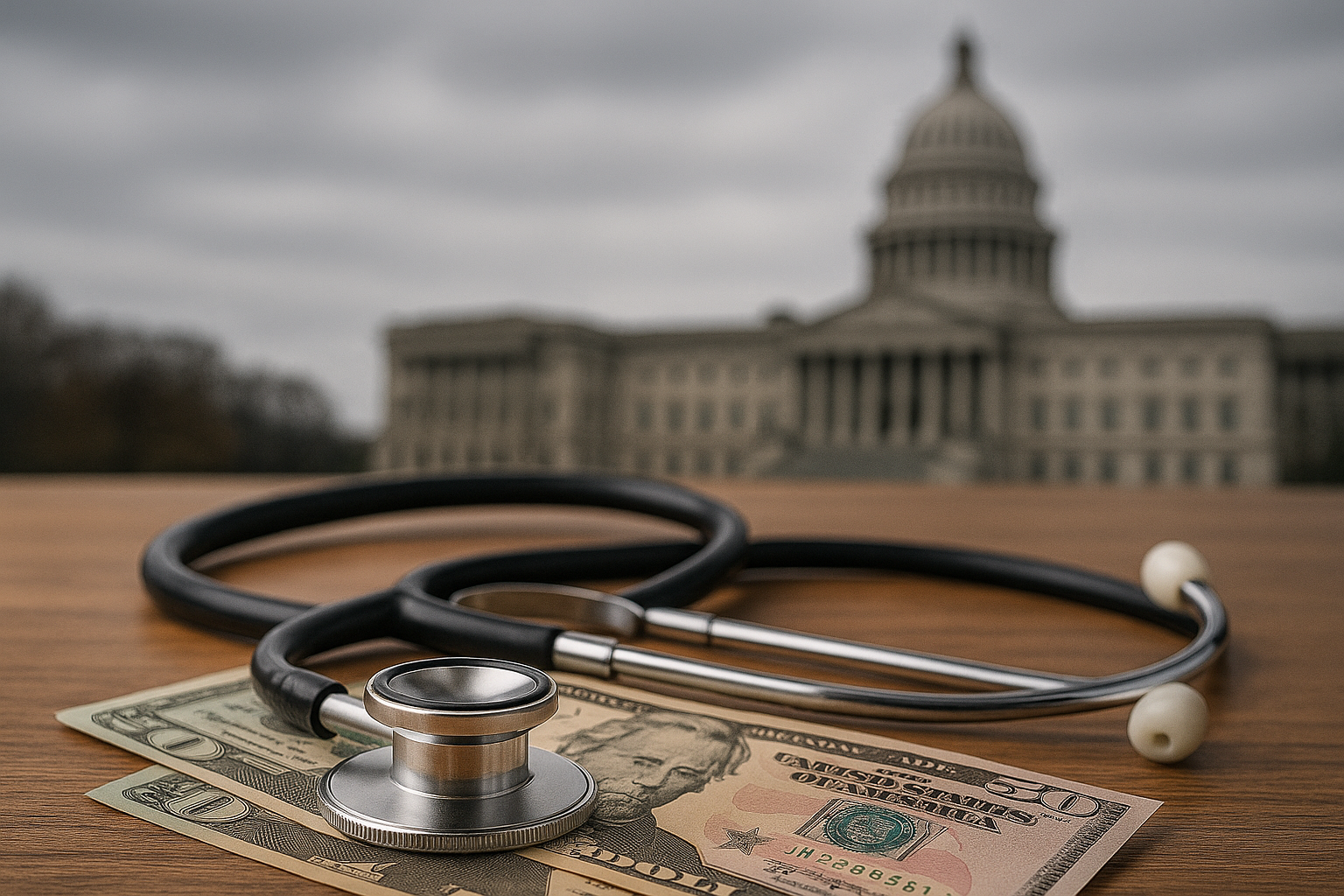
As the federal government shutdown entered its second week, journalists from across the country gathered for a virtual national media briefing hosted by American Community Media to discuss one of the most urgent issues behind the political stalemate: the rising cost of health care. The discussion, held on October 10, 2025, featured three experts who analyzed the growing crisis and warned of the far-reaching consequences of congressional inaction.
The Cost Crisis at the Center of the Shutdown
At the center of the shutdown is a dispute over the expiration of enhanced premium tax credits created under the Affordable Care Act to help Americans pay for health insurance. Without an extension of those credits, premiums for millions of Americans are expected to double beginning January 1. Four million people are projected to lose coverage immediately, and as many as twelve million could be affected when new Medicaid restrictions are added. Seven in ten Americans who were surveyed said they cannot afford higher health care costs without seriously affecting their household budgets.
Sunita Sohrabji, health editor for American Community Media, moderated the session and noted that very low-income families who have benefited from zero-dollar monthly premiums will be hit the hardest. The speakers agreed that the loss of these subsidies would have devastating consequences not only for individuals but also for hospitals and clinics that serve the nation’s most vulnerable populations.
Anthony Wright: Policy Failure and Human Toll
Anthony Wright, Executive Director of Families USA, delivered an impassioned overview of what he described as a looming health care catastrophe that could still be prevented. Wright explained that the expiration of enhanced tax credits, combined with rising premiums and cuts to federal health programs, amounts to a double blow for working Americans. He warned that the average base premium is increasing by eighteen percent, but that many families will see their actual costs double or even triple.
“This is not an inevitable increase,” Wright said. “It is a policy choice.” He criticized lawmakers for prioritizing tax breaks for corporations while ignoring the needs of ordinary families. He also warned that the loss of affordable coverage would place a heavy strain on rural hospitals and community clinics that already operate with limited resources. He said that fewer insured patients will lead to more uncompensated care, staff reductions, and possibly the closures of health facilities in small towns and underserved regions.
Wright drew on his long career in health advocacy to illustrate the ripple effects of lost coverage. Even people who now receive insurance through employers or Medicare, he said, will eventually feel the consequences. When millions drop out of the system, premiums rise for everyone. “When fewer people are insured, the costs spread across a smaller pool,” he said. “That means higher prices for everyone else.”
Jennifer Sullivan: Who Is Most at Risk
Jennifer Sullivan, Director of Health Coverage Access at the Center for Budget and Policy Priorities, provided a detailed look at who will be most affected by the lapse in tax credits. Ninety-three percent of people who buy insurance through the marketplace receive some form of financial assistance. The majority are working adults, small business owners, and self-employed people who do not have access to employer-sponsored health plans. Nearly half earn less than twice the federal poverty level, or about thirty-two thousand dollars a year for a single person.
Sullivan emphasized that the premium tax credit enhancements introduced in 2021 led to significant gains in health coverage among African American and Latino communities. In some areas, enrollment grew by more than one hundred fifty percent. “These gains were historic,” she said. “If the credits expire, those same communities will experience the steepest losses.” She also noted that many beneficiaries are young adults entering the workforce and older Americans nearing retirement who are not yet eligible for Medicare.
Another group that will be heavily affected is residents of states that have not expanded Medicaid. For them, the enhanced tax credits were often the only way to access affordable health insurance. Without those credits, coverage will become unreachable for many working families. Sullivan warned that the disappearance of zero-dollar premium plans will push hundreds of thousands back into the ranks of the uninsured, with serious consequences for public health and hospital debt.
Dr. Ashley Kirzinger: Public Opinion and Political Pressure
Dr. Ashley Kirzinger, Director of Survey Methodology at the Kaiser Family Foundation, presented new polling data showing that the majority of Americans are apprehensive about health care costs. Seventy percent of respondents said they could not handle higher premiums without cutting essential expenses. Many also believe that the federal government has failed to keep costs under control.
Kirzinger noted that public expectations have shifted since the Affordable Care Act became law. Most Americans no longer fear being denied coverage for preexisting conditions, but more and more are concerned about affordability. “People understand that health care is not free,” she said. “But they also believe it should not lead to financial ruin.”
A Call for Immediate Action
All three panelists agreed that the timing of the shutdown could not be worse. Open enrollment for 2026 begins November 1, and insurance companies have already sent notices of sharp premium increases. Once consumers see those prices, many will decide to drop coverage even if Congress restores the credits later. The experts urged lawmakers to act immediately to prevent what Wright called “the sticker shock that drives people away from coverage before they even have a chance to renew.”
As the briefing concluded, the speakers reminded participants that this is more than a policy dispute. It is a matter of moral and economic urgency that affects families, small businesses, and the health system as a whole. “Access to health care should not depend on politics,” Sullivan said. “When coverage becomes unaffordable, communities suffer.”
For now, as the shutdown continues with no resolution in sight, millions of Americans remain caught between political gridlock and the rising cost of staying healthy.