

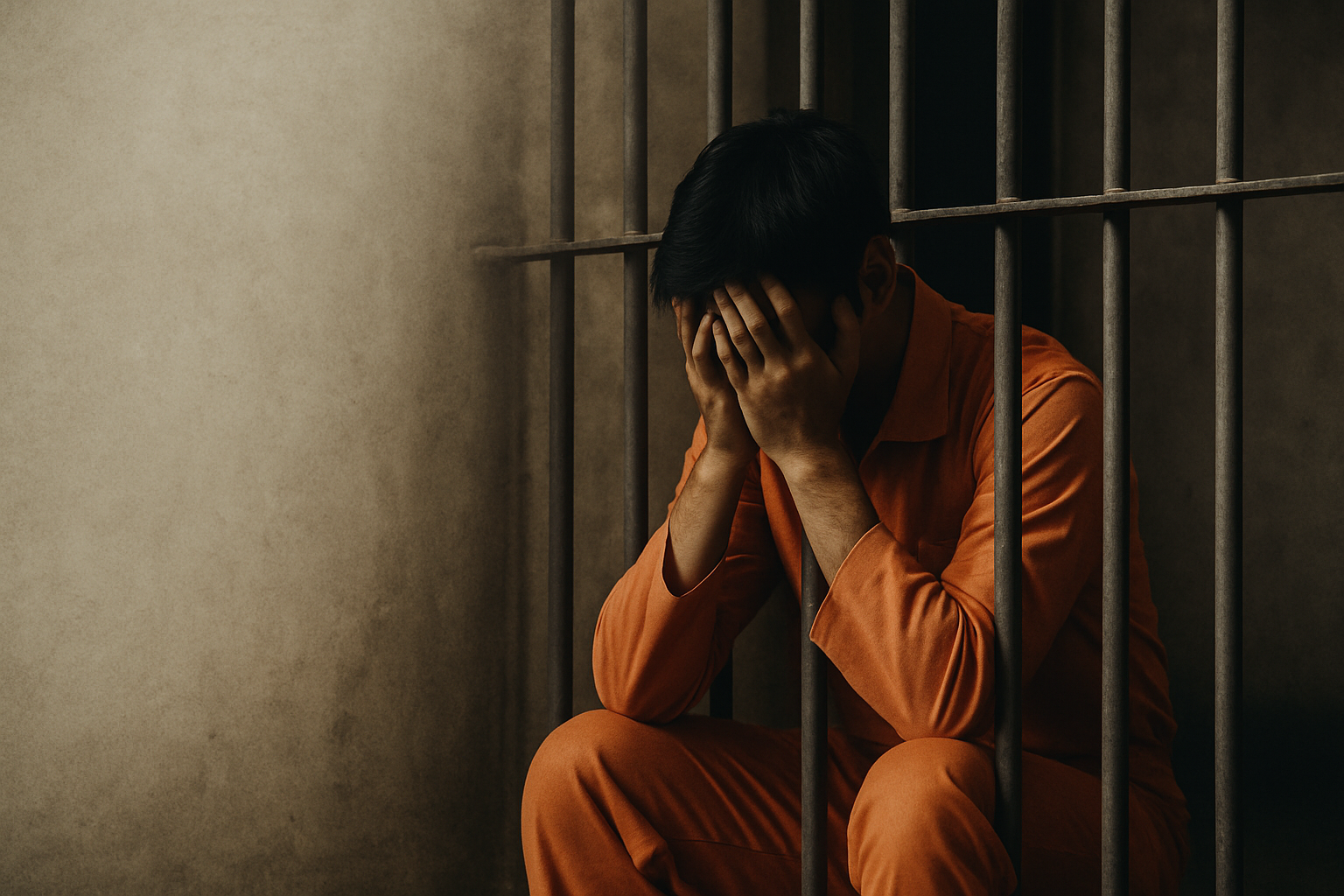
The growing crisis in America’s immigration detention centers has taken on new urgency following a national media briefing hosted by American Community Media. The discussion, titled Deaths, Disappearances, and Danger in Immigrant Detention, brought together journalists and advocates to confront what speakers described as a humanitarian emergency unfolding inside facilities operated by Immigration and Customs Enforcement (ICE).
A Deadly Year for Detainees
The briefing opened with a stark statistic: fifteen immigrants have died in detention so far this year, ten of them within the first six months. Many of these deaths were suicides. Andrew Free, an Atlanta-based attorney and founder of #DetentionKills, revealed that official figures only tell part of the story. “People are dying in ICE custody whose deaths are never publicly reported,” he said, describing hundreds of unacknowledged fatalities stretching back more than a decade.
Free’s research shows that fiscal year 2025 recorded twenty-two confirmed deaths, the second-highest in ICE’s history, surpassed only by 2004. Florida and Texas topped the list, with facilities in the Miami and South Texas regions, especially the Krome and Stewart detention centers, recording the most fatalities. Advocates warn that the actual number is likely higher due to inconsistent or withheld reporting.
Disappearances and Deteriorating Conditions
Beyond the deaths, reports have surfaced of more than 1,200 immigrants allegedly missing from the notorious Everglades facility known as “Alligator Alcatraz.” Families and lawyers are unable to locate them, raising concerns about systemic neglect, record tampering, and a lack of transparency.
Conditions inside detention centers have also worsened dramatically. Overcrowded dormitories, unsanitary facilities, inadequate food, and poor healthcare are now standard. The current detainee population, approaching 60,000, is the largest on record. “The expansion of detention, coupled with diminishing transparency, signals a crisis of accountability,” Free warned.
Voices from Inside
Heather Hogan, Policy and Practice Counsel at the American Immigration Lawyers Association, shared firsthand accounts from her years as an asylum officer in Arizona, California, and Texas. “I have spoken to hundreds of detained asylum seekers,” she said. “They were shackled at the wrists and ankles, treated like criminals, and referred to as ‘bodies,’ a term that shows just how dehumanizing the system has become.”
Hogan described seeing people woken before dawn for interviews that could determine their futures, often hungry and exhausted. Many suffered from untreated trauma or mental illness, which was worsened by solitary confinement. “Those who show signs of depression or suicidal thoughts are often placed in isolation,” she said. “Solitary confinement is used not as protection, but as punishment. The United Nations has defined this as a form of torture when prolonged beyond fifteen days.”
She added that LGBTQ+ individuals and asylum seekers with HIV are routinely isolated under the guise of safety, while limited medical care and neglect contribute to despair and death.
A System Designed to Deter
Speakers emphasized that the cruelty of the system is not accidental. “The trauma is the point,” Hogan said, describing how policies are designed to break detainees’ spirits and encourage them to abandon their asylum claims. Families are torn apart, and those who attempt to protest conditions, such as through hunger strikes, are often force-fed or retaliated against.
Andrew Free reinforced this view, comparing the lack of transparency in ICE’s death records to the era of unreported lynchings that journalist Ida B. Wells once fought to expose. “The government knows when people die,” he said. “They have to move the bodies. Yet this intentional ignorance has political value.”
The Call for Accountability
Yannick Gill, Senior Counsel for Refugee Advocacy at Human Rights First, linked the abuses in detention to larger systemic failures. He explained that U.S. asylum and refugee laws, long grounded in international human rights principles, are now being undermined by punitive enforcement and racialized policies. “We’re seeing a deliberate erosion of refugee protection,” he said. “Detention has become a deterrent tool rather than a measure of last resort.”
Gill called for the reinstatement of humanitarian parole, increased congressional oversight, and greater support for community-based alternatives to detention. “Freedom should not depend on profit,” he argued, referencing the role of private prison corporations such as GEO Group and CoreCivic in running many of these facilities.
What Communities Can Do
When asked how communities can respond, panelists agreed that change begins with exposure. “Tell the stories,” Hogan urged. “Statistics don’t move hearts, but names and faces do.” Advocates also encouraged journalists to investigate deaths, track missing detainees, and follow up on lawsuits and oversight reports at both the federal and state levels.
Free added that the public must pressure elected officials to end private detention contracts and demand transparency from the Department of Homeland Security. “We cannot reform a system built on secrecy and suffering,” he said.
A Crisis of Conscience
The picture painted by the briefing is one of a system failing its most vulnerable. Families remain separated, detainees disappear without a record, and the dead are buried without acknowledgment. The speakers called it a national moral test, one that will measure not only how America enforces its borders but how it defines its humanity.
“The lives lost in detention are not statistics,” Gill concluded. “They are reminders that justice without compassion is no justice at all.”