
By The Christian Herald Editorial Team
A New Roadblock to the American Dream
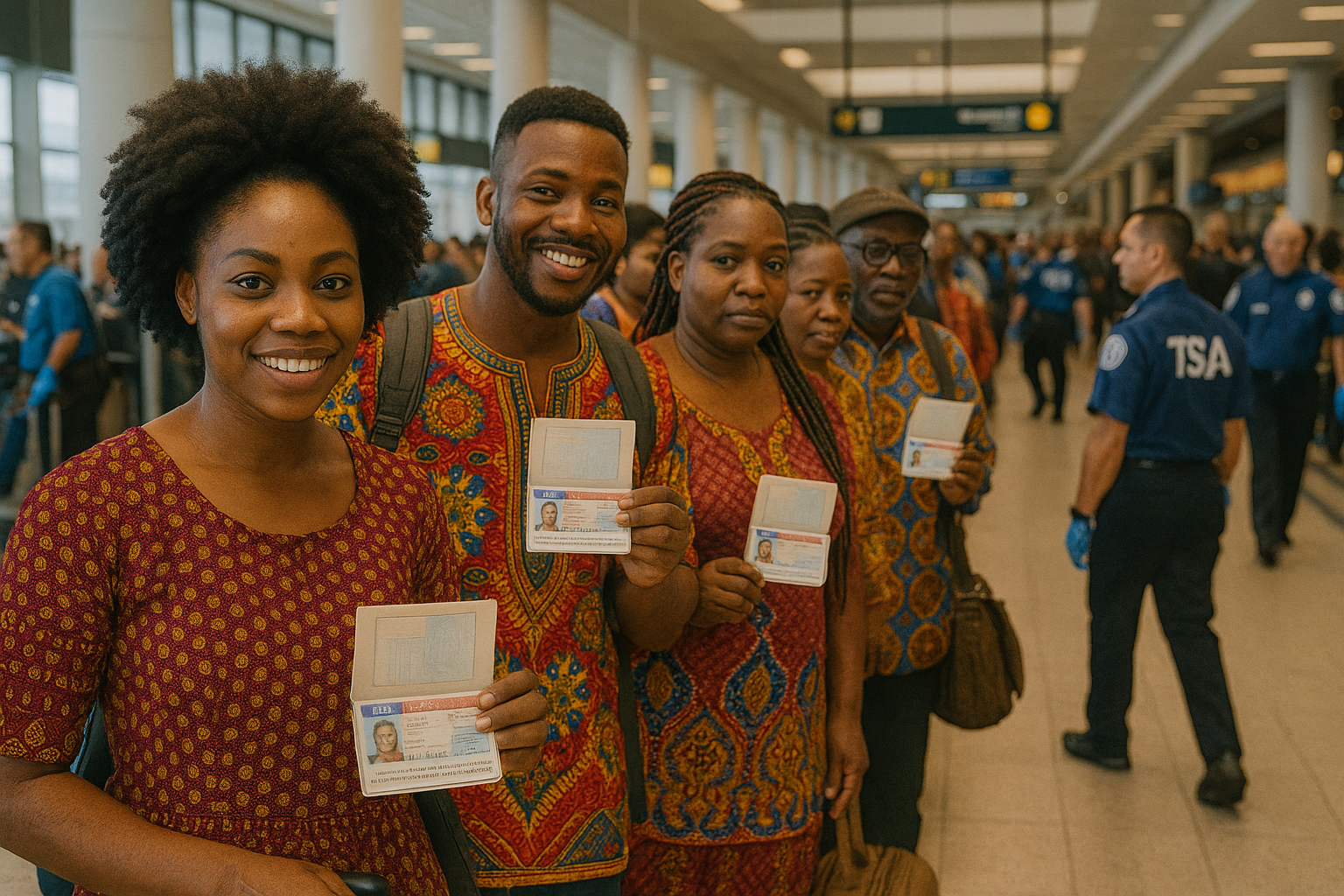
For generations, the United States has stood as a beacon of opportunity—a land many around the world, including countless Africans, have dreamed of visiting, studying in, or building their futures. But a new federal policy—the imposition of a $250 “visa integrity fee” for nonimmigrant visa applicants—threatens to close the doors for many.
Effective July 4, 2025, this fee is added to the already costly application charges, disproportionately impacting travelers from African nations. As we examine the implications of this policy, we cannot ignore its moral, economic, and spiritual ramifications. What does it mean for families, students, missionaries, and businesspeople in our communities? And how should we, as Christians, respond?
Understanding the $250 “Visa Integrity Fee”
The “Visa Integrity and Security Act,” passed as part of a broader immigration enforcement bill, introduces a mandatory $250 fee for nonimmigrant visa applicants from countries not part of the U.S. Visa Waiver Program. While the waiver program covers 42 predominantly Western nations, most African countries are excluded from it.
This means that individuals from Nigeria, Ghana, Kenya, South Africa, and many other countries—who already pay between $160 and $265 in visa application fees—are now expected to add $250 to their costs. The policy applies to tourists, students, business visitors, and even clergy invited for ministry or conferences.
The stated goal is to reduce visa overstays and encourage compliance. But critics argue that it penalizes honest travelers while doing little to address systemic inefficiencies in the U.S. immigration process.
Economic Fallout: Billions in Losses, Doors Closed
According to the U.S. Travel Association, this fee could result in the country losing over $9.4 billion in international visitor spending over the next three years. As many as 15,000 American jobs in the travel and tourism sectors may be affected. Tax revenues could fall by $1.3 billion, mainly due to fewer people being able to afford to come.
For Africa, the impact is personal and painful. Families who planned to visit their children at university in the U.S. must now reconsider. Students dreaming of Ivy League educations may look to Canada or the UK instead. Missionaries invited to conferences or crusades may be priced out of the event entirely.
Many African families operate on tight budgets. Adding $250 per person means sacrificing necessities—or giving up on their dream altogether. In Nigeria, where the average monthly income is under $300, this fee could equal an entire family’s monthly livelihood.
Christian Missions, Exchange, and Community Ties
One silent casualty of this policy may be the weakening of Christian fellowship across borders. Faith-based travel is a cornerstone of Christian life in Africa. Pastors travel to the U.S. to attend conferences, church anniversaries, or leadership training sessions. Gospel musicians come to minister, choirs travel to perform, and churches bring in revival speakers.
These activities are more than events—they are spiritual lifelines. They strengthen the global Body of Christ.
The Apostle Paul reminds us in Romans 12:5, “So in Christ we, though many, form one body, and each member belongs to all the others.” When the body is divided by financial barriers, the Church suffers.
This policy, while framed as a security measure, threatens to restrict the movement of God’s servants and stifle the spiritual exchange that enriches both sides of the Atlantic.
Is There a Refund? Not Really.
The law suggests that the $250 may be refunded if the visitor complies fully with visa terms—namely, leaving the U.S. on time. But in practice, no refund system currently exists. Even if one is created, many visas are valid for multiple years, meaning the refund may not come for a decade—if ever.
In essence, this is not a refundable deposit. It is an upfront penalty assumed by those least able to afford it.
This situation echoes Proverbs 22:16, which warns, “Whoever oppresses the poor to increase his wealth, or gives to the rich, will only come to poverty.” Whether intended or not, the burden falls hardest on the poor and honest traveler.
Disproportionate Burden on Africa
Unlike their European or Asian counterparts, most Africans do not enjoy the benefits of visa-free travel to the U.S. Now, they’re being asked to pay more for less access. This creates a two-tier global travel system, privileging the West and marginalizing the Global South.
In Zambia, a country where the average monthly income is about $150, an additional $250 is not just a financial inconvenience—it’s an insurmountable obstacle. Leaders there have expressed concerns about whether this policy will widen the gap between the rich and the poor, and whether it signals a shift away from inclusivity.
Africans in the diaspora—many of whom send invitations to their families for graduations, weddings, or baby dedications—are now faced with the difficult task of telling loved ones that they can’t come. The fee will undoubtedly strain long-standing family and community ties.
A Spiritual Perspective: What Would Jesus Say?
As Christians, we are called to be good stewards of justice, mercy, and compassion. Our Savior regularly stood with the marginalized and broke down barriers that separated the privileged from the poor.
When Jesus said in Matthew 25:35, “I was a stranger and you invited me in,” He spoke not only of hospitality but of inclusion. Policies that exclude individuals based on their economic status contradict that message.
We also see in Micah 6:8, “He has shown you, O man, what is good; and what does the Lord require of you but to do justice, to love mercy, and to walk humbly with your God?”
This fee does not reflect justice or mercy. It reflects fear and inequality.
The Way Forward: What Can Be Done?
- Diplomatic Engagement: African nations must engage in negotiations with the U.S. government to seek exemptions or explore reciprocal agreements. The African Union and ECOWAS should present a unified front.
- Church Advocacy: Christian organizations—both African and American—should raise their voices in support of their shared values. This policy limits mission work and violates the spirit of fellowship. Denominations can send letters, petition lawmakers, and educate their members.
- Community Awareness: Immigrants and members of the African diaspora in the U.S. should contact their congressional representatives. Inform them about how this policy impacts families and faith-based initiatives.
- Media and Public Pressure: Outlets like The Christian Herald must continue to shine light on these issues. When the public is informed, change is possible.
- Alternative Planning: Churches and ministries should consider hosting hybrid events or relocating conferences to more visa-friendly countries, such as Canada or the UK, until changes are made.
Hope Amid Hardship
While this policy casts a shadow, we are reminded that God is still in control. His plans cannot be thwarted by red tape or new fees. Where man closes doors, God opens greater ones.
As it is written in Isaiah 43:19, “See, I am doing a new thing! Now it springs up; do you not perceive it? I am making a way in the wilderness and streams in the wasteland.”
Our God is a way-maker. Even when policies change, His promises remain.
Conclusion: Standing Together in Faith and Justice
This $250 visa fee is more than a number. It represents a spiritual, economic, and moral crossroads. For the African Christian community, it is a challenge—but also an opportunity to unite, advocate, and reflect Christ’s love in action.
Let us be wise as serpents, gentle as doves, and bold as lions.
Let us pray for wisdom, work for justice, and walk in faith.
Let us speak up—not just for ourselves, but for the least among us.