

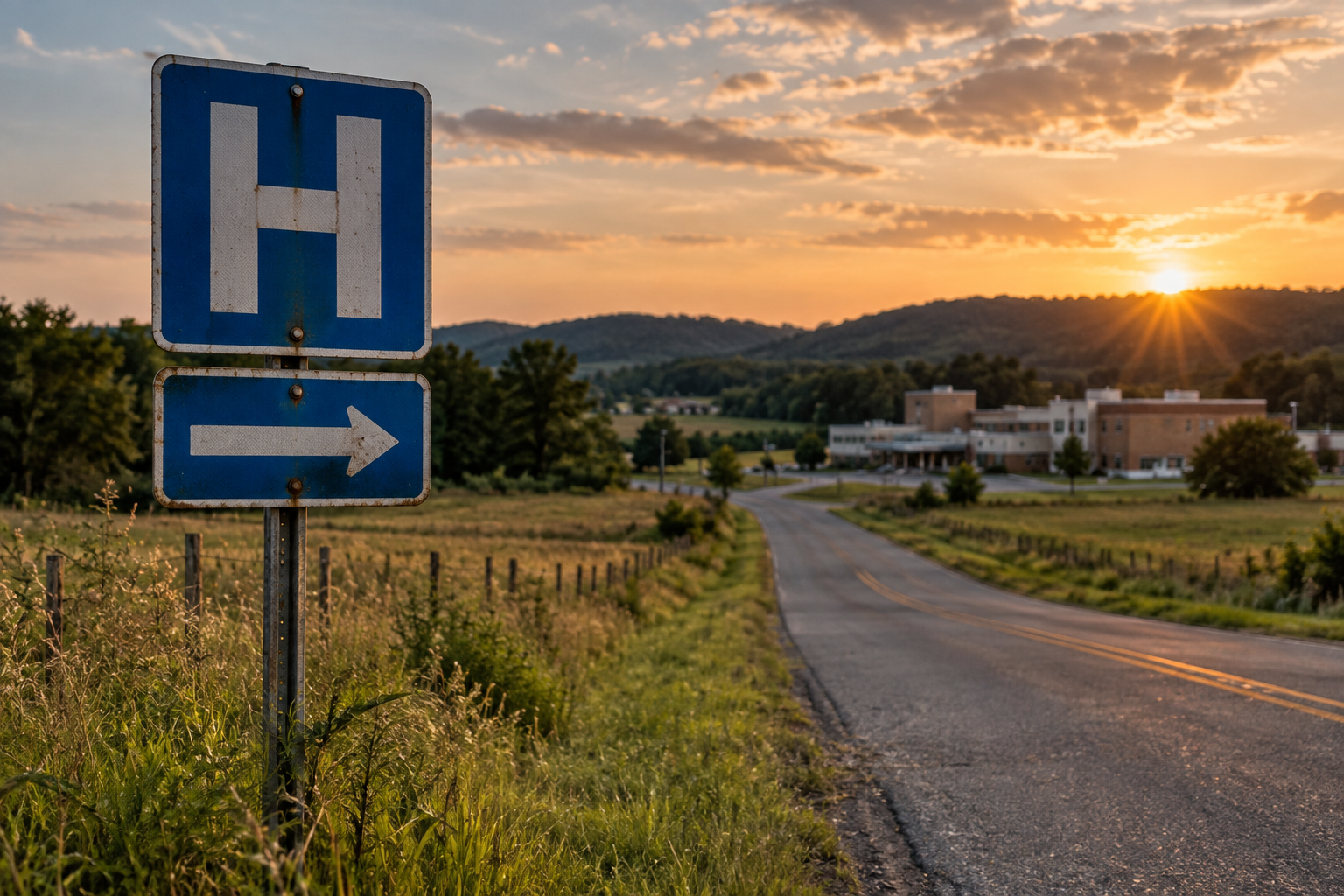
More than 66 million Americans live in rural communities, where access to doctors, hospitals and affordable health insurance is increasingly fragile. At a Sept. 18 American Community Media (ACOM) briefing held in partnership with the Robert Wood Johnson Foundation, health policy experts warned that rural families face a convergence of problems: hospital financial distress, workforce shortages, longer travel distances and changes in Medicaid and Affordable Care Act coverage.
Why Is Rural Health Care Under So Much Pressure?
Dr. Katherine Hempstead, senior policy adviser at the Robert Wood Johnson Foundation, said rural communities entered the current period with disadvantages that were already difficult to overcome. Rural populations tend to have higher rates of chronic disease, while many communities face population aging, provider shortages and long distances to care. Hospitals in sparsely populated areas also operate with high fixed costs and fewer patients, leaving many with narrow or negative financial margins.
The pressure is intensifying as federal health policy changes affect coverage and hospital revenue. The Congressional Budget Office estimates that Medicaid provisions in the 2025 reconciliation law will increase the number of people without health insurance by 7.5 million in 2034. Separately, KFF reported that ACA Marketplace enrollment fell from 21.8 million in 2025 to 19.2 million in 2026 following the expiration of enhanced premium tax credits.
Hempstead said the consequences extend beyond people who directly lose insurance. When hospitals lose revenue, they may reduce services or close, affecting Medicare patients, people with employer coverage and entire local economies. “If people have to travel beyond a certain distance to access health care, it really becomes difficult to live in certain places,” she said.
What Is Happening to Rural Hospitals?
The Center for Healthcare Quality and Payment Reform reports that more than 700 rural hospitals are at risk of closing, with almost 300 considered at immediate risk because of the severity of their financial problems. The ACOM briefing highlighted East Tennessee, where Dr. Amy Gordon Bono, a primary care physician, described what those numbers can mean for individual patients and families.
Bono told the story of a woman in her early 60s who had been enrolled in an Affordable Care Act health plan but lost her insurance when she could no longer make the payments. She went without medical care and medication and later suffered a stroke. “Her story shows how the health care system failing some of us can lead to harm to all of us,” Bono said. She explained that uncompensated care, inadequate reimbursement and private insurance payments that fail to cover hospitals’ costs can place additional strain on rural facilities.
For rural families, a hospital closure does not simply mean losing a building. It can mean longer drives for emergency treatment, maternity care, chemotherapy, surgery and other specialized services. Bono said the shortage of health professionals is also worsening access. Speaking about her hometown area in Tennessee, she noted that doctors who served the community when she was younger are no longer there and have not been replaced, leaving members of her own family with drives of about 30 miles for medical care.
Can the Rural Health Transformation Program Solve the Problem?
The federal Rural Health Transformation Program provides $50 billion over five years, with $10 billion available each year from 2026 through 2030. The Centers for Medicare & Medicaid Services says the program is intended to strengthen the rural health workforce, modernize facilities and technology, improve access and support new approaches to health care delivery.
Hempstead questioned whether the fund is large or immediate enough to address hospitals facing current cash-flow problems. “The Rural Health Transformation Fund is really not a solution to the problem,” she said. She argued that much of the funding focuses on longer-term transformation, technology and new delivery models rather than directly addressing hospitals’ immediate financial pressures. She also emphasized that the program lasts only five years. Her assessment contrasts with the administration’s description of the fund as a major investment designed to strengthen and modernize rural health systems.
What Could Improve Rural Health Care Access?
Dr. Neale Mahoney, professor of economics at Stanford University and director of the Stanford Institute for Economic Policy Research, said the discussion should include not only whether Americans have insurance, but whether their coverage protects them when they actually need care. He pointed to deductibles and out-of-pocket expenses as part of the affordability problem facing families.
Mahoney said policymakers are discussing approaches ranging from Medicaid and ACA changes to public insurance alternatives. “If you lose your job, you shouldn’t lose your health insurance,” he said. “There should be a bedrock form of health insurance that people trust.” He said rural markets can be particularly difficult because families and small employers may have only a limited number of insurance options.
Questions from community journalists broadened the discussion to undocumented and Latino farmworkers, maternal health, mental health services, mixed-status families and the difficulty of attracting doctors and nurses to rural communities. Those concerns show why the rural health care crisis cannot be reduced to a single issue. It involves insurance affordability, hospital finances, workforce shortages, transportation and access to preventive care.
For millions of rural Americans, the central question is increasingly simple: when illness or an emergency strikes, will affordable health care still be close enough to reach?