

When Communities Stand: A Rising National Resistance to Aggressive ICE Enforcement
“We Are Daily Witnessing Horrific Acts in Our Communities”
“We are daily witnessing horrific acts in our communities, in our neighborhoods, at our schools,” said Amanda Otero, co-executive director of TakeAction Minnesota, as she opened her remarks during a national briefing hosted by American Community Media . Her words captured the growing fear and urgency felt across immigrant communities as Immigration and Customs Enforcement intensifies raids, street arrests, and confrontational tactics nationwide.
The briefing, titled “As Risks Escalate, Wave of Community Resistance to ICE Enforcement Spreads,” brought together organizers, legal advocates, and policy leaders to examine how communities are responding to aggressive enforcement. Panelists described how families are being forced into isolation, how schools have become flashpoints of fear, and how community members are stepping into protective roles once reserved for formal institutions.
Minneapolis Becomes a Flashpoint
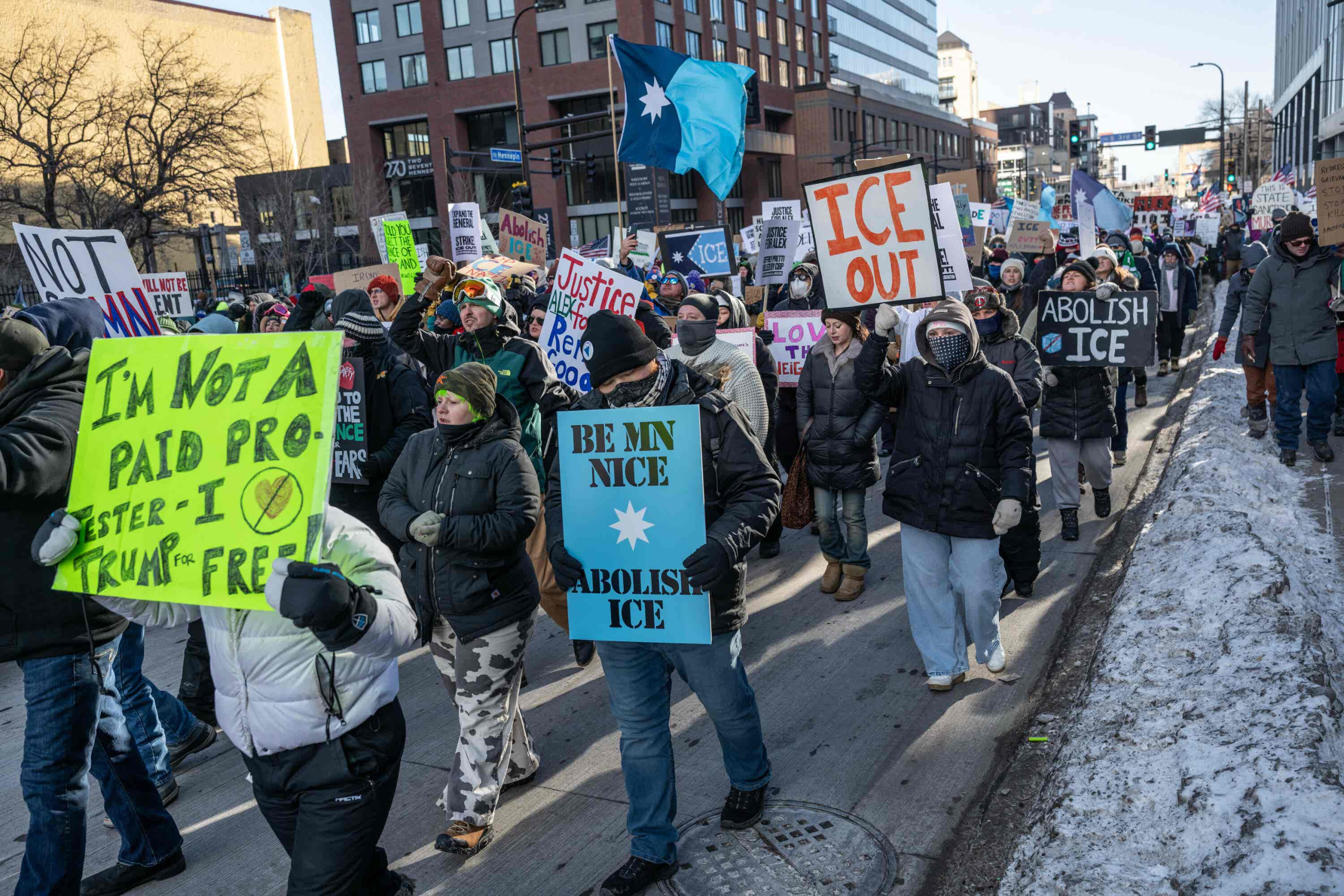
In Minneapolis, enforcement actions reached a tragic turning point with the killing of Rene Nicole Goode, a U.S. citizen and public school parent, during protests against ICE operations. Federal authorities characterized the shooting as self-defense, but local leaders strongly rejected that account . The incident sparked sustained protests, lawsuits, and national attention.
Otero described how enforcement tactics unfolded in close proximity to schools and childcare centers. “As parents were arriving at my child’s preschool, we watched federal agents tear-gassing folks and arresting legal observers,” she said, explaining how parents rushed children indoors for safety . She emphasized that these scenes are not isolated moments but daily realities across many neighborhoods.
Sanctuary Schools and Mutual Aid Networks
In response, parents and educators in Minneapolis have built sanctuary school teams modeled after organizing strategies first developed in Chicago. These teams operate around three pillars: school safety patrols to prevent ICE activity near campuses, mutual aid networks to deliver food and financial support to families afraid to leave their homes, and organized campaigns calling for ICE to leave local communities .
“I’m part of a network of over a thousand parents,” Otero said. “We are doing neighborhood care and safety work across the city.” These efforts reflect a broader shift toward community-based protection, as families assume roles once held by public institutions.
Chicago’s Organizing Blueprint Goes National
Seri Lee of ONE Northside described similar organizing efforts in Chicago following Operation Midway Blitz, a months-long enforcement surge involving dozens of agents. Organizers trained residents to identify ICE agents, document enforcement activity, and respond through rapid-response networks.
Lee recounted how hundreds of residents mobilized after a daycare worker was detained while entering her workplace. “More than 400 people showed up in my neighborhood that same night to demand her release, and she was released,” Lee said . Organizers are now sharing these models across state lines, building what Lee described as an interconnected national defense network.
Fear Across Legal Status Lines
Responding to questions from journalists in the briefing chat, Otero noted that fear is affecting immigrants regardless of legal status. “Everyone who is an immigrant is staying home right now,” she said. “Staying home from work, staying home from the grocery store, staying home from school.”
At the same time, she said the visible acts of solidarity are giving families hope. Seeing neighbors organize patrols, deliver groceries, and show up publicly has encouraged many to hold on, even while remaining physically confined for safety .
A National Shift in Public Opinion
Vanessa Cardenas of America’s Voice described the killing of Goode as a galvanizing national moment. “The attacks on immigrants are the tip of the spear on attacks on all Americans,” she said, warning that enforcement-only agendas inevitably harm citizens as well as non-citizens.
Cárdenas pointed to recent polling showing that a majority of Americans now believe ICE has gone too far, including about 60 percent of independents. However, she cautioned that public concern does not automatically translate into support for reform, highlighting the political challenges facing long-term solutions.
Legal Resistance and the Courts
Ann Garcia of the National Immigration Project described lawsuits challenging ICE and CBP actions, including allegations of pepper-spraying protesters, arresting legal observers, and following individuals home . A district court injunction aimed at stopping these practices was later temporarily blocked by the Eighth Circuit Court of Appeals, allowing enforcement tactics to continue .
The legal struggle underscores the tension between community protections and federal authority, with courts emerging as critical arenas in determining how far enforcement agencies can go.
A Faith-Grounded Call to Action
For Christian communities, the briefing raises profound moral questions about justice, dignity, and protection of the vulnerable. Scripture consistently calls believers to defend the oppressed and care for the stranger. In this season of heightened fear, churches are being challenged to move beyond sympathy toward tangible acts of support.
As Otero observed, “Every day, more and more people are being catalyzed to take action to protect and keep our neighbors and communities safe.”
In a time of uncertainty, the growing wave of community resistance reflects a deeper call to conscience, one that resonates not only in courtrooms and city streets but in the faith commitments of those who refuse to look away.