
Venezuela After U.S. Military Action: What Comes Next for a Nation in Crisis
A Shock That Reshaped Venezuela Overnight
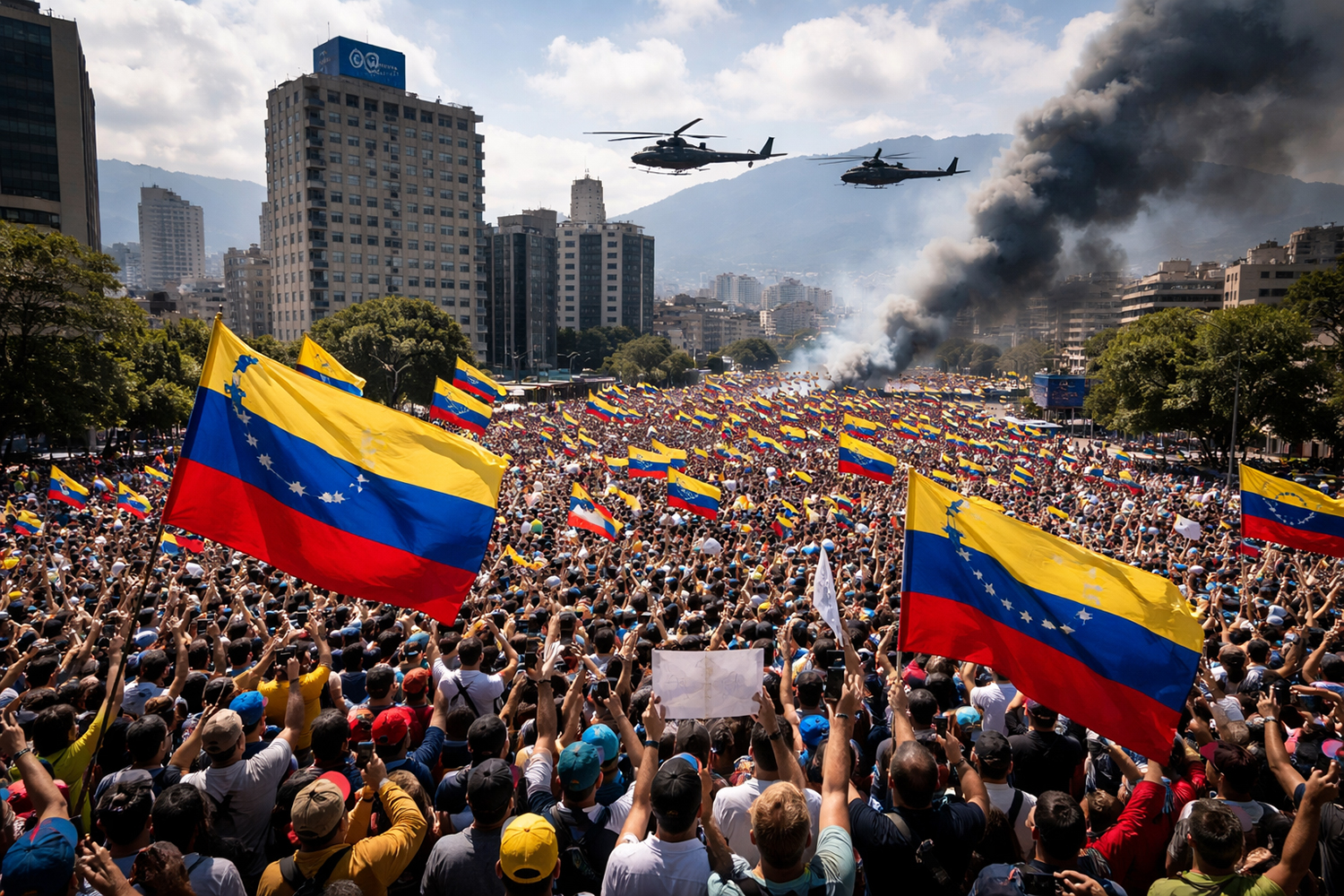
“Following direct U.S. military action and the removal of Venezuela’s ruler, Nicolás Maduro, Venezuela has entered a new and deeply uncertain phase,” said Pilar Marrero, associate editor of American Community Media, as she opened the national briefing.
The intervention abruptly ended one phase of Venezuela’s long political crisis while opening another filled with uncertainty about governance, legitimacy, and the possibility of democratic recovery. Years of economic collapse and institutional damage had already weakened the country. Now, with Maduro removed but much of the governing structure intact, Venezuelans face a future that remains unresolved.
How Venezuelans Are Processing the Moment
Alejandro Velasco, historian at New York University and executive editor of NACLA Report on the Americas, described the emotional landscape inside Venezuela as complex and unsettled. He said people are experiencing “anxiety” over what comes next, along with “confusion” because, beyond Maduro’s removal, many of the same power brokers remain in place.
At the same time, Velasco noted a fragile sense of expectation among Venezuelans who have endured years of paralysis. “The political game has been unstuck,” he said, pointing to early signs such as the release of political prisoners and conciliatory messages from new authorities seeking engagement with Washington.
Yet Velasco cautioned that democratic transition does not appear to be a primary objective of U.S. policy. “Democracy is not a central aim of this moment in Venezuela,” he said, arguing that U.S. priorities appear focused on oil and regional dominance rather than rebuilding democratic institutions.
International Law and the Precedent of Force
From a legal standpoint, Venezuelan lawyer Mariano de Alba described the intervention as unlawful under international law. “There is no legal way to justify this operation,” he said, citing the UN Charter’s prohibition on the use of force without Security Council authorization or self-defense.
De Alba warned that the action sets a troubling precedent. “This reshapes norms around sovereignty and intervention,” he said, noting that the operation could embolden future coercive actions in Latin America and beyond.
Audience members pressed this point further. One journalist asked whether the U.S. could face legal consequences for what some described as a “kidnapping” of a head of state. De Alba replied that accountability is unlikely, given U.S. immunity doctrines and the limited enforcement power of international courts.
Oil, Sanctions, and the Real Drivers of Policy
Roxanna Vigil, international affairs fellow at the Council on Foreign Relations and former sanctions advisor at the U.S. Treasury, argued that U.S. policy appears driven primarily by oil and strategic leverage rather than by democratic transition. “Until we hear President Trump articulate support for a democratic transition, my sense is that this is not part of the plan,” she said.
Vigil added a critical economic context. Venezuela currently produces about 900,000 barrels of oil per day, less than one percent of global supply, making the idea that Venezuelan oil is essential to U.S. energy security misleading.
She emphasized that rebuilding Venezuela’s oil sector would require years of investment, legal reform, and institutional stability, conditions that do not exist under authoritarian rule.
Journalists raised concerns about where proceeds from Venezuelan oil sales might go. Vigil warned that funds appear set to flow into opaque U.S. controlled accounts, raising questions about transparency, corruption, and whether Venezuelans will benefit at all.
Regional and Global Consequences
Several audience questions highlighted broader geopolitical implications. One asked whether this intervention could legitimize similar actions by China or Russia in their respective spheres of influence. De Alba warned that the precedent weakens international norms and could encourage other powers to pursue territorial or political dominance by force.
Another journalist questioned whether Venezuelans abroad, including those with temporary protections in the U.S., might face new uncertainties. Panelists acknowledged that migration policy could shift rapidly, especially if Washington reframes Venezuelan displacement as “resolved” due to regime change.
A Moral Crossroads for Policy and Faith
For faith communities, the briefing underscored a sobering tension between power and principle. The speakers repeatedly emphasized that while Maduro’s removal may be welcomed by many Venezuelans, the method used risks deepening suffering, weakening international norms, and sidelining the voices of ordinary people. As Velasco noted, “The question is not only who rules next, but whether Venezuelans themselves will have a meaningful voice in shaping what comes next.”
As Venezuela enters this uncertain chapter, the path forward remains contested. The briefing made clear that without a genuine commitment to the rule of law, democratic institutions, and accountability, the removal of one ruler may simply replace one form of domination with another.