

By: Christian Herald
It was the early hours of July 4, 2025 — Independence Day. Quiet blankets had just fallen across Camp Mystic, an all-girls Christian camp nestled along the Guadalupe River in Kerr County, Texas. Around 750 campers and staff members drifted into slumber after a day of crafts and campfires, unaware that a catastrophic storm was approaching.
Elsewhere in the Texas Hill Country, families rested peacefully in their homes and cabins, oblivious to the transformation unfolding in the skies. A powerful weather system known as a mesoscale convective complex parked overhead, releasing a deluge of rain that would soon become one of the deadliest flood events in the state’s history.
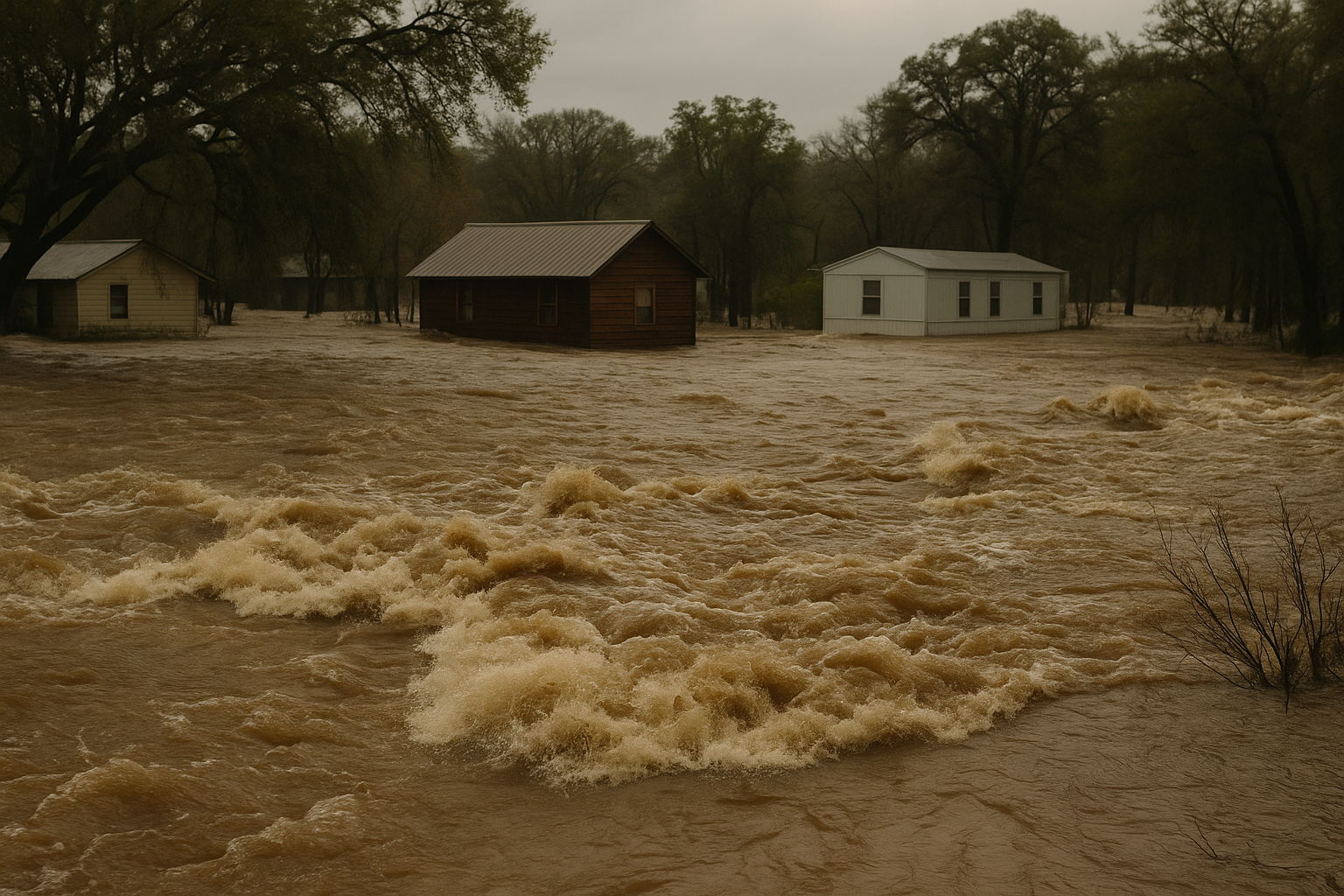
Between 1 a.m. and 4 a.m., the Guadalupe River rose with terrifying speed. Its level surged from around 7 feet to nearly 30 feet within just 45 minutes. The wall of water swept across low-lying campgrounds with little warning, and within minutes, entire cabins were submerged or swept away.
The Children Caught in Darkness
At Camp Mystic, the night quickly turned from peaceful to chaotic. Water gushed into wooden cabins, lifting beds off the ground and throwing campers into a maelstrom of confusion and fear. By morning, families across Texas were frantically searching for news about their daughters.
Local newspapers, including the Houston Chronicle and San Antonio Express-News, reported that 27 campers and counselors had perished at Camp Mystic. In total, Kerr County officials confirmed between 75 and 82 deaths from the flooding, with at least 28 of those being children.
Lives Lost: Names and Moments
Among the youngest victims was 8-year-old Renee “Reenie” Smajstrla. Her uncle described her as a bright, joyful girl who loved to sing and dance. Renee was found in the debris near the camp’s central dining hall.
Janie Hunt, age 9, was another young camper whose family clung to hope until her death was confirmed. Her photo had circulated widely in missing persons reports, her pink glasses and bright smile becoming a heartbreaking symbol of the disaster.
Sisters Blair (13) and Brooke (11) Harber were also lost. They died alongside their grandparents, who were staying at a riverside trailer. Their father, RJ Harber, remembered Blair as a “gifted student with a love for books” and Brooke as “a light in any room.”
Ten-year-old Greta Toranzo, a student from Houston ISD, had just arrived at camp for the first time. She had been excited about arts and crafts and sleeping in a cabin. Her body was recovered three days after the storm.
Chloe Childress, an 18-year-old counselor who had graduated from high school just weeks before, died while trying to save campers. She was remembered as a selfless leader with a passion for mentoring younger girls.
Heroes and Heartbreak
Amid the tragedy, stories of heroism emerged. Julian Ryan, a 27-year-old father in a neighboring community, sacrificed himself while saving his fiancée and two small children from their flooding mobile home. He died in his mother’s arms, whispering, “I love you.”
Camp Mystic’s director, Dick Eastland, died trying to lead a group of girls to safety. His body was found downstream, clutching a flashlight. At a nearby camp, Jane Ragsdale, co-owner and director, was also lost in the floods.
Rescue crews worked around the clock, pulling more than 850 people from rooftops and treetops. Coast Guard swimmers, volunteers with airboats, and local first responders braved dangerous currents to reach stranded families. One unnamed rescuer was credited with saving at least 165 lives.
The Community’s Response
As the water receded, reunification centers opened in Ingram and Kerrville. Grieving parents and siblings embraced survivors while others waited for word of the missing. Vigils were held in churches and community centers across Texas. In Houston, dozens gathered to remember Greta Toranzo with candles and songs.
Governor Greg Abbott declared days of mourning and called for a special legislative session to address Texas’s flood readiness. The Texas Tribune and other local outlets have reported on plans to strengthen warning systems and revise evacuation protocols for summer camps near waterways.
President Donald Trump issued a federal disaster declaration, freeing up resources for the recovery effort. FEMA deployed teams to assist with debris removal, shelter coordination, and mental health services.
The Silence After the Storm
When the river finally returned to its banks, it left behind a landscape of shattered cabins, broken bridges, and unspeakable sorrow. For families like the Harbers and the Toranzos, grief is not a moment but a journey.
The San Antonio Express-News editorial board called the tragedy “a preventable catastrophe,” citing systemic failures in emergency alerts and evacuation coordination. Local leaders are now calling for accountability and reform, including the implementation of real-time river sensors and the establishment of mandatory evacuation plans for camps.
Remembering Childhood Interrupted
The flood didn’t just claim lives; it stole childhoods. Renee, who once danced under Texas stars, now exists only in memory. Blair and Brooke, who shared whispered dreams in bunk beds, are now silent. Chloe, who once promised to be there for “her girls,” kept that promise to the end.
Each child lost was a universe of potential. They were not statistics, but sisters, daughters, campers, leaders in the making.
What Now?
The Texas Legislature is expected to debate new safety laws during its upcoming special session. Proposals include improved drainage infrastructure, updated floodplain maps, and better inter-agency coordination. There are also calls to establish a scholarship fund in memory of the children lost, as well as a permanent memorial at Camp Mystic.
Mental health professionals warn that grief will linger. Survivors may suffer from PTSD and survivor’s guilt. School districts are preparing counselors and implementing special programs to support students and staff who are grieving.
Carrying the Light Forward
Although the floods took so much, they did not take away their hope. Communities are coming together to rebuild. Donations have poured in to support affected families. Churches have opened their doors for counseling, prayer, and quiet mourning.
Children who survived the flood now share their stories, some speaking of the friends they lost, others drawing pictures of the river that changed their lives.
As one pastor said during a memorial in Kerrville, “We may not understand the storm, but we can choose how we respond to it.”
Final Reflection
The July 2025 floods were among the deadliest in Texas history. But within that darkness, the memories of those lost shine brightly. Renee, Blair, Brooke, Chloe, Greta, Janie — names now etched into the heart of a state still healing.
Their deaths demand not only remembrance but action. Their lives, however short, must inspire a safer, kinder, and more prepared tomorrow.
Let us not forget the night the river rose. And let us honor those lost not only with flowers and tears, but with vigilance and change.