

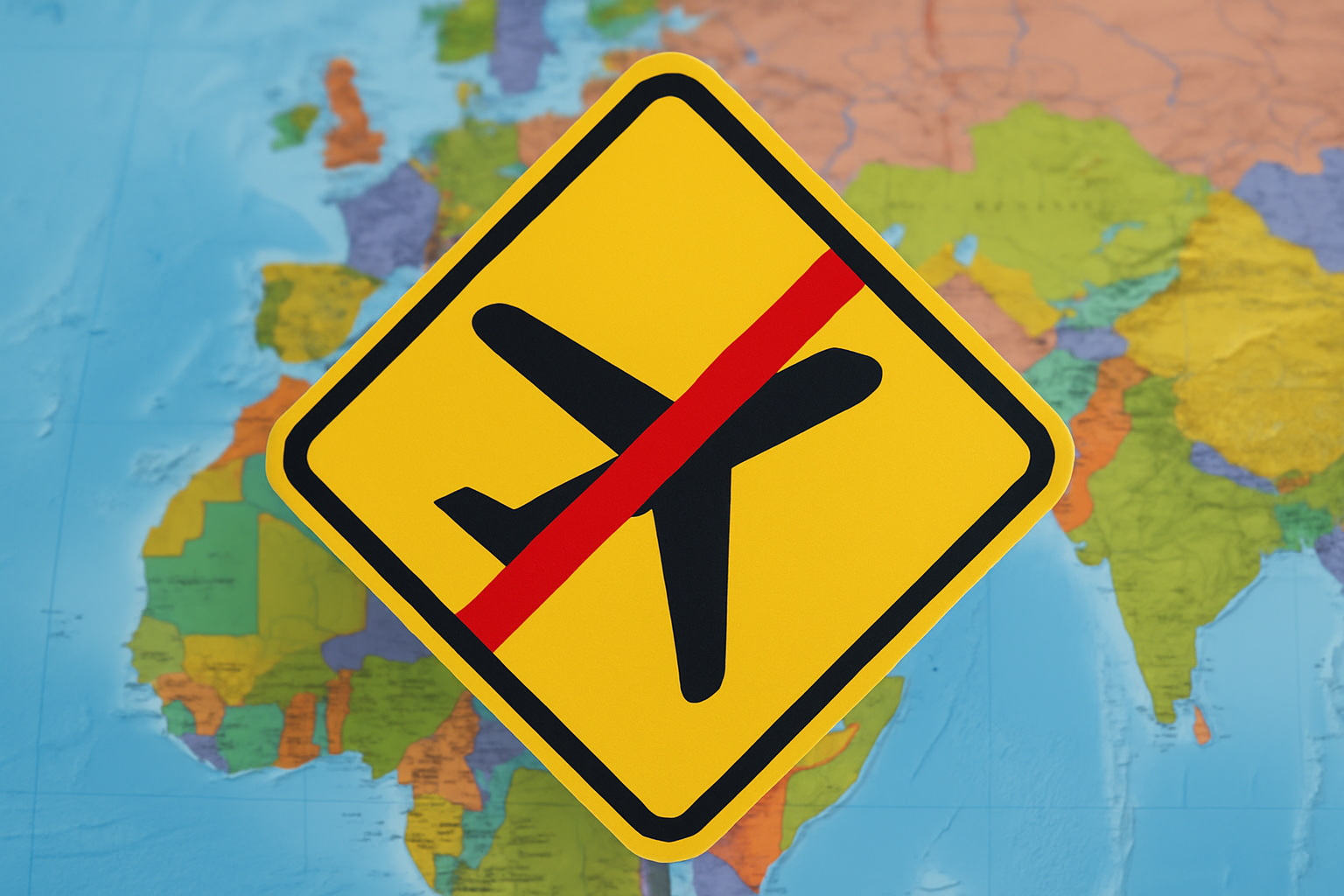
In a move that has reignited fierce debate over immigration policy, President Donald Trump has issued a new travel ban targeting several countries across Africa, the Middle East, and parts of Latin America and Asia. The order, which took effect on June 9, 2025, restricts entry for nationals from 19 countries and may soon expand to include dozens more.
Trump’s administration describes the measure as a safeguard against terrorism and inadequate identity verification systems abroad. Critics call it a discriminatory policy with devastating effects on families, students, and humanitarian efforts.
19 Countries Affected—And More May Be Added
The ban, issued through a presidential proclamation on June 4, blocks immigrant and non-immigrant visa holders from 12 countries: Afghanistan, Myanmar, Chad, the Republic of the Congo, Equatorial Guinea, Eritrea, Haiti, Iran, Libya, Somalia, Sudan, and Yemen. Most travelers from these nations are now barred from entering the U.S.
In addition, nationals from seven more countries—Burundi, Cuba, Laos, Sierra Leone, Togo, Turkmenistan, and Venezuela—face more targeted restrictions. In many cases, student visas and temporary visitor visas are no longer being granted.
The U.S. Department of State has also issued notices to over 30 additional nations, warning that they could face similar restrictions if they do not improve their identity verification and information-sharing systems within 60 days.
A Response to the Boulder Attack
In announcing the ban, President Trump cited a deadly attack in Boulder, Colorado earlier this month. The assailant, who was from Egypt, had entered the United States legally on a tourist visa. “We cannot allow flawed systems overseas to become threats here at home,” Trump said during a press briefing.
Security officials argue the new policy is meant to pressure foreign governments to meet U.S. vetting standards. The Department of Homeland Security has expressed concerns that certain countries either lack biometric databases or fail to notify the U.S. of lost or stolen passports.
Immediate Human Consequences
While the administration claims the move is necessary for public safety, families and advocacy groups argue that the policy has already caused chaos.
Mohamed Abdo, a Sudanese-American green card holder, told The Washington Post that his fiancée was turned away at a U.S. consulate in Cairo just days before their planned wedding. “I’ve done everything the right way, and now we’re just stuck,” he said.
Students from affected countries have also expressed fear about losing their scholarships or having to withdraw from U.S. universities. According to reports in Reuters, several colleges are working to provide emergency legal assistance for affected international students.
Critics: “A Ban in Disguise”
Civil rights organizations and immigration advocates have denounced the new order as a continuation of Trump’s earlier travel bans, some of which were aimed at majority-Muslim countries.
“This is just a rebranded Muslim ban,” said Zainab Chaudry of the Council on American-Islamic Relations (CAIR). “The administration is using national security as a cover for discriminatory policy.”
The International Rescue Committee warned that the ban could also affect refugee programs and hinder family reunification efforts for those already approved for resettlement.
Legal and Political Fallout
Several legal challenges are already in progress. Harvard University and a coalition of civil rights organizations have filed lawsuits seeking to block parts of the proclamation, particularly the sections that limit student visas. A federal judge temporarily halted a related order on June 13, pending further review.
Congressional Democrats have called the policy “inhumane and unconstitutional,” and some moderate Republicans have expressed concern about the diplomatic repercussions. “We need security, but blanket bans risk alienating allies and violating individual rights,” Senator Lisa Murkowski said in a statement.
Meanwhile, the Trump administration maintains it is acting within the legal bounds of national security authority granted to the executive branch.
Diplomatic Tensions Brewing
Foreign governments affected by the ban have begun pushing back against it. Several African nations have summoned U.S. ambassadors to request clarification, while others are threatening to impose reciprocal measures.
The African Union described the ban as “deeply troubling,” noting that such policies risk damaging long-standing diplomatic relationships and undermining international cooperation on global security issues.
Cuba, which is also included on the restricted list, accused the U.S. of targeting it politically, citing the policy’s alignment with increased economic sanctions.
What Happens Next?
The White House has made it clear that unless the 36 additional countries currently under review make specific improvements to passport technology and data-sharing systems, they may face restrictions by mid-August.
This two-month grace period may lead to hurried reforms among countries hoping to maintain travel access. However, smaller nations with limited resources may struggle to meet U.S. standards within the required timeframe.
Some speculate that the administration could use future expansions of the ban as a form of political leverage in foreign relations or domestic policy negotiations.
A Look Back—and Ahead
This is not the first time the Trump administration has used travel bans as a tool of immigration policy. The first travel ban, enacted in January 2017, faced extensive court battles and protests before being upheld by the U.S. Supreme Court in a 5-4 decision. That ban, which initially targeted seven majority-Muslim nations, was revised several times in response to legal scrutiny.
Critics fear this new version could again marginalize specific ethnic and religious groups under the guise of national security. Supporters argue that it reflects a needed shift toward more cautious vetting in an increasingly volatile world.
As legal battles proceed and the list of affected countries grows, millions of potential travelers—including students, families, and professionals—are left in limbo, uncertain of whether their dreams and obligations in the United States will be fulfilled or deferred indefinitely.
Final Thoughts
Whether viewed as a justified act of protection or a discriminatory policy cloaked in national security language, President Trump’s newest travel ban is already reshaping U.S. immigration policy in ways that will have ripple effects globally.
For many Americans and aspiring immigrants, the question remains: How do we strike a balance between safety and fairness in a country built by—and for—immigrants?